
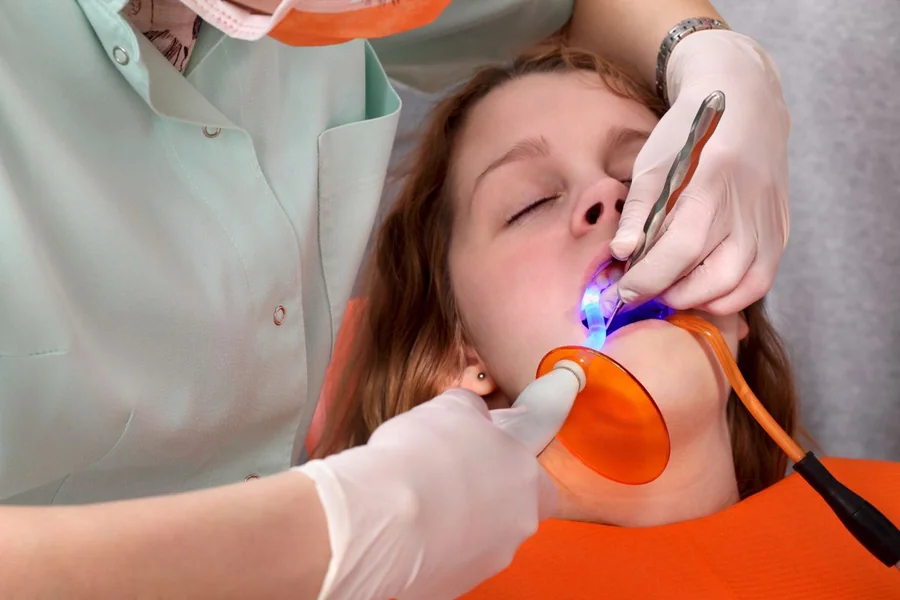
Dental lasers moved from research labs into general practice over the past two decades. The technology now handles procedures that once required a scalpel, sutures, and a longer recovery period. Patients rarely notice the equipment itself, because the working tip looks like a slim handpiece with a fibre attached. What they do notice shows up afterward, in the form of less bleeding and a shorter return to normal meals. This article explains how dental lasers work, which procedures suit them, and what happens during a laser appointment in Edmonton.
What a Dental Laser Actually Does
A dentist in Edmonton uses a laser to deliver concentrated light energy at one specific wavelength. Different tissues absorb different wavelengths, and that selective absorption gives the instrument its precision. Water and pigment inside gum tissue absorb diode energy, so the beam cuts soft tissue while it seals small vessels at the same moment. Hard tissue lasers target the water content inside enamel and bone through a separate wavelength. The energy converts to heat in a fraction of a second, which removes tissue layer by layer with minimal effect on the area around it.
Two Laser Families Serve Separate Purposes
Most general practices operate one or both of two distinct laser types. The differences shape which procedures a clinic can complete in-house:
- Diode lasers work on soft tissue, and clinics use them for gum contour, frenectomy, and canker sore treatment
- Erbium lasers work on hard tissue, and they prepare cavities, trim bone, and roughen enamel before bonding
- Diode wavelengths seal blood vessels as they cut, which keeps the working field clear during gum procedures
- Erbium wavelengths pair with a fine water spray that cools the tooth throughout the preparation
- Some clinics run both units, so a single appointment covers gum reshape and cavity preparation together
Soft Tissue Procedures in Daily Practice
Gum work represents the largest share of laser use across general dentistry today. A laser reshapes an uneven gum line, so crowns and veneers sit at matched heights across the smile. Frenectomy releases a tight band of tissue under the lip or tongue, a common treatment for infants and children. The instrument also removes small overgrowths of tissue around erupting molars and orthodontic brackets. Because the beam seals as it works, most soft tissue cases close without a single suture.
Hard Tissue Applications on Teeth
Erbium lasers prepare small and moderate cavities without the vibration and pressure of a drill. Many patients complete these appointments with no anesthetic at all, because the laser produces far less nerve stimulation. The prepared surface carries a microscopically rough texture that improves the bond with composite material. Dentists also use hard tissue lasers to expose a tooth trapped below bone for orthodontic treatment. Crown lengthening combines both tissue types in one appointment when a restoration needs more visible structure.
Recovery Advantages Patients Notice in Edmonton
The practical difference shows up in the hours and days after an appointment. Four outcomes appear consistently across laser cases:
- Bleeding stays minimal during treatment, which shortens chair time for both patient and clinician
- Most soft tissue sites close without sutures, so no removal appointment gets scheduled
- Swelling stays lower, and patients return to a normal diet sooner than with scalpel treatment
- The beam sterilizes the site as it works, which lowers the bacterial load left behind
A dentist in Edmonton reaches for a laser when precision and faster tissue recovery matter more than speed alone. One tip carries real value here: ask which wavelength the clinic operates before any soft tissue appointment. Diode units handle routine gum work, erbium units cut enamel and bone, and that single question reveals exactly which procedures the local practice can complete comfortably in a single appointment without an outside referral.

Passionate about exploring diverse ideas and sharing inspiration, I curate content that sparks curiosity and encourages personal growth. Join me at ElementalNest.com for insights across a wide range of topics.