
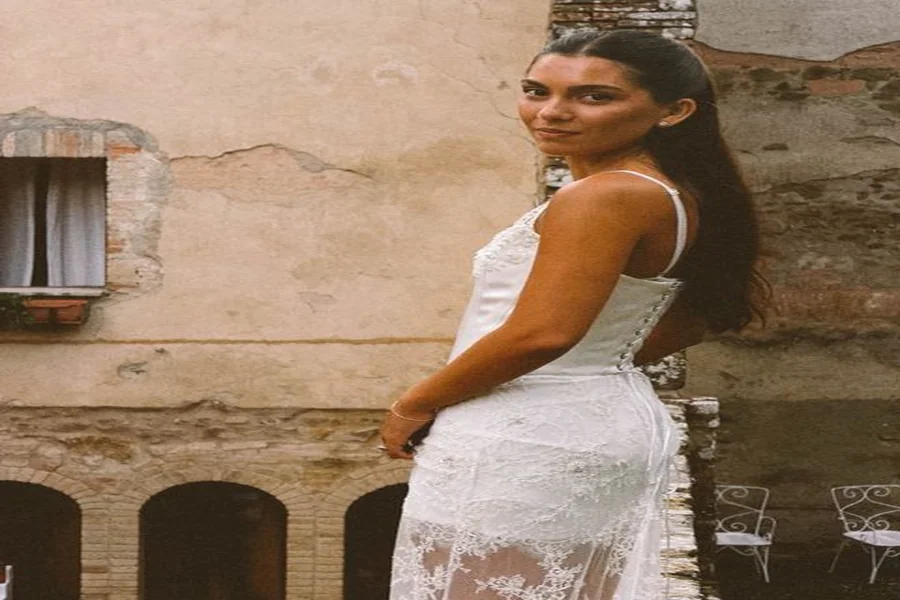
The corset is back in the spotlight—but not the kind that made it impossible to breathe. No longer just a piece of shapewear, the corset has become a symbol of confidence, style, and—yes—comfort.
Caribis is a bridal atelier and online wedding shop that works with this modern idea of the corset. Brides can choose a corset wedding dress, a two-piece set or a wedding corset top from the main collection, or have a custom design made to their measurements.
A brief history of the corset—or, things are far more unusual than you might think
The corset has developed a rather poor reputation. Most people picture a Victorian young lady who can barely breathe. But the real history is far stranger—and, more importantly, much more interesting:
- Corsets appeared much earlier than one might assume. The oldest precursor to the corset can be seen on a Minoan figurine dating back to approximately 1000 BCE; the “Snake Goddess” is depicted with a tightly cinched waist and lifted breasts. The desire to shape the torso in a specific way has existed for at least 3,000 years.
- “Whalebone” is not actually bone. Corsets were stiffened using baleen—flexible, horn-like plates found in a whale’s mouth. This same material was also used to make umbrella ribs and chimney-sweeping brushes. It turns out that glamour had a very practical, utilitarian side.
- Men wore them, too. In the early 19th century, dandies would cinch themselves into corsets to achieve a wasp-like waist. It is said that before his coronation in 1821, King George IV reduced his waist measurement from 55 to 50 inches (approximately 140 to 127 cm).
- The myth about the surgical removal of ribs is nothing more than fiction. Historians have found no evidence that Victorian women ever had ribs surgically removed. Based on surviving corsets, the average waist measurement was 20–22 inches (about 50–56 cm)—a very small size, certainly, but one that is anatomically possible.
- Madonna transformed the perception of this garment. When Jean-Paul Gaultier created her iconic conical corset for the 1990 “Blond Ambition” tour, the corset evolved from an instrument of torture into a symbol of female empowerment.
Over time, the corset has served as a symbol of high status, a target for criticism, a fetish object, and a staple of punk culture. Today, however, it is associated with femininity, comfort—and, increasingly, weddings.
In fact, the philosophy behind Caribis is built upon this very evolution: the transition from a rigid, restrictive shell to a supportive structural element. The brand does not attempt to replicate a museum-piece corset; instead, it adopts the original’s engineering logic to create a garment in which one can comfortably enjoy a celebration all day long.
Corset Wedding Dresses: A New Silhouette Architecture
So why are modern corsets so comfortable? It was not the idea of the corset itself that changed, but its engineering. Previously, the frame worked like a hard shell, where the shape was held due to pressure on the body. Today, a corset is just a supporting structure. It distributes the load and follows the curves of the figure.
What exactly has changed:
- Spiral boning instead of rigid stays. These flexible supports bend in multiple directions, adapting to the contours of your body and returning to their original shape, rather than digging into your ribs. The result is postural support without the feeling of being encased in armor.
- Breathable fabrics and a carefully layered design. The corset shapes the silhouette through its cut and combination of materials—not through sheer thickness or extreme compression—ensuring you don’t have to sacrifice comfort or risk overheating to achieve a beautiful fit.
- A different distribution of weight. A heavy skirt is anchored to a stable base, shifting the load onto the waist and hips instead of pulling down on the shoulders and neck.
- Adjustable fit. Lacing and fasteners allow the garment to be tailored to your specific body, rather than forcing your body to conform to a pre-set shape.
What does this mean in practice? A corset shapes the silhouette without restricting breathing or movement. It provides postural support rather than compressing the body, and it bears the weight of the dress instead of shifting that burden onto the shoulders. For this reason, stylists recommend checking three things when trying on a wedding dress with a corset:
- waist fit — snug, yet without restricting breathing;
- neckline stability — the bodice stays in place and maintains its shape during movement;
- weight distribution — the heaviness of the fabric is supported at the waist, rather than putting pressure on the neck and shoulders.
When all three elements come together, you stop noticing the complex setup. You simply enjoy the celebration, embrace your loved ones, and feel confident in front of the cameras.
Wedding Dresses with Detachable Skirts: The Magic of Practical Transformation
One of the most prominent wedding trends in recent seasons is versatility. Many brides are opting for wedding dresses with detachable skirts, allowing them to transition between two distinct looks over the course of a single evening—without the need to purchase two separate outfits or spend ages changing. It’s a solution that is quick, simple, and cost-effective—and this is where a corset-based design truly proves its worth.
The secret lies in weight distribution. When the base of the dress fits correctly, you can attach voluminous trains or multiple layers of tulle without the garment feeling like it’s sliding down. After the ceremony and the main photo session, the overskirt can be removed, revealing an elegant mini-dress or a comfortable midi-length gown for the reception. Caribis offers several designs with detachable skirts that perfectly illustrate this concept: the overskirt is supported by the corset base rather than the shoulders, meaning it can be removed in seconds—with nothing pulling or slipping out of place.
To see the practical difference, here is how these modern solutions compare to more traditional approaches when planning your wedding day:
| Criterion | Traditional one-piece dress | Convertible dress with a detachable skirt |
| Ceremony style | Classic, voluminous silhouette | A luxurious look with a long train. |
| Comfort on the dance floor | You need to hold up the hem of your dress | Absolute freedom of movement in a basic dress |
| Changing of the Guard | Need to purchase a second wedding dress.. | It happens in a matter of seconds—just by unfastening the skirt. |
| Use after the wedding | Usually worn only once. | A basic dress can easily be repurposed for future events. |
Two-Piece Wedding Dresses: new rules for combining
Beyond classic silhouettes, two-piece wedding dresses are gaining popularity. They allow the bride to act as the creative director of her own big day.
Corset tops often serve as the foundation for this look; their true charm lies in their versatility. A well-tailored corset can be paired with flowing palazzo trousers for a minimalist wedding, or with a dramatic maxi skirt for a formal reception. And long after the wedding, the corset can become a staple in one’s everyday evening wardrobe—it looks fantastic styled with a business suit or vintage jeans for an anniversary dinner.
Designer Wedding Dresses: premium-quality fabrics and textures
Today, more and more designers are focusing on tactile qualities and emotional resonance. The fabric sets the tone for an event and dictates how a dress will move throughout the day.
Play with contrasts. A bodice made of substantial, matte cotton can be paired with sheer, airy layers. Looking for something more striking? Opt for the refined, sophisticated luster of satin. Satin holds its shape well, creating structured folds that look stunning in photographs. For a soft, fluid, and timeless silhouette, there is always silk. At Caribis, you will find both satin and silk. The difference between them isn’t apparent in a still photograph—it reveals itself in motion: satin maintains a structured form, while silk flows.
Wedding Accessories: finishing touches
Choosing the right accessories for a corset wedding dress can completely shift the mood of your look. A structured, well-defined bodice serves as a striking focal point on its own, beautifully highlighting the collarbones—so there’s no need for a necklace. Instead, consider adding a pair of gloves or opting for elegant, long earrings.
A long, weightless veil from the brand Caribis perfectly balances the precise geometry of the bodice. For the evening reception—once the veil and the overskirt have been set aside—you can simplify both your look and your comfort. Minimalist pearl stud earrings or a bold statement necklace will accentuate a modern, slightly daring aesthetic.
A last tip before the fitting
Modern fashion finally allows women to avoid compromises. A well-thought-out look proves that appearing magnificent in photographs and feeling relaxed until dawn need not be mutually exclusive.

Passionate about exploring diverse ideas and sharing inspiration, I curate content that sparks curiosity and encourages personal growth. Join me at ElementalNest.com for insights across a wide range of topics.