
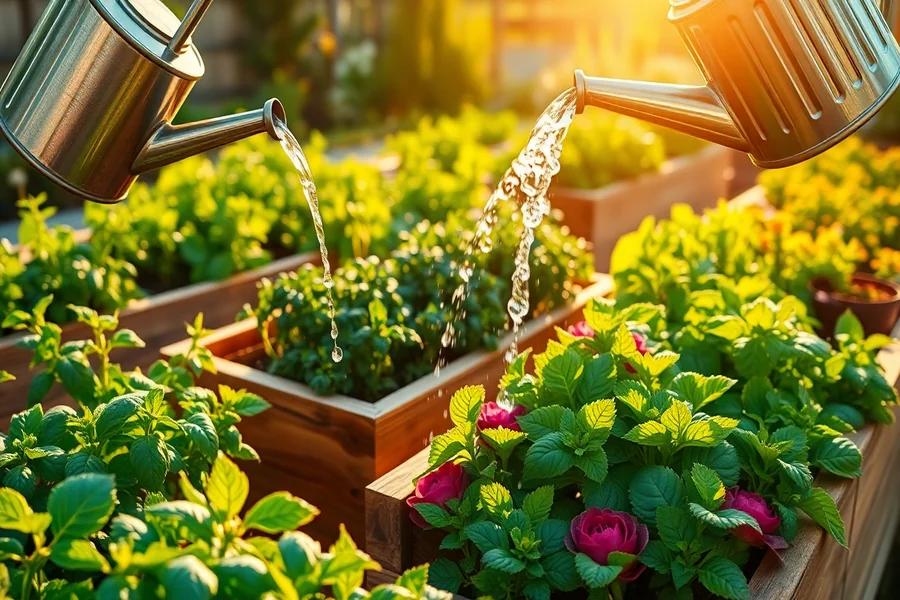
An efficient garden starts with regular care, and one of the most significant aspects of taking care of beautiful outdoor areas is the correct watering. Whether you are planting colorful flowers, a green lawn, or growing vegetables in a raised bed, all plants require the right level of moisture to grow. Nevertheless, watering is not necessarily as easy as turning on a tap in the garden. Your watering needs vary depending on the plants, and it can be difficult to reach all areas of a garden. Everyday gardening can be simplified, more effective and enjoyable by selecting appropriate watering tools, such as a good hose nozzle and tools that can be adjusted to fit the desired watering.
Finding the best watering wand can make a noticeable difference when caring for plants that are difficult to reach with an ordinary garden hose. The wands are also extended with watering wands to enable the gardeners to reach hanging baskets, high planters, flower beds, and plants behind the shrubs without straining and dragging heavy containers. Adjustable spray patterns are also characteristic of many models, thus it is easy to alternate between a soft watering spray of delicate flowers and a powerful spray of cleaning the garden surfaces. Gardeners can also save more water through the right watering wand, which can help them to distribute water more precisely, minimizing unnecessary splashing and water wastage.
Why Proper Watering Matters for Plant Health
Water is essential for photosynthesis, nutrient transportation, and healthy root development. Nevertheless, excessive or insufficient water to the plants will cause issues. Prolonged overwatering could lead to root rot, promote fungal infection, as well as deprive roots of adequate oxygen. Conversely, underwatering may result in hanging leaves, dry soil, poor flowering and stunted growth.
Optimal watering schedule is variable and is dependent on a few factors like the type of plant, soil, temperature, and sunlight. When using containers, the plants will often need more water than the plants in the garden bed as the soil will dry up easily. Likewise, flowers that are in sunny areas could require more care during hot seasons.
Gardeners ought to monitor soil moisture prior to watering, but not depending on a strict daily routine. In order to check whether the soil requires more moisture or not, pushing a finger an inch deep into the soil can help to check the soil. Repeated deep watering will stimulate the root to grow deeper into the soil, which will make the plants more resilient in hot weather.
Selecting the Ideal Garden Hose Nozzle
One of the most useful accessories in the daily maintenance in the outdoor environment is a reliable garden hose nozzle. Gardeners do not have to use one stream of water but can select various spray patterns according to the job. This is particularly useful in the preservation of gardens with varieties of plants.
To illustrate, a low flow shower is good when watering seedlings, herbs, and tender flowers. A mist system can offer some light water to specific plants and a focused stream can aid in washing off a garden tool or outdoor furniture.
When selecting a nozzle, consider the following features:
– Variable spray patterns: There are several settings, which allow the same nozzle to be used in several gardening tasks.
– Easy to hold: An ergonomic handle will decrease hand fatigue during longer watering periods.
– Sealed connections: Quality fittings are used in avoiding unnecessary loss of water.
– Resistant building: Materials used in the exterior are resistant to frequent exposure to the sun and moisture.
– Simple controls: Simple adjustment controls allow changing spray patterns to be easy.
An efficient nozzle will conserve time and provide gardeners with more options on the manner water reaches their plants.
Making Flower Beds Healthier With Consistent Watering
Flower beds provide color, texture and personality to the outside areas. Nevertheless, their upkeep needs consideration of soil moisture, drainage, and watering specific to plants.
Newly planted flowers may need more frequent watering time as their roots get established. When developed, numerous varieties have the advantage of deeper watering and fewer waterings. This promotes good root systems and also enables the plants to tap the moisture that is located below the soil surface.
Water must be directed to the plants base, instead of being sprayed over the plants and flowers continuously. Damp leaves, especially during the night, may heighten the chance of fungus. This is enhanced by a watering wand that has a low-pressure shower setting since the gardeners can control the flow of water to areas that require it.
Another helpful practice is mulching the flower beds. The presence of organic materials like shredded bark, compost or even dried leaves helps keep the soil moist, slow down the growth of the weed and also maintain the soil temperature. Mulch used together with a proper watering schedule can be very helpful in maintaining the garden.
Maintaining Hanging Baskets and Elevated Planters
Hanging baskets are beautiful features to patios, balconies, porches, and garden entrances. They enable gardeners to showcase trailing flowers and ornamental plants without occupying a good portion of the ground. Nevertheless, waterings can be inconveniencing due to their high location.
Due to the dry soils in hanging baskets, they can easily dry up due to the dry weather especially in summer. Moisture loss may be enhanced by wind and direct sunlight and frequent checks are relevant.
This can be especially helpful with garden hose wands. Their long arms enable gardeners to water baskets without having to remove them off the hooks or have to use a ladder. The soft spraying pattern spreads moisture to the soil and prevents fragile flowers from being ruined.
When watering hanging baskets, keep watering until it starts to drain out at the bottom. This aids in making sure that the root area receives moisture and does not just wet the upper layer of the soil.
Clearing ornamental trays or containers that hold up too much water is also an important thing to do. Stagnant water may cause adverse effects to roots of plants and promote breeding of mosquitoes in the open air.
Reaching Plants in Difficult Garden Locations
All plants do not grow in a convenient place. There are thick shrubs, narrow walkways, raised beds, decorative containers and plants found behind fences or outdoor buildings.
Stepping over flower beds to reach these plants or moving pots can be destructive to foliage and can also compact soil. Long-reach watering tools are a viable solution since they enable gardeners to water plants comfortably when standing.
A watering wand that can be adjusted can be of particular use when cleaning:
– Plants along the garden boundaries.
– Flowers in the background of bigger bushes.
– Elevated vegetable planters.
– Baskets and window boxes of flowers.
– Plants in tight or crowded gardens.
To gardeners who have a number of planting areas, it may be more convenient to select equipment that has adjustable spray settings and a handle that is comfortable to use.
Understanding Watering Needs Across Different Seasons
Seasonal variations directly influence the frequency of watering of the gardens. In the spring, the moisture needed by the established plants may be greatly contributed by rainfall. Nonetheless, young vegetables and new flowers are to be attended to regularly.
Summer normally demands a more cautious watering schedule. Overheated and intense sunlight raise the level of evaporation, that is, containers and open flower beds may become dry in a short time. Water early morning is usually a good idea since plants have time to absorb the water before the hottest time of the day.
Autumn is characterized by cooler weather and more rain. Gardeners are advised to change their watering routines and not to stick to the same routine adopted in the summer.
The need for winter watering is based on the climate and the plant types. Certain plants become dormant and require significantly less water, whereas evergreen plants might be in need of periodic water when dry seasons hit.
Looking at the soil instead of keeping on the calendar assists in avoiding watering during the whole year unnecessarily.
How to Reduce Water Waste in the Garden
Plants and the environment are the beneficiaries of responsible watering. Wasting water will make households spend more and strain the local water resources.
Luckily, there are a few easy things that may be done to ensure that the outdoor watering is more effective.
First, water plants instead of spraying extensive areas that do not require this. Second, use mulch to minimize evaporation and keep the soil moist. Third, harvest rainwater in appropriate containers and irrigate the garden where allowed.
The gardeners are also able to cluster plants based on their water needs. Wet-loving plants may be planted jointly and those resistant to drought may be planted in those places which are not watered as frequently.
It is also possible to regulate the distribution of water using the appropriate hose nozzle or watering wand. Adjustable spray options enable users to use the right level of water without submerging pathways and the surrounding surfaces.
Shopping Guide to Watering Equipment
The choice of garden watering equipment should depend on the size of the outside area and the plants that are being taken care of. The simple hose nozzle might suffice in a small balcony garden, whereas longer watering tools might be useful in a bigger property, with hanging baskets, flower beds, and raised planters.
When buying, you should take into account:
- Reach: Select an appropriate wand length to use with tall and inaccessible plants.
- Spray flexibility: Variations of spray patterns provide more control of various watering tasks.
- Durability: Equipment that is used outdoors all year long should have durable materials.
- Portability: Lightness of construction and ease of carrying handles help to make watering less exhausting.
- Compatibility: Be sure that the equipment is compatible with your existing garden hose.
The brand like RESTMO provides garden watering accessories that enable them to handle the routine outdoor maintenance. Comparison of specifications of products, construction materials, spray options and handle designs can assist gardeners in selecting equipment that best meets their specific requirements.
Final Thoughts
To keep a beautiful garden, it is not enough to select beautiful plants and supply them with the appropriate soil. Regular watering, seasonal changes, and the right gardening tools also lead to a healthier flower, well-established roots and greenery.
It can be delicate flower beds, watering hanging baskets, or accessing plants behind the dense shrubs, the correct watering equipment can make daily chores easier. A reliable hose nozzle offers flexibility to the overall garden care, and an adjustable watering wand offers an extra reach and control.
Through appropriate tooling and considerate watering practices, gardeners will be able to have healthier outdoor spaces, minimize water waste, and reap the benefits of their labors during the growing season.

Passionate about exploring diverse ideas and sharing inspiration, I curate content that sparks curiosity and encourages personal growth. Join me at ElementalNest.com for insights across a wide range of topics.