
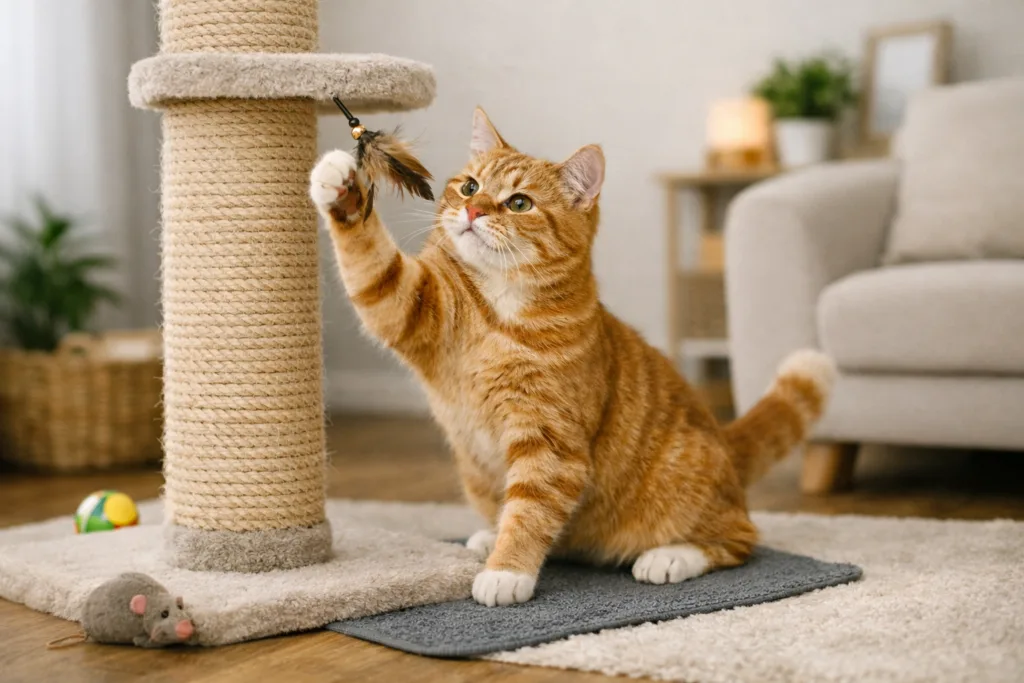
The first step in preparing for a Scottish Fold kitten is to set up one safe room and then thoroughly inspect all areas where the kitten will be accessing. Clear away loose cords, small items, poisonous plants, broken furniture, and open pathways. Provide low entry litter boxes, feeding and drinking stations, hiding spots, scratchers, and easy resting spots. This room-by-room approach minimizes accidents and allows kittens time to find food, water, sleeping places, and places to play and toilet.
How to prepare your home before the kitten arrives
Begin your Scottish Fold kitten home preparation before choosing beds or toys. First, collect the kitten’s veterinary records, vaccination history, current food details, litter preference, and daily feeding schedule. Keeping familiar food and litter during the first few days reduces the number of changes happening at once.
Before responding to a buy scottish fold kitten listing, review the available health documentation and ask how the kitten has been raised. The breed page states that kittens may come with a veterinary examination, age-appropriate vaccinations, deworming, a microchip, pedigree documents, and a health guarantee. These records should be checked before the arrival date rather than after the kitten is already home.
Go slowly throughout the house at a kittens height. Look under furniture, behind appliances and beside cabinets by kneeling down or by holding a phone camera close to the ground. This test typically uncovers dangers which cannot be seen from standing position in just 10 minutes.
Check for:
- Electrical cords that can be bitten or pulled.
- Blind cords and curtain ties that form loops.
- Coins, hair ties, rubber bands, thread, and small toy parts.
- Gaps behind cabinets or appliances.
- Unstable shelves and floor lamps.
- Open windows without secure screens.
- Medicines, detergents, and cleaning products.
- Recliners or folding furniture with moving mechanisms.
Lilies should not be kept in a cat household. Certain true lilies and daylilies can cause life-threatening kidney injury in cats, including after exposure to pollen or vase water.
Prepare a safe room for your Scottish Fold kitten
A safe room provides the baby cat with a smaller area to explore before he or she must take on a whole house. An extra room, preferably a separate one, is generally better than a laundry room with noisy equipment. The door needs to close tightly and not stop social interaction and interaction between the family and the children, but there must be enough room.
Cats Protection suggests creating an escape-proof haven for your cat containing a bed, separate food and water bowls, an out-of-the-way litter tray, hiding places, a safe higher perch, toys and a scratching post. Another familiar item that can help to make the new room less foreign is a familiar blanket.
Set up the room in this order:
- Place the litter box first. Choose a quiet corner that remains easy to reach.
- Put food on the opposite side of the room.
- Position water away from both the food and litter.
- Add an open carrier or cardboard box as a hiding place.
- Provide a stable scratcher that will not tip.
- Place two or three safe toys on the floor.
- Add a low bed and a washable blanket.
- Check the room again with the door closed.
A frightened kitten may hide inside the carrier, under a chair, or behind a box. Do not pull the kitten out. Sit nearby, speak quietly, and allow contact to begin at the kitten’s pace.
Make resources easy to reach
The trait of folded ears is linked to a cartilage and bone defect in the genes known as osteochondrodysplasia. Severity and age of onset are different among cats. The signs may range from stiffness, reluctance to jump, unusual gait or decreased tail flexibility.
For this reason, the room should work even if the kitten later shows reduced mobility. Use a litter tray with a low entrance. Choose a stable bed rather than a hanging model. Place scratchers, food, water, and resting areas on the same level during the adjustment period.
A Scottish Fold kitten can still enjoy raised observation points. The safer arrangement is a low, wide platform reached by short steps instead of one tall tower that requires a long jump.
Room-by-room guide to the living room
The living room is often the first larger space a kitten explores. It also contains more movement, cables, furniture gaps, and climbing opportunities than the safe room.
Start by limiting access to one part of the room. Close doors, use a secure pet gate where practical, and supervise the first visits. Let the kitten return to the safe room whenever it chooses.
| Living room hazard | Practical correction |
| Loose charging and television cables | Use rigid cord covers or route cables behind closed furniture |
| Gaps under recliners and sofas | Block narrow access points and inspect moving furniture before use |
| Tall, unstable furniture | Secure bookcases and cabinets to the wall |
| Breakable objects on shelves | Move them into closed storage |
| Slippery floors | Add washable, nonslip runners near play and resting areas |
A Scottish Fold may behave like any energetic kitten during play, rushing after a toy and attempting jumps without judging the landing. Place play sessions on rugs rather than polished flooring. Keep wand toys low and move them horizontally so the kitten can chase without repeated high leaps.
Test furniture before the kitten does
Press down on each scratcher, small table, and cat platform with one hand. If it shifts, rocks, or tips, it is unsuitable for unsupervised use.
Use this simple furniture test:
- The base remains flat when pushed from the side.
- The surface is wide enough for the kitten to turn.
- Fabric edges do not contain loose threads.
- Nearby objects cannot fall if the kitten climbs.
- The landing area has traction.
The test takes less than five minutes for an average living room. It is more useful than assuming that a product labeled for cats is stable enough for a fast-moving kitten.
How to prepare the kitchen and bathroom
Kitchens and bathrooms contain concentrated household risks. Keep both rooms closed during the first stage unless someone is supervising.
Install child-resistant latches on low kitchen cabinets that hold cleaners, trash bags, pest products or sharp tools. Use a food waste bin with a tight-fitting lid to collect food waste. Before closing or turning on the dishwasher, oven, washer or dryer, check to see if they are running. A warm appliance or an open drum may draw in the curious kitten.
Clean food counters off after use. Never leave an onion, garlic, chocolate, alcohol, caffeine, grape or raisin (or foods with the sugar substitute, xylitol) in a kitten’s reach to explore. Store plastic wrap, foil, skewers, string and food packaging in closed storage.
In the bathroom:
- Close the toilet lid.
- Empty the tub and sink after use.
- Store razors and dental floss inside cabinets.
- Remove hair ties and cotton swabs from open containers.
- Keep medicines in closed storage.
- Secure cleaning products.
- Check that towels do not create a route to a high shelf.
- Keep the washer and dryer doors shut.
Create a measured feeding station
Choose shallow stainless steel or ceramic bowls that are easy to wash. Place the water bowl several feet from the food when space permits. Some cats drink more readily when water is offered separately from meals.
Ask the breeder or previous caregiver for the kitten’s usual food and portion size. Continue that diet initially. Any later change should be gradual and discussed with a veterinarian, especially when the kitten has digestive problems or an existing medical record.
Do not leave a full day’s food out merely because the bowl looks small. Measure each portion. A simple method is to weigh the daily allowance in the morning, divide it by the planned number of meals, and store the remaining amount in a labeled container.
Prepare bedrooms, stairs, and home offices
Bedrooms appear quiet, but they often contain strings, soft hiding places, open closets, and items that can be swallowed. Put jewelry, earplugs, sewing supplies, medication, and cosmetics into drawers. Check inside bedding before sitting or lying down, particularly during the kitten’s first week.
Close closet doors until the kitten is familiar with the home. Shoes with long laces, hanging belts, and garment bags can become chewing or climbing targets. Block the underside of beds when the space is too deep to reach safely in an emergency.
Home offices need the same floor-level review. Use cable sleeves for computer wires. Store staples, clips, thumbtacks, batteries, and adhesive products in closed drawers. Shredders should remain unplugged or locked when not in use.
Make stairs easier to use
Traction and good lighting should be provided on stairs. Nonslip wood steps may be required on smooth wood steps. If the kitten can fit through the rail gaps, block them. You can set up a temporary gate to keep your kitten off of the premises while you teach him the house rules.
Don’t leave toys on stairs. Play should occur on a surface that is level and the kitten should be able to stop and turn around without falling down.
If the kitten doesn’t hurry to jump again, hesitates going up, stops jumping and barks or flinches when legs or tail are handled, schedule a veterinary exam. Don’t assume that a cat is fine if they alter their normal gait. Scottish Folds can suffer from bone, joint and arthritis problems so it is recommended that they are monitored regularly by a vet.
Scottish Fold kitten checklist for the first week
The first week should be observation week and not a set deadline. Certain Scottish Fold kittens will start exploring a few days after being born. Others must be concealed for several days before they depart when people are around.
Follow the behaviour as the guide. Before allowing the kitten to access more rooms, the kitten must be eating, drinking, utilizing the litter box, resting, grooming and curious.
| Time | What to check |
| First 24 hours | Eating, drinking, urination, bowel movement, and ability to rest |
| Days 2 to 3 | Litter habits, confidence around people, and interest in toys |
| Days 4 to 7 | Supervised room access, scratching behavior, and movement |
| End of week | Supplies, veterinary plan, records, and household adjustments |
A general rule of thumb for litter boxes is to have one more than the number of cats. Two boxes will be needed for a home with one kitten, if space permits. Three is the minimum required for a house that contains one resident cat and one new kitten; they should be separated when you introduce them. Kittens and cats with limited mobility will benefit from low entrances.
A safe start in a well-prepared home
Before your Scottish Fold comes home, prepare the basics in advance. Set out a secure carrier, two easy-to-enter litter boxes with the litter the kitten already knows, separate food and water bowls, washable bedding, scratchers in different positions, a quiet hiding spot, a low resting platform, and nonslip mats. Keep grooming tools, nail clippers, an enzyme-based cleaner, veterinary documents, and the number of a local emergency clinic where you can find them quickly.
For the first week, make a brief note each evening about the kitten’s appetite, litter box use, energy level, and movement. Pay attention to any hesitation when walking, climbing, or jumping. A few daily observations can give the veterinarian useful context if the kitten’s behavior or mobility changes.
A suitable home does not need to be filled with pet products. It should offer clear walking routes, stable surfaces, separate resources, and quiet places where the kitten can rest without disturbance. Once the safe room becomes familiar, introduce other areas gradually and repeat the same floor-level safety check before opening each new room.

Passionate about exploring diverse ideas and sharing inspiration, I curate content that sparks curiosity and encourages personal growth. Join me at ElementalNest.com for insights across a wide range of topics.