
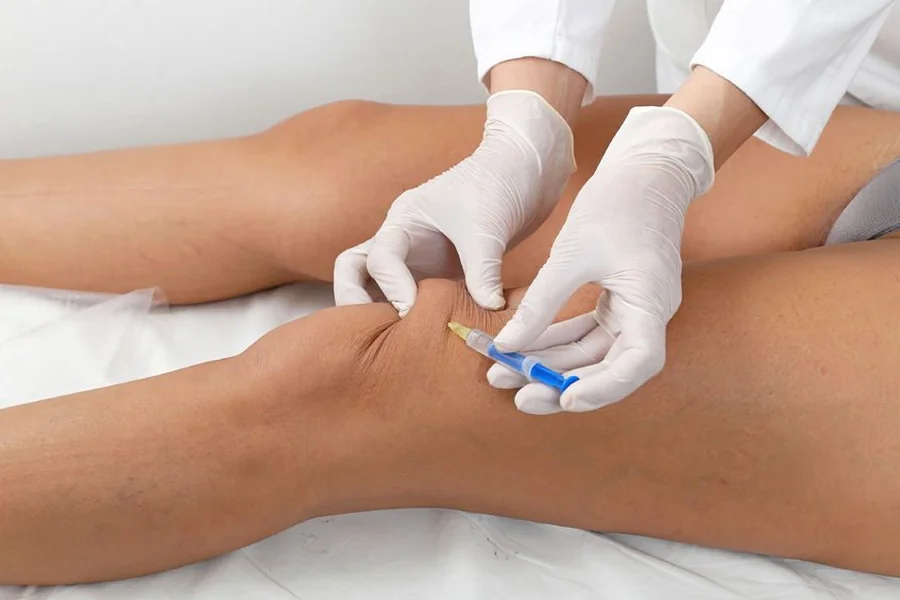
For decades, the standard office response to a swollen, painful knee joint was almost algorithmic. Patients complaining of sharp, mechanical pain from weight-bearing activities received an intra-articular corticosteroid injection. Relief arrived fast. Yet as the clinical understanding of cartilage metabolism evolved, the limitations of repeated steroid administration became uncomfortably clear. Corticosteroids excel at dampening acute inflammatory cascades, but their effect on joint mechanics is fundamentally subtractive rather than additive.
Rising interest in preserving joint architecture has shifted attention toward mechanical and biochemical restoration. Synthetic and naturally derived hyaluronic acid preparations—often referred to as viscosupplements—aim to rebuild the fluid mechanics of synovial fluid rather than simply suppressing immune responses. Synovial fluid in a healthy adult knee contains high concentrations of high-molecular-weight hyaluronic acid, acting both as a shock absorber during high-impact loading and as a low-friction lubricant during slow sliding movements. In an osteoarthritic knee, endogenous hyaluronic acid degrades rapidly, dropping in both molecular weight and concentration.
Choosing between these two modalities requires weighing immediate symptomatic suppression against long-term structural preservation. Corticosteroids deliver a swift, high-potency strike against synovial inflammation. They work. However, the intra-articular environment often pays a steep price over multi-year treatment courses, leading clinicians to reconsider how frequently they reach for the triamcinolone vial.
| Treatment Variable | Intra-Articular Corticosteroids | Hyaluronic Acid Viscosupplementation |
| Primary Mechanism | Immunosuppression & anti-inflammation | Rheological lubrication & fluid elasticity |
| Onset of Action | 24 to 72 hours | 2 to 5 weeks |
| Duration of Relief | 4 to 12 weeks | 24 to 26 weeks |
| Impact on Cartilage | Catabolic risk with repeat doses | Chondroprotective in preclinical studies |
| Common Regimen | Single injection (max 3–4/year) | Single or multi-injection series |
Inflammatory Suppression Versus Mechanical Rheology
Steroids act through direct binding to intracellular glucocorticoid receptors. This binding alters gene expression to downregulate pro-inflammatory cytokines like interleukin-1 beta (IL-1β) and tumor necrosis factor-alpha (TNF-α). By arresting the inflammatory cascade, corticosteroids rapidly reduce joint effusion, capillary permeability, and nociceptive signaling.
Pain drops within days. Patients leave happy.
Viscosupplementation, by contrast, operates on physical principles alongside secondary cellular interactions. Hyaluronic acid is a linear glycosaminoglycan composed of repeating disaccharide units of D-glucuronic acid and N-acetyl-D-glucosamine. When injected into the intra-articular space, it physically alters the viscosity and elasticity of degraded synovial fluid. Beyond simple lubrication, high-molecular-weight hyaluronic acid binds to CD44 receptors on chondrocytes, inhibiting matrix metalloproteinase production and reducing the degradation of endogenous collagen networks.
The American Academy of Orthopaedic Surgeons (AAOS) in its clinical practice guidelines notes that while intra-articular corticosteroids provide short-term pain relief for knee osteoarthritis, evidence supporting sustained functional improvement remains limited. Clinicians frequently encounter patients demanding a repeat steroid injection every three months because the pain relief evaporated. Medical representatives from pharmaceutical distributors often highlight the immediate patient satisfaction scores associated with fast-acting steroids, yet surgical literature suggests that repeated high-dose steroid exposures within three months of a total knee arthroplasty significantly increase post-operative infection risks.
Because of these concerns regarding tissue atrophy and infection risk, many practices transition patients with Kellgren-Lawrence grade 2 or 3 osteoarthritis toward intra-articular viscosupplements once the initial inflammatory surge subsides. When sourcing these medical devices, procurement officers look for trusted distribution channels that offer reliable supply chains for specialized avian and biofermented formulations. Clinics looking to stock high-purity sodium hyaluronate can purchase Supartz for your practice to evaluate manufacturer specifications, lot packaging, and single-dose syringe configurations designed for multi-injection series protocols. Reviewing these product parameters ensures the chosen molecular weight profile aligns directly with your clinic’s specific viscosupplementation protocols.
Transitioning from acute steroid suppression to a sustained viscosupplementation routine requires careful patient counseling regarding expectations. The onset of action for hyaluronic acid is fundamentally different from that of anti-inflammatory steroids.
Navigating the Onset Gap and Duration Metrics
Patients receiving a steroid injection typically experience marked pain reduction within 24 to 72 hours. This rapid response instills immediate confidence. However, clinical trial data tracked by the Osteoarthritis Research Society International (OARSI) demonstrate that the therapeutic benefit of corticosteroids peaks around two to four weeks post-injection, tapering off dramatically beyond week eight or twelve.
Viscosupplementation operates on an inverted curve.
Initial pain relief during the first two weeks following a hyaluronic acid injection is often modest, sometimes leading patients to believe the therapy failed. But between weeks four and eight, as the exogenous hyaluronan stimulates endogenous synovial synthesis—or more precisely, as the viscoelastic properties normalize the biomechanics of the joint capsule—pain scores decline steadily. This symptomatic relief frequently persists for six months or longer.
A recurring clinical dilemma involves the patient who presents with a hot, effused joint alongside moderate mechanical degeneration. Injecting a high-viscosity hyaluronic acid product directly into a joint space filled with inflammatory exudate is largely counterproductive; inflammatory enzymes like hyaluronidase will chop the long carbohydrate chains into ineffective fragments within hours. In these scenario-based presentations, a stepped strategy often proves superior. A low-dose corticosteroid can be deployed first to clear the effusion, followed weeks later by a structured viscosupplementation course once the joint microenvironment has stabilized.
Chondrocyte Safety and Safety Profiles
Safety concerns differ markedly between the two treatment classes. Corticosteroids carry a well-documented risk profile related to local tissue toxicity. High-frequency intra-articular steroid injections have been correlated with accelerated joint space narrowing, subchondral bone loss, and direct chondrocyte apoptosis in laboratory settings.
Hyaluronic acid injections exhibit a notably benign metabolic footprint. Because hyaluronan is an endogenous component of human connective tissue, systemic side effects are extraordinarily rare. The primary adverse events are localized to the injection site: minor post-injection flares, transient joint swelling, or temporary stiffness. High-molecular-weight formulations derived from bacterial fermentation generally carry a lower risk of avian-protein-induced pseudoseptic reactions compared to older rooster-comb derivatives.
The Food and Drug Administration (FDA) classifies intra-articular hyaluronic acid formulations as medical devices rather than pharmaceutical drugs because their primary therapeutic mechanism is physical friction reduction within the joint cavity. This regulatory distinction highlights their mechanical nature, though basic science literature consistently emphasizes their secondary biochemical signaling effects on synovial cells.
While the clinical safety profile of hyaluronan is clean, patient selection remains a significant variable in overall therapeutic success.
Patient Suitability and Exclusions
Not every osteoarthritic knee responds identically to hyaluronic acid or corticosteroids. Matching the therapy to the specific structural and clinical presentation prevents wasted resources and unrealized patient expectations.
Primary Candidates for Corticosteroid Therapy
- Patients experiencing acute inflammatory flares characterized by warmth, joint effusion, and severe night pain.
- Individuals requiring immediate, short-term mobility restoration for crucial events.
- Patients with advanced, end-stage osteoarthritis (Kellgren-Lawrence Grade 4) awaiting total joint replacement within 3 to 6 months.
Primary Candidates for Hyaluronic Acid Therapy
- Patients with mild-to-moderate osteoarthritis (Kellgren-Lawrence Grade 2 or 3) seeking prolonged functional preservation.
- Individuals who have experienced adverse reactions, glycemic spikes, or lack of efficacy with previous steroid injections.
- Diabetic patients in whom systemic corticosteroid absorption poses a significant risk of uncontrolled blood glucose dysregulation.
Clear Contraindications and Exclusions
- Active joint infection or systemic bacteremia.
- Skin infections, severe stasis dermatitis, or active psoriasis plaques directly overlying the intended injection site.
- Known hypersensitivity to specific formulation components (e.g., avian proteins in specific rooster-comb derivatives or bacterial proteins in fermented hyaluronans).
- Severe vascular compromise or unmanaged bleeding disorders that make intra-articular needle entry unsafe.
Practical Realities of Intra-Articular Delivery
Performing a clean intra-articular injection demands attention to anatomical landmarks and fluid mechanics. Whether targeting the knee via an anterolateral, anteromedial, or lateral patellofemoral approach, needle placement must be precise. A misplaced hyaluronic acid injection into the infrapatellar fat pad or periarticular soft tissue causes intense, localized pain and renders the therapy useless.
Many clinics now routinely employ point-of-care ultrasound to confirm intra-articular positioning prior to instillation. Ultrasound visualization eliminates guesswork, confirming that the needle tip rests beneath the patella or within the suprapatellar bursa. This is particularly crucial when administering high-viscosity hyaluronans, which require deliberate, steady thumb pressure on the syringe plunger to pass smoothly through a standard 21-gauge or 22-gauge needle.
Another practical challenge involves insurance pre-authorization workflows. While corticosteroids are inexpensive and universally covered under basic medical billing codes, viscosupplementation products often require extensive prior-authorization paperwork proving that conservative physical therapy and oral analgesics have failed. This administrative headache often delays care by several weeks, forcing clinicians to manage patient frustration while navigating payer-specific coverage policies.
Reframing the Osteoarthritis Care Continuum
Managing chronic knee pain is rarely a single-event intervention. Expecting any intra-articular therapy to reverse decades of mechanical wear or complete loss of articular cartilage is unrealistic.
Corticosteroids remain an important tool for acute inflammatory control. They act fast, cost little, and calm down hot joints. But relying on them as a recurring, long-term maintenance strategy introduces real risks of tissue breakdown and diminished return on efficacy.
Viscosupplementation offers a logical, mechanics-focused alternative for moderate degenerative disease. By restoring the viscoelastic properties of synovial fluid, hyaluronic acid therapies provide a sustained, multi-month window of improved mobility without threatening the metabolic health of remaining chondrocytes. When combined with targeted physical therapy, weight management, and patient education, targeted intra-articular therapies allow patients to maintain functional independence while deferring—or entirely avoiding—invasive surgical reconstruction.

Passionate about exploring diverse ideas and sharing inspiration, I curate content that sparks curiosity and encourages personal growth. Join me at ElementalNest.com for insights across a wide range of topics.