
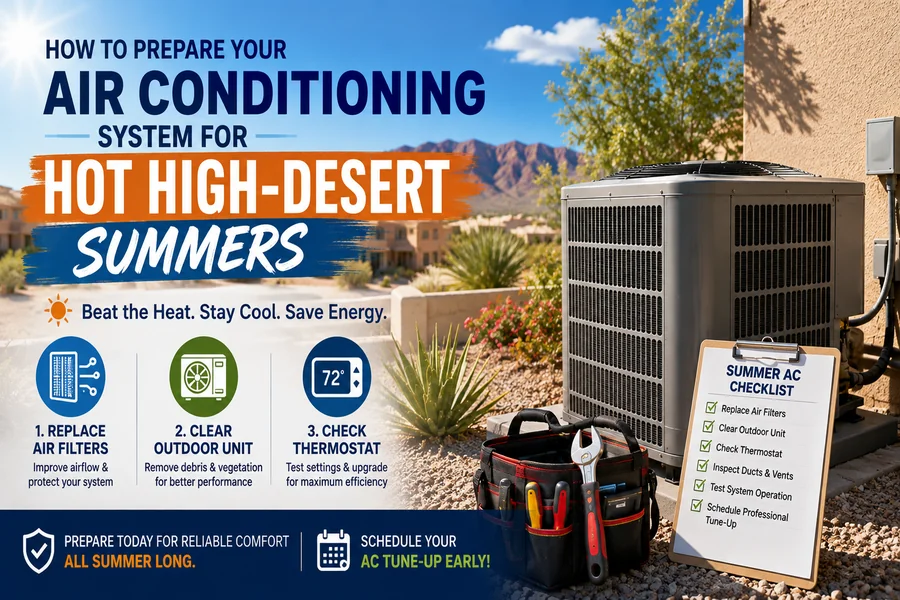
High-desert summers can be demanding on residential air conditioning systems. Long periods of intense sunshine, high daytime temperatures, dry conditions, and airborne dust can force cooling equipment to work harder precisely when homeowners depend on it most.
Preparing your air conditioning system for summer can help improve cooling performance, maintain consistent airflow, and reduce the likelihood of discovering a problem during the hottest part of the season. Better yet, many basic preparation steps can be completed before temperatures begin climbing.
From replacing filters to inspecting the outdoor condenser, here’s how to get your AC ready for a hot high-desert summer.
Why High-Desert Summers Are Hard on Air Conditioners
Air conditioners transfer heat from inside a home to the outdoors. As outdoor temperatures increase, maintaining a comfortable indoor temperature can become more demanding.
The high desert introduces another consideration: dust.
Dust, dirt, pollen, leaves, and other debris can accumulate around HVAC equipment and filters. When airflow becomes restricted, the system may have to work harder to maintain the thermostat setting.
Preparation is therefore about more than simply switching the thermostat from “heat” to “cool.” A few preventive steps can help ensure the entire cooling system is ready for increased seasonal demand.
1. Replace or Inspect Your Air Filter
Checking the HVAC air filter is one of the easiest ways to prepare for cooling season.
The filter captures airborne particles before they travel through certain parts of the HVAC system. As debris accumulates, airflow through the filter can become restricted.
Depending on your HVAC system and filter type, a replacement may be required at regular intervals. Homes with pets, significant dust, remodeling activity, or other sources of airborne particles may require more frequent filter checks.
Before summer:
- Locate the HVAC filter.
- Check whether it appears excessively dirty.
- Verify the correct filter dimensions.
- Replace or clean it according to manufacturer instructions.
- Continue checking it throughout cooling season.
Avoid automatically installing a filter with a much higher efficiency rating without confirming that it is appropriate for your system. Filters that create excessive resistance can affect airflow.
2. Clear the Outdoor AC Condenser
Your outdoor condenser needs adequate airflow to operate properly.
Over fall and winter, leaves, weeds, grass, and other debris can accumulate around the cabinet. Spring is a good time to inspect the area and carefully remove obvious obstructions.
Vegetation should be kept from crowding the equipment. Property owners should also avoid stacking tools, landscaping supplies, or other items next to the condenser.
You can visually inspect the exterior for obvious damage, but avoid opening panels or attempting internal electrical repairs yourself.
If the condenser appears damaged or extremely dirty, professional HVAC maintenance may be appropriate.
3. Test Your AC Before the First Heatwave
Don’t wait until the hottest afternoon of the year to discover that your air conditioner isn’t working correctly.
Test your cooling system during mild spring weather. Set the thermostat to cooling mode and give the equipment time to operate.
Pay attention to:
- Whether the system starts normally
- Airflow from supply vents
- Unusual noises
- Unexpected odors
- How consistently rooms cool
- Whether the system repeatedly starts and stops
- Water appearing around indoor HVAC equipment
Testing early provides time to schedule repairs before cooling companies face the heavier demand that often accompanies extreme temperatures.
4. Inspect and Optimize Your Thermostat
The thermostat acts as the control center for your HVAC system, so make sure it is working correctly before summer.
Check that the thermostat displays the correct indoor temperature and responds when you adjust the cooling setting.
Homeowners with older thermostats may also consider programmable or smart models. Depending on the equipment, these controls can make it easier to create temperature schedules and avoid cooling an empty home unnecessarily.
Useful features may include:
- Programmable schedules
- Remote smartphone controls
- Vacation settings
- Energy-use information
- Maintenance reminders
- Smart-home integration
The ideal thermostat depends on your HVAC equipment, so check compatibility before upgrading.
5. Check Vents and Airflow Throughout the House
Walk through your home and inspect the supply and return vents.
Make sure furniture, rugs, curtains, or boxes aren’t blocking airflow. If one room receives noticeably weaker airflow than others, don’t assume that closing vents elsewhere will solve the problem.
Uneven cooling can result from several issues, including duct leakage, insulation deficiencies, airflow restrictions, or HVAC equipment problems.
Persistent hot spots are worth investigating before peak summer temperatures arrive.
6. Reduce the Cooling Load on Your AC
Preparing your air conditioner also means helping the house retain conditioned air.
Your AC may have to work harder when outdoor heat enters through windows, doors, attics, and gaps in the building envelope.
Simple efficiency improvements can include:
- Closing blinds or shades during intense afternoon sunlight
- Checking weatherstripping around doors
- Sealing obvious air leaks
- Maintaining adequate insulation
- Using ceiling fans appropriately
- Avoiding unnecessary heat-generating activities during the hottest part of the day
These measures don’t replace HVAC maintenance, but they can reduce unnecessary cooling demand.
Signs Your Air Conditioner May Need Professional Attention
Even after basic maintenance, some AC problems require a qualified HVAC technician.
Consider scheduling an inspection if you notice:
- Warm air coming from vents while cooling is running
- Weak or inconsistent airflow
- Loud grinding, squealing, or banging noises
- Frequent on-and-off cycling
- Unexplained water around HVAC equipment
- Unusual electrical or burning odors
- Rooms that won’t reach the thermostat setting
- Unexpected increases in cooling-related energy consumption
Continuing to operate malfunctioning equipment can sometimes make the underlying problem worse.
When troubleshooting goes beyond simple filter, thermostat, or airflow checks, seeking expert AC repair in Albuquerque can help identify whether the problem involves electrical components, refrigerant, airflow, controls, or mechanical equipment.
Schedule Preventive AC Maintenance Before Peak Summer
Professional preventive maintenance can complement the steps homeowners perform themselves.
During an AC service appointment, a technician may inspect relevant electrical and mechanical components, evaluate system operation, check temperatures and airflow, and identify signs of developing problems.
The exact maintenance procedure will depend on the type and condition of the equipment.
Scheduling service before the busiest part of summer has another advantage: if the technician discovers a problem, you’ll have more time to address it before temperatures become extreme.
Prepare Early for a More Comfortable High-Desert Summer
Reliable air conditioning starts before the first major heatwave.
Inspect your filter, clear debris around the outdoor condenser, test your thermostat, check airflow, and run the cooling system before summer reaches full intensity. Pay attention to changes in noise, temperature, airflow, or operating behavior, as these can indicate that professional service is needed.
Most importantly, don’t wait for a complete breakdown before addressing obvious warning signs. Preventive air conditioning maintenance and early repairs can help keep your cooling equipment operating reliably when high-desert temperatures put it under the greatest strain.
A little preparation in spring can make a meaningful difference once summer arrives—helping your home remain cool, comfortable, and ready for the hottest days of the year.

Passionate about exploring diverse ideas and sharing inspiration, I curate content that sparks curiosity and encourages personal growth. Join me at ElementalNest.com for insights across a wide range of topics.