
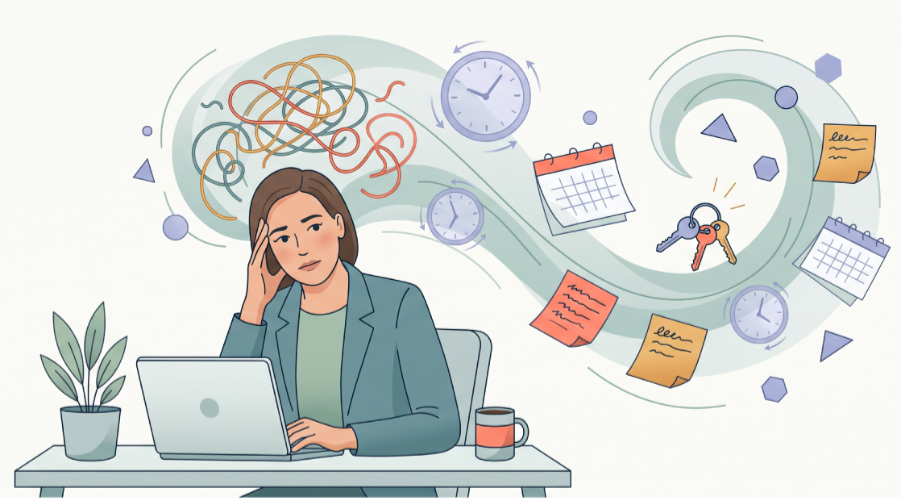
You forget a bill, lose your keys again, and wonder why simple tasks seem so difficult for you. Other people seem to manage daily life with ease, so you may start blaming yourself for being lazy or careless. Over time, that quiet shame can lower your confidence at work, at home, and with others.
But the real reason may not be a flaw in your character at all.
According to the CDC, about 15.1 million adults in the US have ADHD, and more than half were diagnosed as adults. Learning the signs and understanding why they are missed can help you understand your struggles and choose a helpful next step.
This article explains the common signs of ADHD in adults and why so many people remain undiagnosed for years.
Symptoms Of ADHD In Adults
ADHD can look different from one adult to another, but some signs appear again and again. Here are the ones you are most likely to notice.
1. Trouble Focusing and Staying on Task
The symptoms of ADHD in adults often begin with a wandering mind. You may zone out during meetings or forget what a friend just said, and even simple tasks may take longer than expected.
Still, focus is not always the issue. Many people with ADHD can spend hours doing something they enjoy, so others may think they could focus on anything if they just tried harder. The real problem is controlling attention and directing it where it is needed.
2. Poor Organization and Forgotten Responsibilities
Missed appointments, unpaid bills, and lost phones are common signs of poor organization. Even when you set reminders, your plan may fall apart after a few days, leaving you feeling like you are always behind.
Over time, a messy desk or home and a growing pile of chores can create stress with family and coworkers. People may call you careless, even though the real problem is planning and keeping track of tasks.
3. Constant Procrastination and Unfinished Projects
Putting off important tasks is another common sign that many adults notice. You may know a job is important and still find it very hard to begin, so deadlines arrive before you feel prepared.
Projects can follow the same pattern, because many adults start with lots of energy, but their interest may fade when the work becomes routine. This is not about laziness or poor values, because ADHD affects how the brain starts, plans, and finishes tasks.
4. Impulsive Choices and Inner Restlessness
Acting before thinking is also common, and it may show up as interrupting people, buying things on a whim, or taking risks such as driving too fast. These habits can create problems at work and with money and close relationships.
Restlessness can also look very different in adults than in children. Kids may run and climb, while adults may feel it inside as a constant need to stay busy, change tasks, or find something exciting to do.
Why ADHD Often Goes Unnoticed
Because these signs are common, many adults never understand the cause. The reasons below explain how ADHD can go unnoticed for years.
1. Adults Don't Fit the Childhood Picture of ADHD
For many years, people saw ADHD as a childhood problem, often pictured as a restless boy who could not sit still. Because of this idea, adults with quieter symptoms were easy to miss, even when they struggled every day.
Problems with attention and planning may not look dramatic, so doctors and families may not think about ADHD. Many adults spend years looking for other reasons until they finally learn that ADHD can continue into adulthood.
2. Coping Skills Hide the Symptoms for Years
Many children find ways to cope, and a structured home, good grades, or supportive parents can hide the problem for a long time. Hard work can also cover up focus problems, so others may see you as smart and capable.
Adult life, however, brings more responsibilities, from college and work to marriage, children, and bills. Once the load becomes heavier, old coping methods may stop working, and the hidden effort finally becomes clear.
3. Women's Symptoms Are Often Quieter
Boys have long been diagnosed more often than girls, partly because girls often tend to show quieter, less noticeable signs. A girl who daydreams may get much less attention than a classmate who disrupts the classroom.
Women may learn to hide their struggles to fit in, which is called masking and can hurt self-esteem and relationships. Without an explanation, they may blame laziness or poor discipline for problems that have another cause.
4. Other Conditions Look Like ADHD
Poor concentration can also be caused by anxiety, depression, too little sleep, substance use, or other health problems. Because the signs can overlap, ADHD may be mistaken for something else, so the real cause can stay hidden.
It can also exist with these conditions, and then the other problem may get all the attention. This is why an online quiz cannot confirm ADHD, while a full assessment considers your history, health, and symptoms in different settings.
Conclusion
Struggling with focus, organization, and finishing tasks year after year can make you doubt yourself. However, these patterns often have a real cause, and noticing them is an important first step toward understanding why daily life has felt so difficult.
Talking to a doctor or mental health professional is a good next step. Bring a few real examples so you can explain your concerns clearly. Getting an answer can bring relief, and the right support can make everyday life feel much easier to manage.

Passionate about exploring diverse ideas and sharing inspiration, I curate content that sparks curiosity and encourages personal growth. Join me at ElementalNest.com for insights across a wide range of topics.