
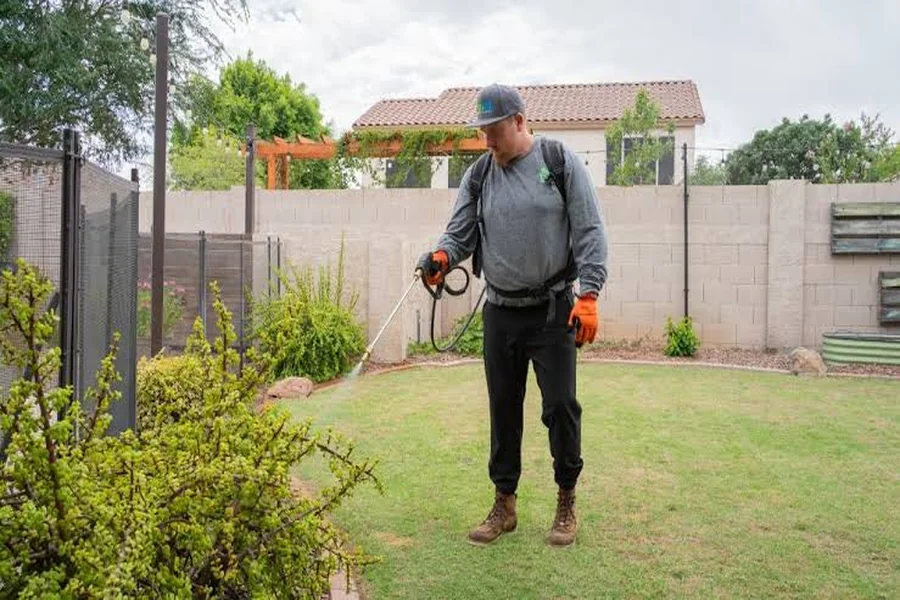
Eco-conscious pest control starts with prevention: seal entry points, remove food, water, and shelter, and decide how many pests you can tolerate. Greener sprays come last. Most low-impact gains come from exclusion and habitat changes, using products only when a real problem remains and the label has been checked.
Many homeowners who want a greener approach start by looking for a better spray. The more effective move is usually to need less spray at all. Pests come indoors for food, water, and shelter, and removing those three things does more for both your home and the environment than any product swap.
What Does “Eco-Friendly” Mean in Pest Control?
The label is used loosely. In its strongest sense, eco-friendly pest control means choosing methods that limit harm to people, pets, pollinators, waterways, and non-target wildlife. In its weakest sense, it means a product with a leaf on the packaging and a plant-derived ingredient list.
That gap matters because “natural” does not automatically mean “low impact.” Some plant-derived insecticides, such as pyrethrins, are toxic to bees and fish, while some synthetic baits are used in tiny, contained quantities. Homeowners who want a ready range of eco-friendly pest control options can browse one, but the question to ask of any product is how it works, where it ends up, and whether it is needed at all.
The table below compares the common approaches on the points an eco-conscious buyer usually cares about.
| Approach | Typical environmental impact | Evidence of effectiveness | Best used for |
| Exclusion (sealing gaps, screens) | Very low | Strong | Rodents, ants, flies, spiders |
| Habitat and moisture control | Very low | Strong | Ants, cockroaches, silverfish |
| Traps and monitoring | Low | Good | Rodents, flies, pantry pests |
| Targeted baits | Low to moderate | Good | Ants, cockroaches |
| Broad-spectrum sprays | Moderate to high | Good, short-lived | Last resort, targeted spots |
Reading down the table, the lowest-impact methods are also the best supported, which is why prevention comes first. The next section explains what that looks like in practice.
Why Is Prevention the Lowest-Impact Intervention?
Prevention works because it addresses the cause. A mouse can pass through a gap about the width of a pencil, and many insects need far less. Sealing those gaps with steel wool, copper mesh, caulk, or door sweeps stops entry without releasing anything into the home.
Habitat control follows the same logic. Pests need three things, and each can be reduced:
1.Food: store pantry items in sealed containers, clean crumbs and grease, and take out rubbish before it builds up.
2. Water: fix leaks, ventilate bathrooms, and empty trays and standing water around the home.
3. Shelter: clear clutter, trim vegetation away from walls, and store firewood off the ground and away from the house.
None of these steps cost much, and none leaves a residue. They also last longer than a spray, which controls today’s pests but does nothing about tomorrow’s visitors. A home that offers little food, water, or shelter simply attracts fewer of them.
Which Non-Chemical Controls Have Real Evidence Behind Them?
Exclusion and sanitation have the strongest record, and integrated pest management, the framework used by public health agencies and extension services, is built around them. Monitoring comes next: sticky traps placed along walls show what is present, where it is entering, and whether your efforts are working.
Mechanical traps work well for rodents and flies, and diatomaceous earth and boric acid can help with crawling insects when applied in thin layers in sealed cracks and voids. Neither is risk-free, so keep them away from children and pets. Homeowners who want a broader overview of what pests commonly show up and how they are handled can read this guide to common household pests, which pairs well with a prevention plan.
Some other methods have weaker or mixed evidence. Essential oil sprays and peppermint have limited, short-lived effects in most studies, and ultrasonic repellers have inconsistent results at best. They are not harmful to try, but they should not stand in for sealing and sanitation.
When Is a Product Warranted, and What Should You Check on the Label?
Sometimes prevention is not enough. An established ant colony, a cockroach infestation, or a rodent problem inside the walls may need targeted treatment, and waiting can cause more harm than acting. The aim is to choose the narrowest tool that solves the problem.
Before buying, check the points below on the label:
1.The target pest: use products registered for the pest you actually have.
2. The active ingredient: look it up, rather than relying on front-of-pack wording.
3. The signal word: “Caution” is the lowest hazard level, while “Warning” and “Danger” indicate higher toxicity.
4. Application directions: indoor and outdoor use often differ, and following the label is legally required in many countries.
5. The registration number: in the United States, an EPA registration number shows the product has been reviewed.
Baits and gels placed in cracks generally pose less risk than open sprays, and spot treatment beats whole-room application. If a problem keeps returning, a licensed professional can find the source, which is often more effective than repeated treatment.
Frequently asked questions
What is the most eco-friendly way to control pests at home?
Prevention: sealing entry points, removing food and water sources, and reducing clutter and shelter. These methods are well supported by evidence and leave no residue.
Are natural pesticides always safer than synthetic ones?
No. Some plant-derived products are toxic to bees, fish, and pets, and some synthetic baits are used in very small amounts. Safety depends on the specific product and how you use it.
Do essential oils work against pests?
Results are limited and short-lived in most studies. They may briefly repel some insects, but they do not replace sealing and sanitation.
What is a tolerance threshold?
It is the level of pest presence you are willing to accept before acting. A single spider may not justify treatment, while rodent signs usually do.
When should I call a professional?
When a problem returns after you have sealed and cleaned, when you suspect pests inside walls, or when the species involved can damage the structure or affect health.

Passionate about exploring diverse ideas and sharing inspiration, I curate content that sparks curiosity and encourages personal growth. Join me at ElementalNest.com for insights across a wide range of topics.