
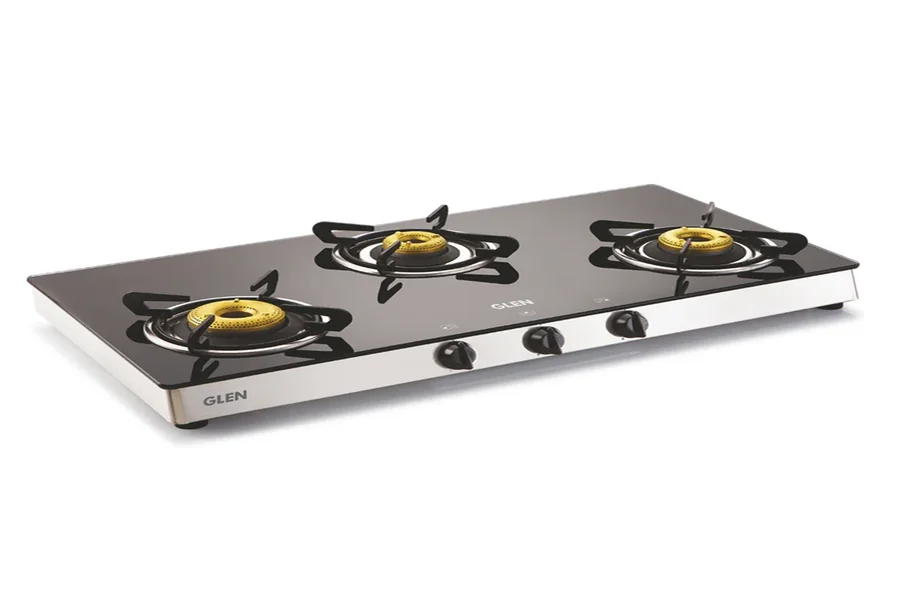
Retailers rarely flag fuel-type compatibility when selling a gas stove. The assumption is that all stoves work on all gas types, and that assumption is wrong. PNG and LPG operate at different pressures and require different burner injector sizes. A stove bought without confirming this match will produce weak, uneven flames and incomplete combustion regardless of brand or price. For any household shortlisting the best 3 stove gas burner option, fuel compatibility is the specification that determines whether the stove performs correctly from day one. This guide covers every technical checkpoint worth verifying before purchase.
Why PNG and LPG Require Different Stove Configurations
LPG is stored in cylinders as compressed liquid. It vaporises at the regulator valve and flows to the burner at a relatively high operating pressure, typically between 28 and 35 mbar in domestic use. PNG is supplied through underground pipelines at a much lower pressure, generally around 21 mbar, and is composed primarily of methane rather than the propane-butane blend in LPG.
Each burner on a gas stove contains a small metal nozzle called an injector. Its internal orifice diameter is precision-engineered for a specific gas type and pressure range. LPG injectors have narrower orifices because the gas arrives under greater pressure. PNG injectors require wider orifices to allow adequate gas flow at lower pipeline pressure.
Connecting an LPG-configured stove to a PNG line produces a starved flame – thin, yellowish, and thermally inefficient. Connecting a PNG-configured stove to an LPG cylinder produces an oversized flame that is a direct safety hazard. Any gas chulha 3 burner purchased for either fuel source must either come pre-configured for that fuel type or include both injector sets with documented conversion instructions.
Confirming Fuel Compatibility Prior to Purchase
The product label, spec sheet, or company website would mention whether the stove can only use LPG or can be used with both. The terms include: “PNG & LPG compatible,” “dual fuel,” “convertible” and “PNG injectors included.”
When any of these terms do not appear in the product literature, contact the manufacturer’s technical department and ask two direct questions. Are you able to operate on PNG? Is your warranty still valid even when converted to use PNG injectors? Some manufacturers require that injector swaps be performed by their authorised service personnel. This affects both setup time and post-purchase cost and should be confirmed before the transaction.
Burner Material: Why Brass Outperforms Aluminium
The two materials used for gas stove burners in the Indian market are brass and aluminium. The difference between them becomes significant over 18 to 24 months of regular use.
Forged brass burners resist corrosion, maintain precise flame port geometry through repeated thermal cycling, and sustain consistent heat output over years of daily operation. Aluminium burners oxidise in humid kitchen environments, and their flame ports deform or clog faster under exposure to cooking residue and heat. In a PNG household where the stove operates continuously without the natural interruptions that accompany LPG cylinder replacement, burner degradation directly affects cooking performance and energy efficiency. The best 3 stove gas burner for daily PNG use should have forged brass burners as a baseline specification, not an upgrade.
Cooktop Surface: Glass vs. Stainless Steel
Toughened glass cooktops clean faster. Spills sit on a smooth, non-porous surface and wipe away without scrubbing around burner rings or drip trays. The structural limitation is thermal shock sensitivity. Cold liquid spilled on a hot glass surface, or a heavy vessel dropped from height, can crack the cooktop. Glass thickness determines resistance: 8mm toughened glass withstands daily kitchen stress meaningfully better than 4mm or 6mm variants.
Stainless steel cooktops tolerate physical impact and thermal shock without risk of cracking. They are prone to staining around the burner areas over time and require consistent cleaning to prevent discolouration. For a gas chulha 3 burner in a PNG kitchen with multiple cooking cycles per day, stainless steel provides better structural longevity, particularly when cookware is heavy.
Pan Supports, Ignition Type, and Safety Certification
Pan supports determine cookware stability during high-temperature cooking. Vitreous enamel-coated pan supports resist rust, tolerate repeated exposure to acidic spills, and clean without abrasive effort. Wide, square-section supports distribute the weight of heavy pressure cookers and deep vessels more evenly than thin circular bars. Removable pan supports allow thorough cleaning of the cooktop surface underneath without obstruction.
Ignition type is a functional preference. Auto-ignition generates a spark through a battery-powered piezo mechanism when the knob is pressed and turned. It requires a functioning battery and clean electrode tips. Cooking residue on the electrode tip is a common cause of ignition failure and needs periodic cleaning. Manual ignition has no battery dependence or electronic components. Both types perform reliably when maintained correctly.
ISI certification under IS 4246 is a mandatory safety standard for gas cooking appliances in India. It certifies gas-tightness at all connections, flame stability across pressure ranges, thermal resistance of materials, and structural integrity. This certification applies to both PNG and LPG stoves and is not negotiable. Any stove without a valid ISI mark should not be considered, regardless of price or brand.
A Compatibility Mistake That Frequently Occurs
Many buyers associate a 360-degree revolving inlet nozzle with PNG compatibility. These are unrelated features. A swivel inlet nozzle allows the gas pipe to connect from multiple angles for installation flexibility. It does not indicate anything about injector configuration. A stove with a revolving inlet and LPG injectors will still underperform on a PNG line.
Conclusion
Three specifications determine whether a 3-burner gas stove performs correctly on PNG or LPG: injector configuration matched to the fuel source, forged brass burners for sustained durability, and a cooktop material suited to the kitchen’s daily cooking volume. Pan support design, ignition type, and ISI certification complete the evaluation. For buyers who need documented PNG compatibility alongside brass burner construction and ISI-certified builds, Glen Appliances offers a dedicated 3-burner gas stove range covering both glass and stainless steel cooktop variants. The best 3 stove gas burner is one whose technical specifications align precisely with the fuel type and usage pattern of the household it serves, and Glen Appliances addresses that requirement across its cooking appliance range.

Passionate about exploring diverse ideas and sharing inspiration, I curate content that sparks curiosity and encourages personal growth. Join me at ElementalNest.com for insights across a wide range of topics.