
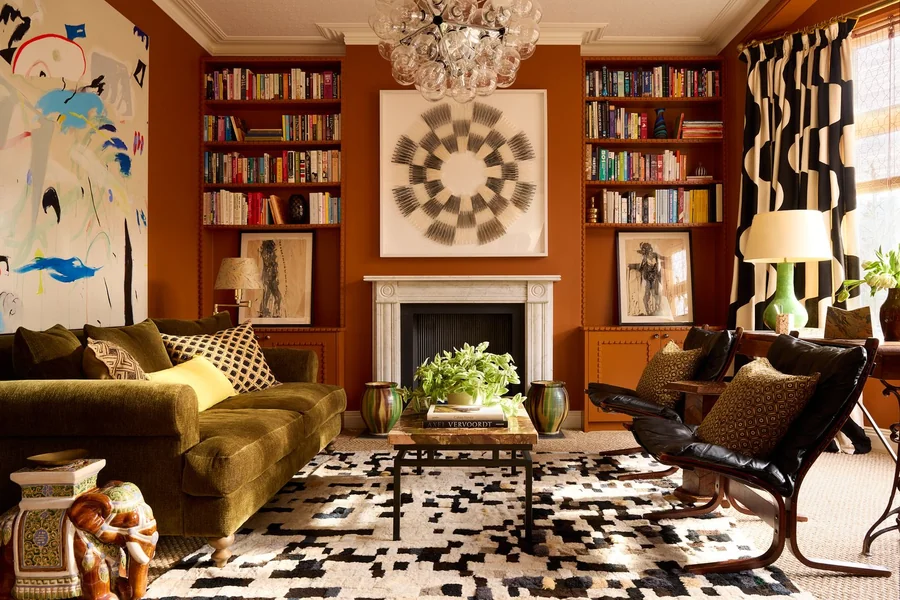
Few minerals make a statement quite like cinnabar. Its deep, almost lacquered red has been used for centuries in art, jewellery and decorative objects across China and Mesoamerica, and that same vivid colour is what draws contemporary decorators to it today. Used thoughtfully, a cinnabar accent piece brings warmth and an unmistakable focal point to a shelf, console or meditation corner.
In design terms, cinnabar pairs beautifully with natural textures such as raw wood, linen and brass, where its saturated tone reads as luxurious rather than loud. A single polished piece or carved object is often all a room needs, which makes it an ideal less-is-more addition for those who like curated, intentional interiors.
Cinnabar is also rich in symbolism. Many traditions associate its red with vitality, grounding and transformation, which is why it frequently appears in wellness and intention-setting spaces. If you are drawn to the stone for that reason, it is worth reading up on the genuine cinnabar stone properties and meanings before incorporating it into your home.
One important note: natural cinnabar is a mercury sulfide, so authentic specimens should be displayed rather than handled frequently, kept away from heat, and simply enjoyed for their colour and craftsmanship. Many decorative cinnabar items are in fact carved lacquer in homage to the mineral, so knowing the difference helps you choose pieces that match your intentions, whether purely aesthetic or more spiritual.
Styled with care and a little knowledge, cinnabar becomes more than a pop of colour: it is a conversation piece with deep cultural roots and a striking presence in any considered space, from a minimalist mantel to a richly layered gallery wall.
When sourcing cinnabar, look for pieces with an even, saturated colour and a smooth finish, and always buy from sellers who are transparent about whether an item is natural mineral or carved lacquer. Pair a single piece with neutral tones so its red can lead, and give it room to breathe rather than crowding it among competing accents. In small spaces, a compact carved figure or a polished sphere works beautifully on a bookshelf or entryway tray; in larger rooms, a bolder sculptural piece can anchor a sideboard or mantel. However you style it, cinnabar rewards restraint, letting its colour and history do the talking while you build a calm, intentional and visually memorable interior. Cared for properly, kept dry, dusted gently and away from direct heat, a good cinnabar piece keeps its lustre for years and remains a quiet focal point that visitors notice and ask about.

Passionate about exploring diverse ideas and sharing inspiration, I curate content that sparks curiosity and encourages personal growth. Join me at ElementalNest.com for insights across a wide range of topics.