
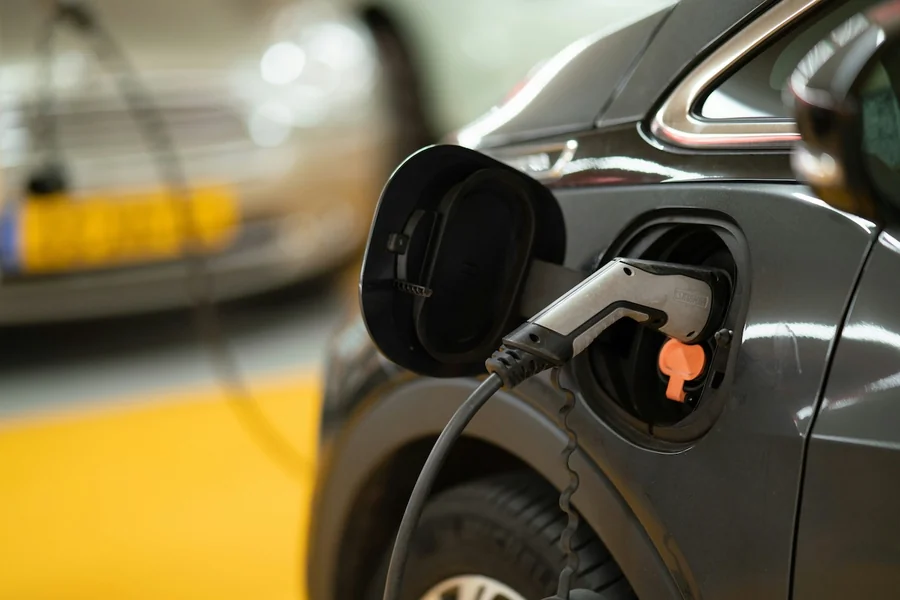
This transition has prompted a serious re-evaluation of workshop safety and workflow design. According to the development team at ZECA, one of the world’s leading companies in the field of industrial equipment, the transition to electric mobility requires more than just buying specialized protective gear; it demands a systematic rethink of how electricity is delivered to the vehicle. Their engineers point out that leaving heavy charging and testing cables coiled on the floor is not just an obstacle to movement, but a direct threat to the delicate diagnostic process, as tangled lines are highly susceptible to mechanical damage and signal interference.
High voltage and physical hazards: the strict rules of the EV bay
Working with hybrid and electric vehicles means dealing with voltages ranging from 400V to 800V. Under these conditions, international safety standards require workshops to establish a clearly demarcated “safety island” where only certified technicians can operate. In these designated zones, maintaining a completely dry, clean, and organized floor is not just a recommendation; it is a mandatory safety requirement.
A simple trip over a loose cable or a diagnostic line near an open high-voltage battery pack can have catastrophic consequences. By lifting these cables off the floor, workshops remove the primary physical hazard from the bay. This simple organizational step significantly reduces the risk of accidental falls, protecting the technician and ensuring that work on sensitive electrical components is carried out in a controlled, stress-free environment.
Protecting diagnostic signals and heavy charging cables
Electric vehicle maintenance relies heavily on precise diagnostic data. The cables connecting diagnostic tablets to the vehicle’s onboard computers are highly sensitive. When left on the floor, these cables are frequently run over by heavy tool trolleys, stepped on by technicians, or exposed to corrosive chemical spills.
The technical experts at ZECA suggest that keeping these cables suspended on retractable overhead reels is the most effective way to preserve their signal integrity. When the cables are kept off the floor, they are protected from being crushed, which prevents internal micro-fractures in the copper wiring that could lead to false error codes and hours of unnecessary troubleshooting. Furthermore, overhead delivery keeps the heavy, bulky charging cables organized and immediately accessible at the perfect working height.
Maximizing throughput in the modern workshop
In a professional auto shop, time is the ultimate currency. Because electric vehicles have fewer moving parts, their mechanical maintenance actually takes less time than traditional combustion engines. However, the preparation time—including setting up safety barriers, connecting diagnostic equipment, and managing charging levels—can slow down the overall process.
By transition to an organized, overhead utility layout, auto shops can dramatically reduce these setup times. Technicians no longer waste minutes untangling lines or searching for the correct charger. Everything is suspended directly above the bay, ready to be plugged in. This streamlined workflow allows workshops to service more vehicles per day, maximizing the return on investment for their EV diagnostic equipment and keeping the workshop floor safe and clean.
Frequently Asked Questions (FAQ)
Why is cable management more critical in an EV bay than in a traditional mechanical bay?
Because EVs operate at high voltages (up to 800V), meaning a fall or trip near an open circuit carries a severe risk of electric shock. Additionally, EV diagnostic cables are highly sensitive and easily damaged if left on the floor, which can lead to false readings.
How does protecting diagnostic cables prevent false error codes?
Tangled or crushed cables often suffer from micro-fractures in their internal copper wiring. This disrupts data transmission between the vehicle and the diagnostic computer, leading to false error readings and wasting valuable troubleshooting time.
Can high-power EV charging cables be managed with overhead reels?
Yes, specialized heavy-duty retractable reels are designed specifically to handle the weight and electrical load of high-power charging cables, keeping them clean, safe, and easily accessible from above when needed.

Passionate about exploring diverse ideas and sharing inspiration, I curate content that sparks curiosity and encourages personal growth. Join me at ElementalNest.com for insights across a wide range of topics.