
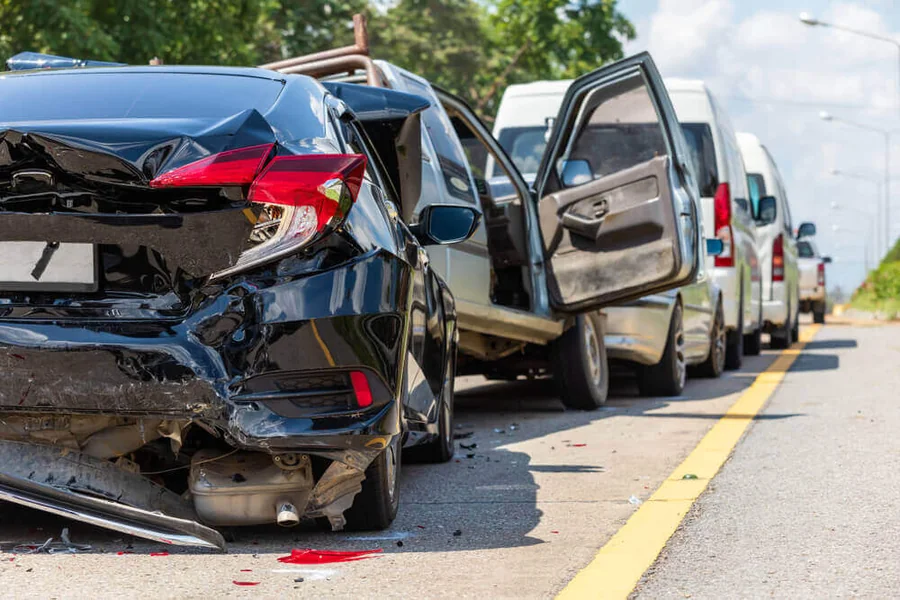
A multi-vehicle collision can be harder to investigate than a two-car crash because several impacts may occur within seconds, different drivers may describe the sequence differently, and more than one person may have contributed to the outcome. In Austin, these cases are generally governed by Texas rules on negligence, proportionate responsibility, insurance, and civil procedure.
Working with car accident attorneys in Austin, TX may involve reconstructing the order of impacts, identifying every potentially responsible driver, reviewing available insurance coverage, and determining how Texas law allocates responsibility. A driver does not automatically become responsible for every resulting injury merely because that vehicle made the first contact. The evidence surrounding the entire sequence matters.
Police May Treat a Chain Reaction as One Crash
A pileup can involve several collisions but still be documented as a single crash. The Texas Department of Transportation’s 2025 instructions for peace officers state that chain-reaction events are generally treated as one motor vehicle crash unless there was a stabilized situation between separate events. If the chain is definitively broken by time or place, officers are instructed to report the events as separate crashes.
The same TxDOT instructions explain how officers report additional vehicles when one CR-3 form does not have enough space for every unit. They also provide fields for contributing factors, vehicle information, environmental conditions, an investigator’s narrative, and a diagram. Those details can become useful when several drivers later disagree about where the sequence began or which actions contributed to later impacts.
Responsibility Can Be Divided Among Several Drivers
Texas uses a proportionate-responsibility system for claims covered by Chapter 33 of the Civil Practice and Remedies Code. Section 33.003 directs the factfinder to determine percentages of responsibility for people or entities included under the statute. In a multi-car collision, this means fault does not have to be assigned entirely to one driver.
Consider the legal structure rather than assuming that the last vehicle in a chain is always responsible for everything that occurred before it. Evidence may show that separate acts contributed to the same harm. The percentage assigned to each responsible party affects how damages are allocated if the case reaches a judgment.
An Injured Driver’s Own Conduct Can Affect Recovery
Texas law also allows responsibility to be assigned to the claimant. Under Section 33.001, a claimant cannot recover damages in an action governed by Chapter 33 if the claimant’s percentage of responsibility is greater than 50 percent. When the claimant remains eligible to recover, Section 33.012 requires the court to reduce the damages by the claimant’s assigned percentage of responsibility.
This makes evidence about every driver’s conduct significant. Lane position, following distance, traffic signals, vehicle movements, witness observations, photographs, video, and other records may affect how the sequence is understood. A multi-vehicle case can therefore involve several competing versions of the same few seconds rather than one simple dispute over which vehicle struck another.
One Defendant May Sometimes Face Broader Liability
Texas law generally provides that a liable defendant is responsible for the percentage of damages corresponding to that defendant’s percentage of responsibility. Section 33.013, however, contains an important exception: a defendant assigned more than 50 percent responsibility can be jointly and severally liable for the recoverable damages, subject to the statute’s terms and other specified circumstances.
That rule can make allocation particularly consequential in a multi-vehicle case. A finding that one driver bears 20 percent responsibility has different legal consequences from a finding exceeding 50 percent. The percentages are therefore more than descriptive labels; they can determine the extent of a defendant’s financial responsibility after judgment.
Multiple Insurance Policies Can Enter the Claim
Every potentially responsible driver may have a separate auto policy with its own liability limits. The Texas Department of Insurance explains that liability coverage pays for injuries and property damage a driver causes, subject to policy limits. TDI also specifically cautions that Texas minimum liability limits may be insufficient when a driver causes a multi-vehicle crash or a vehicle is totaled.
Insurance companies may also disagree about their insureds’ responsibility. TDI notes that when another driver’s insurer disputes fault and refuses payment, a person with collision coverage may be able to pursue vehicle repairs through their own insurer, which can then seek payment from the other company. With several vehicles and carriers involved, property-damage and injury claims may proceed along different tracks.
Evidence Becomes More Important as the Number of Vehicles Grows
Multi-vehicle crashes can generate a large record. Each driver may have photographs, dash-camera footage, vehicle damage, phone records, insurance information, or a different account of the event. Nearby businesses or roadway systems may also possess video. TxDOT itself is the custodian of the official crash report, but it states that dash-camera footage, field notes, scene photographs, and similar investigative materials need to be requested from the investigating agency rather than TxDOT.
If a lawsuit becomes necessary, Texas Rule of Civil Procedure 192 provides formal discovery mechanisms that include requests for documents and tangible things, interrogatories, requests for admission, and depositions. These tools allow parties to investigate competing claims and defenses when voluntary exchanges do not resolve disagreements about the sequence of events.
One Driver Can Settle While Claims Against Others Continue
A multi-party case does not necessarily resolve through one agreement signed by everyone at the same time. One defendant may reach a settlement while disputes involving other defendants continue. Texas Section 33.012 addresses this situation by providing, for ordinary claims covered by the provision, that damages recovered through judgment are further reduced by the dollar amounts of settlements with other persons.
Settlement decisions therefore interact with the broader allocation of responsibility. Before resolving a claim against one participant, it is necessary to understand which parties remain involved, what claims are being released, and how Texas settlement-credit rules could affect later recovery. The presence of several drivers can make that analysis considerably more involved than settling a claim arising from a two-vehicle collision.
Multi-Vehicle Claims Depend on Reconstructing the Entire Sequence
To handle a multi-vehicle accident in Austin, you first need to understand what happened throughout the event. This includes the initial collision, later impacts, actions of non-colliding vehicles, road conditions, and driver behavior. TxDOT advises that officers report on any non-contact vehicle if its actions contributed to the crash.
Texas rules on proportionate responsibility determine how fault affects recovery and liability, while insurance coverage affects compensation sources. A careful investigation focuses on evidence, avoiding assumptions about the order of damage. In a multi-car crash, knowing the full sequence of events is crucial for determining legal responsibility.

Passionate about exploring diverse ideas and sharing inspiration, I curate content that sparks curiosity and encourages personal growth. Join me at ElementalNest.com for insights across a wide range of topics.