
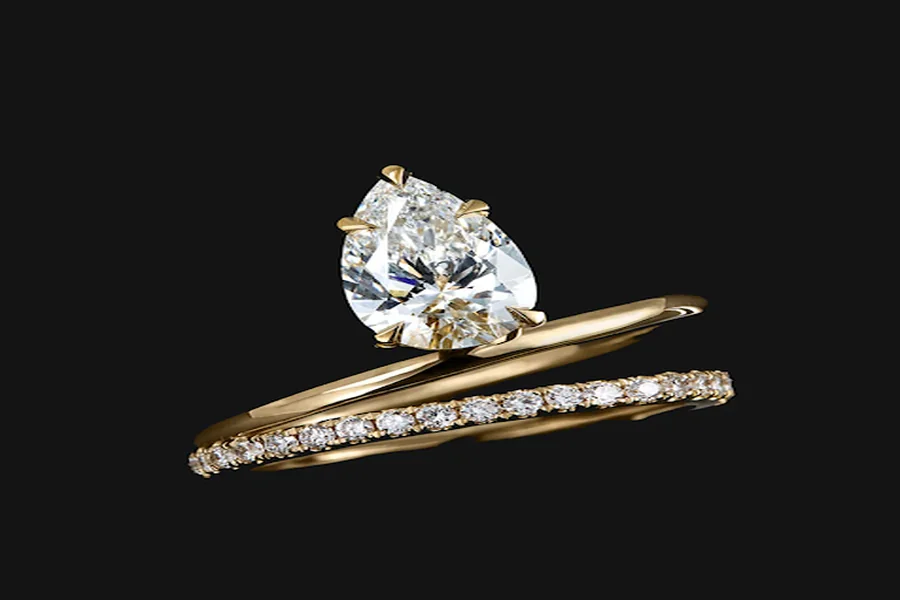
Six years ago, lab-grown diamonds were the awkward newcomer at the jewellery counter. Now they’re outselling mined stones in some categories, and couples want to know if the hype holds up once the ring’s actually on the finger.
What “Lab-Grown” Actually Means
A lab-grown diamond isn’t a fake or a simulant. It’s carbon, grown under heat and pressure in a controlled chamber rather than underground over a billion years, and it comes out with the same crystal structure, hardness and sparkle as a mined stone. Jewellers use one of two processes: HPHT (high pressure, high temperature) or CVD (chemical vapour deposition). Neither one is detectable to the naked eye, or even under most standard jewellers’ loupes. You need specialised equipment to tell the difference, and even then, it’s about spotting growth patterns, not judging beauty.
The Price Gap Isn’t Small
This is where most people’s decision actually gets made. A lab-grown diamond typically costs 60 to 80 percent less than a mined diamond of equivalent size, cut and clarity. That’s not a marketing number, either. It reflects the fact that lab-grown supply doesn’t carry the same extraction, mining rights and global logistics costs that mined stones do. So a couple with a $6,000 budget might land a 1.5 carat lab-grown stone where they’d only stretch to 0.7 carats with a mined equivalent. For a lot of buyers, that trade-off is the whole story.
Certification Still Matters
Don’t skip grading just because the stone is lab-made. A legitimate ring should still come with an independent certificate from GIA or IGI, detailing the four Cs: cut, colour, clarity and carat weight. This is where buyers get burnt, actually, more often with lab-grown than mined, simply because the market’s newer and less regulated in some corners. If you’re shopping locally, Cullen Jewellery’s Australian Lab-Grown Diamond is a good example of how this should be done properly, with every stone independently certified and set in Australian-made mounts rather than imported as a finished piece. Ask for the certificate before you ask about the setting.
The Sustainability Question, Honestly Answered
Lab-grown diamonds are often marketed as the sustainable choice, and there’s some truth to that: no land disturbance, no displacement of mining communities, no open-pit scars. But it’s not a clean win either. Diamond growth chambers use a lot of electricity, and unless that power comes from renewables, the carbon footprint isn’t automatically lower than mining. If sustainability is genuinely driving your decision, ask the retailer where their stones are grown and what powers the facility. A vague answer is a red flag.
Where This Actually Lands
The “worth it” question isn’t really about diamonds at all. It’s about what the ring is meant to represent. If resale value and rarity matter to you, mined stones still hold a premium, though even that gap is narrowing as more buyers accept lab-grown as the norm rather than the alternative. If you’d rather put the saved money toward the honeymoon, the house deposit or simply a bigger stone, lab-grown makes that trade-off possible without compromising on how the ring actually looks or wears. The stone will pass every test a jeweller runs on it. What you’re really choosing is where the money goes instead.

Passionate about exploring diverse ideas and sharing inspiration, I curate content that sparks curiosity and encourages personal growth. Join me at ElementalNest.com for insights across a wide range of topics.