
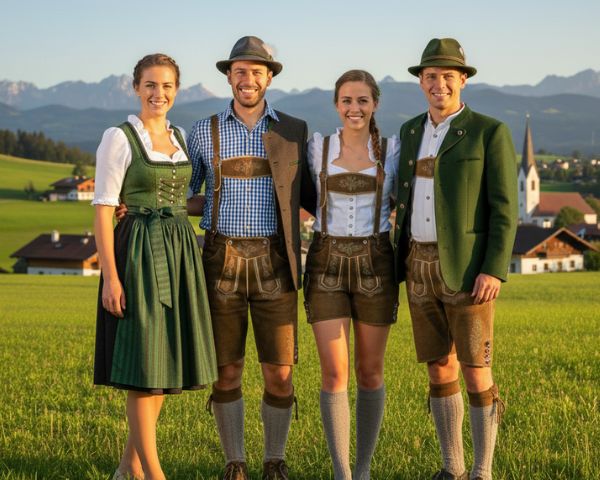
Traditional Lederhosen have come a long way from their origins as working garments worn by Bavarian farmers and Alpine labourers. In the United States, they have grown from a niche cultural item associated almost exclusively with Oktoberfest celebrations into a recognised category of quality clothing that people actively seek out, invest in, and wear across a range of occasions.
The American market for traditional Bavarian clothing has matured considerably, and with that maturity has come a clearer understanding of what separates genuinely well-made Lederhosen from the mass-produced imitations that flood costume and novelty retailers. This guide covers what makes traditional Lederhosen worth owning in 2026, how the market has evolved, and what to look for when buying in the USA.
The Origins of Traditional Lederhosen
Understanding what traditional Lederhosen are and where they come from, provides a useful foundation for evaluating the options available today.
Lederhosen, which translates literally as leather breeches, originated in the Alpine regions of Bavaria and Austria in the 18th century. They were practical working garments designed for durability in agricultural and mountain environments, the leather resisted wear from rough terrain, required minimal maintenance, and improved with age rather than deteriorating.
Key characteristics of authentic traditional Lederhosen:
- Leather construction: traditionally made from deer, goat, or cowhide; genuine leather softens and molds to the wearer over time in a way synthetic materials cannot replicate
- Embroidery: hand-stitched decorative patterns on the bib, suspenders, and knee sections; motifs vary by region and reflect specific Bavarian cultural traditions
- Button hardware: horn or metal buttons rather than plastic; traditional button styles are a visible marker of authentic construction
- Suspenders (Hosenträger): an integral structural element, not a decorative addition; traditionally embroidered and crossed at the back
- Length variations: short (above the knee) for festival and summer wear; knee-length (Kniebundhosen) for more formal or cooler weather occasions
The garment that most Americans associate with Oktoberfest is typically the short style and that remains the most widely sold version in the US market.
How Traditional Lederhosen Became a Modern Trend in the USA
The growth of Oktoberfest culture across the United States has been the primary driver of increased demand for traditional Lederhosen. What began as community celebrations in cities with established German-American heritage, Cincinnati, Milwaukee, Leavenworth, Fredericksburg, has expanded into a nationwide phenomenon, with Oktoberfest events now held in cities with little historical connection to German culture.
With that expansion has come a shift in how Americans approach Oktoberfest clothing. In the early years of the American Oktoberfest trend, most attendees wore whatever approximation of Bavarian dress was available locally, often thin, synthetic costumes that bore little resemblance to genuine Trachten. That approach has changed noticeably over the past decade.
Factors driving the shift toward authentic traditional Bavarian clothing:
- Increased awareness through travel: more Americans have attended the original Munich Oktoberfest and seen what genuine Trachten looks like in its natural context
- Social media visibility: images of authentic festival dress have raised the standard of what people aspire to wear
- Growing availability: specialist Trachten retailers now ship to the USA, making genuine traditional Lederhosen accessible without travelling to Europe
- Investment mindset: as awareness of quality has grown, so has willingness to spend more on garments that last multiple seasons rather than a single use
The result is that the American market for traditional Bavarian clothing in 2026 is more informed and more quality-conscious than at any previous point.
Men’s Traditional Lederhosen: What to Look for in 2026
For men purchasing traditional Lederhosen in the USA, the range of options has expanded considerably. Understanding what distinguishes a quality pair from an imitation helps narrow the field quickly.
Construction quality indicators:
| Feature | Authentic | Imitation |
| Material | Full-grain or top-grain leather | Bonded leather or synthetic |
| Embroidery | Hand-stitched, consistent pattern | Machine-printed or absent |
| Hardware | Horn or brass buttons | Plastic buttons |
| Suspenders | Structurally integral, embroidered | Decorative, loosely attached |
| Fit | Sized to measurements | Generic S/M/L sizing |
| Aging | Softens and improves over time | Cracks or peels over time |
Style options commonly available in the USA:
- Short Lederhosen (Kurze Lederhosen): above the knee; the standard festival style and the most widely available in the US market
- Knee-length Lederhosen (Kniebundhosen): a more formal style that suits cooler weather and more traditional occasions
- Rustic/distressed styles: pre-aged leather with a worn finish; popular in the US market as a casual alternative to the more polished festival style
- Contemporary cuts: slimmer silhouettes that maintain traditional construction while accommodating modern fit preferences
For first-time buyers, a short style in natural brown leather with traditional embroidery and horn buttons represents the most versatile and authentic starting point.
Women’s Lederhosen: The Fastest Growing Category
Women’s Lederhosen have undergone the most significant transformation of any category within the traditional Bavarian clothing market in the United States. What was once considered an unusual alternative to the Dirndl is now a mainstream and fully accepted part of Oktoberfest clothing culture for good reason.
Why women’s Lederhosen have grown in popularity:
- They offer a more practical and physically comfortable alternative to a full Dirndl for a long festival day
- The silhouette is versatile: women’s Lederhosen can be styled for festival wear, casual outdoor occasions, and themed events beyond Oktoberfest
- Authenticity is maintained: genuine women’s Lederhosen are made to the same leather and construction standards as men’s styles
- The range of available styles has expanded considerably, with options in different lengths, leather colours, and embroidery patterns
Key differences between women’s and men’s Lederhosen:
| Feature | Women’s Lederhosen | Men’s Lederhosen |
| Length | Typically shorter – mid-thigh | Short to knee-length |
| Cut | More tailored through the hip and thigh | Straighter cut |
| Embroidery | Often more detailed or floral-influenced | More geometric, regional motifs |
| Pairing | Traditional blouse or Trachten shirt | Trachtenhem (checked or plain) |
| Suspenders | Present but often narrower | Wider, more structured |
For women purchasing Lederhosen in the USA, the same quality indicators apply as for men genuine leather, hand-stitched embroidery, and metal or horn hardware are the markers that distinguish authentic traditional Bavarian clothing from a costume.
Styling Traditional Lederhosen: What to Wear With Them
A pair of traditional Lederhosen is the foundation of an Oktoberfest clothing look, but the complete outfit involves several additional elements that are worth understanding before purchasing.
For men:
- Trachtenhen: a traditional shirt in checked or plain linen or cotton; the collar is typically embroidered or trimmed and worn open or with the top button fastened
- Loferl: calf-length wool socks with a decorative upper band; worn pulled up to just below the knee
- Haferlschuhe: the traditional Bavarian leather shoe with side lacing; the most authentic footwear choice with Lederhosen
- Hat (optional): a felt Bavarian Trachtenhut with a small feather or decorative pin
For women:
- Trachten blouse: a fitted or peasant-style blouse in white or cream, often with lace or embroidered detailing at the collar and cuffs
- Knee-high wool socks: the standard pairing with women’s Lederhosen for festival wear
- Haferlschuhe or Mary Jane flats: both work well depending on the specific style of Lederhosen and the occasion
- Accessorie: traditional Trachten jewellery in silver or antique gold completes the look without competing with it
Where to Buy Traditional Lederhosen in the USA in 2026
The options for purchasing genuine traditional Lederhosen in the USA have expanded considerably, though the quality range remains wide. The most reliable sources fall into a few distinct categories.
Specialist Trachten retailers shipping to the USA:
European-based Trachten specialists represent the most reliable source for authentic traditional Bavarian clothing. They supply garments made to genuine Bavarian standards, with detailed sizing guidance and international shipping. Retailers usually follow traditional construction standards for both men’s and women’s Lederhosen, making them a dependable source for buyers in the US market.
German-American cultural shops:
Cities with established German-American communities: Cincinnati, Milwaukee, Leavenworth, Fredericksburg, often have specialist shops or seasonal market vendors carrying authentic Trachten. These are worth seeking out for the ability to try garments before purchasing and for guidance from people with genuine knowledge of Bavarian dress.
What to avoid:
- General costume retailers and Amazon marketplace listings offering Lederhosen at very low price points these are almost universally synthetic, poorly constructed, and unsuitable for anything beyond a single use
- Listings that do not specify the material clearly genuine leather will always be identified as such; vague descriptions like “leather-look” or “faux leather” confirm the product is not authentic
Caring for Traditional Lederhosen: Making Them Last
One of the defining qualities of genuine traditional Lederhosen is their longevity. A well-made pair, properly cared for, can last decades, which is part of what justifies the higher upfront cost compared to synthetic alternatives.
Basic care guidelines:
- Wipe down with a damp cloth after wearing to remove surface dirt
- Apply a leather conditioner or beeswax balm at least once a season to keep the leather supple
- Allow to dry naturally after any exposure to rain or perspiration — never use direct heat
- Store hanging rather than folded to avoid permanent creasing along the same lines
- Never store in plastic — leather needs to breathe during long storage periods
What to expect as the leather ages:
Genuine leather Lederhosen softens and develops a patina with wear. The leather conforms to the wearer’s body over time, which improves both the fit and the appearance. This aging process is a feature of authentic traditional Lederhosen, not a sign of deterioration and is one of the clearest ways to distinguish a genuine pair from a synthetic imitation that simply cracks and peels.
Conclusion
Traditional Lederhosen have established a genuine place in American clothing culture that goes well beyond Oktoberfest season. In 2026, the USA market offers access to authentic traditional Bavarian clothing at a quality level that was considerably harder to find a decade ago and the growing popularity of women’s Lederhosen has expanded the category in ways that make it relevant to a broader range of buyers. Whether you are purchasing your first pair for an upcoming Oktoberfest event or investing in a quality garment that will last for years, the principles remain the same: genuine leather, authentic construction, and attention to the traditional details that distinguish real Trachten from imitation Oktoberfest clothing. A well-chosen pair of traditional Lederhosen, cared for properly, will outlast any synthetic alternative by years and improve with every wearing.

Passionate about exploring diverse ideas and sharing inspiration, I curate content that sparks curiosity and encourages personal growth. Join me at ElementalNest.com for insights across a wide range of topics.