
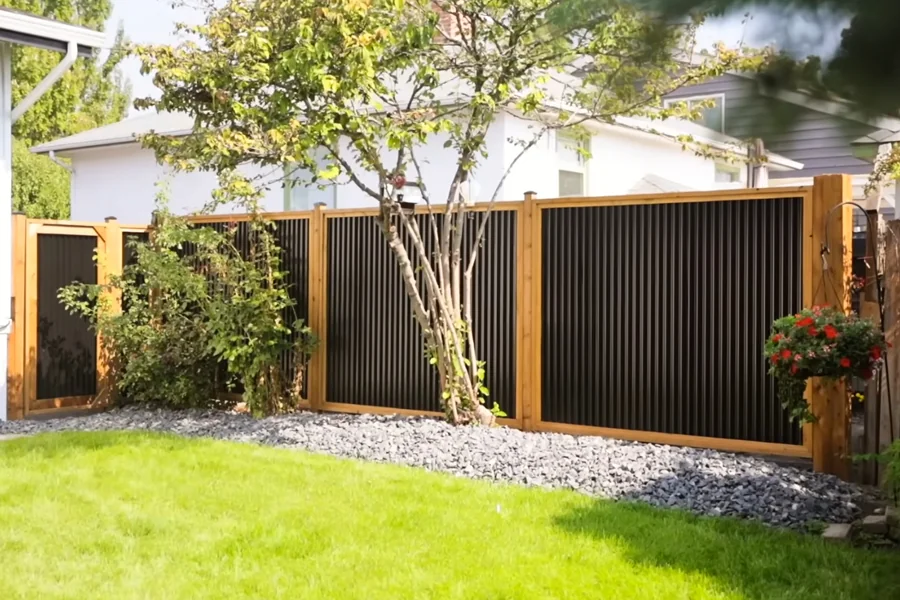
A corrugated metal fence can look sharp, private, and durable. Still, it is not the only good option. For most homeowners, the better question is not “What fence looks best?” It is “Which fence material makes sense for this yard, this budget, this specific fence project, and this level of maintenance?”
That answer changes quickly. A flat backyard with easy access is one thing. A sloped property with trees, an existing fence, tight gate access, and rocky soil is another job entirely.
Pricing a Fence Starts With the Right Fence Material
When pricing a fence, material choice is usually the biggest cost driver because it shapes the upfront cost, long-term maintenance, and total cost of the project. Chain link, wood, vinyl, corrugated metal, and wrought iron all sit in different price ranges. They also age differently.
Chain link often makes sense as an affordable option for large yards where security matters more than full privacy. Wood feels warmer and works naturally with many outdoor settings, especially when cedar or pressure-treated pine fits the budget and site conditions. Vinyl tends to cost more at the start, but it can reduce upkeep later. Metal fencing adds durability and a modern edge, especially when corrugated metal is softened with wood posts or rails.
For local projects, Seattle fence material choices often come down to moisture, slope, privacy needs, and how much regular maintenance the homeowner wants to take on.
Fence Installation Cost by Material and Per Linear Foot
Fence installation in the U.S. typically falls somewhere between $20 and $60 per linear foot. For a complete residential project, homeowners often spend around $4,000 to $12,000, depending on project size, material, layout, and access. That range is wide, but it is normal. A fence estimate depends on far more than the panels, and the per-foot price rarely tells the full story by itself.
| Fence material | Typical cost range | Best fit |
| Chain link fences | $5 to $15 per linear foot installed | Large yards, security, lower-end budgets |
| Wood fence | $10 to $45 per linear foot | Privacy, natural style, flexible design |
| Vinyl | $20 to $40 per linear foot installed | Low maintenance, clean look, longer lifespans |
| Wrought iron | $25 to $55 per linear foot | High-end curb appeal and security |
| Seattle residential fencing | $28 to $58 per linear foot | Standard materials and labor in local conditions |
A standard 150-linear-foot backyard fence installation in 2026 often falls around $2,400 to $3,300 for wood, $4,500 to $6,750 for vinyl, and $1,200 to $2,250 for chain link. Corrugated metal is more variable because panel quality, posts, rails, height, and design details all affect the price.
Fence Installation Cost Is Not Just Panels
This is where the sticker shock usually starts. Most homeowners look at panel prices first, but panels do not tell the full story. That is also where homeowners miss the real difference between a cheap material quote and the amount they actually pay once labor, posts, gates, removal, and cleanup are included.
Fence installation cost also includes labor, posts, rails, gate hardware, access conditions, materials, and sometimes old fence removal. In Seattle, standard materials and labor for residential fence installation typically run from $28 to $58 per linear foot. Labor rates can run about $30 to $50 per hour, and labor costs may be higher than the national average because of local rates, terrain, and soil conditions. This is why fair pricing should account for the full site, not just the panel type or a simplified material list.
Several factors can raise the final cost and lead to higher costs than a basic online estimate suggests:
- Hills, rocky soil, trees, or poor access
- Old fence removal or fence removal from difficult areas
- Premium materials, taller panels, or custom gate work
- Permit needs for taller fences
- Complex layouts with corners, slopes, or mixed materials
In Seattle, fences 6 feet or lower typically do not require a building permit. Higher fences usually do. Still, it is better to check with the local building department before starting a specific project.
Corrugated Metal Fence and Yard Style
Corrugated metal is not only for industrial homes. Used carefully, it can create a fence that feels clean, private, and more inviting than expected. The key is getting the mix right.
A full metal fence can look powerful, but in some gardens, it may feel too stark. Corrugated metal paired with wood posts or trim brings in warmth and can support a home’s curb appeal without making the yard feel closed off. It can also work well behind modern landscaping, concrete patios, or simple planting beds.
For homeowners comparing materials, corrugated metal fence planning in Portland may involve moisture resistance, privacy goals, property layout, and how the fence will look from both sides. Portland and Seattle yards both deal with wet conditions, so durability matters. Cedar is popular in Seattle because it handles moisture better than some wood types, while metal panels can reduce some rot concerns when installed correctly.
Labor Costs, Location, and Fence Complexity
Labor costs for fence installation can vary by 40 to 60% across the United States. Urban areas usually cost more than rural ones. Location matters, contractor demand matters, and so does the fence complexity.
Material costs often make up 40% to 60% of the total cost in Seattle. The rest is labor, site prep, posts, rails, gate installation, removal, and cleanup. Old fence removal in Seattle can cost roughly $3 to $8 per linear foot.
There are practical ways to reduce fence costs without cutting corners. Fence costs can come down with better timing, clearer planning, and multiple quotes from different contractors. Fall scheduling may bring 5% to 10% savings because demand is usually lower. Bulk material orders can save 10% to 15% on larger projects, especially when neighbors coordinate shared fence work. DIY installation can save money on simple fences, such as chain-link or wood-picket styles, on level ground. But not every fence should be treated as a weekend project. Tall privacy fences, heavy metal panels, slopes, and property-line issues usually call for professional installation from an experienced team, which is often the safer choice for many homeowners.
FAQ
Is a corrugated metal fence more expensive than wood?
Sometimes. Corrugated metal can become more expensive when the panels are higher quality or the layout requires custom framing. Wood usually leaves more room for budget adjustments on standard backyard projects.
What Is the Cheapest Fence Material: Chain Link, Wood, or Vinyl?
Chain link is usually the cheapest widely used fence material. It often costs around $5 to $15 per linear foot installed, which makes it a common choice for larger yards where privacy is not the main goal.
How much does fence installation cost per foot?
The national range often sits around $20 to $60 per linear foot. In Seattle, standard residential installation may run about $28 to $58 per linear foot for labor and materials.
Does a new fence improve home value?
A well-installed fence can support curb appeal, privacy, and security. Some estimates suggest a quality fence may recover 50% to 70% of its installation cost at resale, especially when it improves the yard’s function.
Is vinyl better than wood?
Vinyl is easier to maintain, but wood has more warmth and natural character. Vinyl usually costs more upfront. Wood often costs less at first, but it needs more staining, sealing, and upkeep over time.
Why Do Contractors Give Different Fence Cost Quotes?
The details behind the number may vary, which is why most homeowners should compare scope, not just the final price. One contractor may include better posts, closer spacing, hardware, old fence removal, and cleanup. Another may not.
Do I need a permit for fence installation?
It depends on where the property is and how tall the fence will be. In Seattle, fences 6 feet or lower typically do not need a building permit, while taller fences usually do. Local rules should still be checked first.

Passionate about exploring diverse ideas and sharing inspiration, I curate content that sparks curiosity and encourages personal growth. Join me at ElementalNest.com for insights across a wide range of topics.