
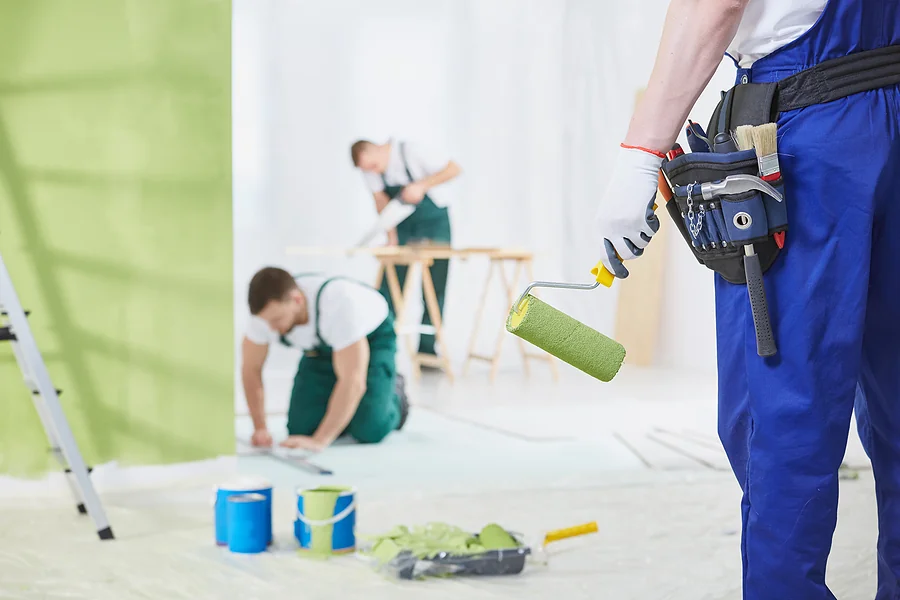
A fresh wall can make a business feel cleaner almost overnight. Still, commercial painting is rarely as simple as rolling a new color over tired paint and calling it done.
So, what is commercial painting? It is a specialized painting service for commercial spaces, not private homes or smaller residential jobs. Think offices, restaurants, schools, retail stores, apartment buildings, warehouses, healthcare centers, office buildings, and other commercial properties. The goal is not only to make the place look better. A well-planned commercial painting job also helps protect surfaces, support the business’s image, and keep the building looking professional through daily use.
That is why the price can feel higher than expected. There is usually more labor, planning, protection, and prep involved than most people see at first.
Commercial Painting Cost: Why the Price Changes
The final cost of commercial painting depends on what the space needs before painting even starts. Size matters, of course. So do wall condition, paint quality, access, timing, labor, prep, and the specific application techniques required for the building.
One gallon of paint usually covers about 300 square feet. The paint itself can cost roughly $15 to $80 per gallon, depending on quality and product type. In a small room that may be easy to overlook. On a commercial property with thousands of square feet of wall space, doors, trim, exterior walls, and damaged surfaces, it changes the estimate quickly.
Labor matters too. For commercial painting, labor rates often sit around $55 to $120 per hour per worker. Businesses may pay more when the schedule is tight, the turnaround is short, peak-season availability is limited, or the work environment is harder to control. It is one thing to paint an empty space during normal hours; it is another to work nights, weekends, or around people using the building.
The going rate also shifts from one location to another, so local industry knowledge matters. Urban areas often cost more because labor rates, parking, access, and scheduling are more complicated.
Commercial Painter vs a Basic Wall Painter
A commercial painter often has to plan around an active space, not just paint a clean, empty room, and that process can involve several contractors working near the same area.
Desks, shelves, display cases, tenant areas, public walkways, construction equipment, contractors, and other trades may all sit close to the work zone. That means protection work has to happen before painting starts. Glass, doors, signs, hardware, and fixtures may need masking tape and plastic protection, while lifts, scaffolding, safety gear, or special equipment may be needed for access.
That is why many businesses choose commercial painting professionals instead of treating the project like a simple repaint. A commercial painter needs a wider skill set than painters who mostly handle smaller residential jobs. They have to understand surfaces, coatings, tools, timing, protection, application techniques, and how to keep the job moving without disrupting the business.
A rushed job may look fine on day one. The difference shows later, when the finish is easier to clean, the coatings hold up, and the space still looks sharp after real use. That difference can also shape customer satisfaction, especially in spaces where clients see walls, trim, doors, and common areas every day.
Commercial Painting Company Pricing Benchmarks by Square Foot
| Cost factor | Typical range or detail | Why it matters |
| General wall painting | $0.75 to $1.50 per square foot | Common benchmark for wall space, depending on job complexity |
| Interior painting | $2 to $6 per square foot | Trim, doors, furniture, and prep can change the price |
| Exterior painting | $3 to $10 per square foot | Weather, access, and surface conditions matter |
| Healthcare facilities | Up to $7 per square foot | Heavy traffic and safety needs can raise costs |
| Paint coverage | About 300 square feet per gallon | Useful for estimating materials |
| Commercial labor | $55 to $120 per hour per worker | Labor shifts by location, timing, and project scope |
On larger painting projects, the per-square-foot rate may sometimes be lower because the crew can work more efficiently across repeated surfaces. But the overall cost can still be higher. The building is larger, the job takes longer, and the material needs are greater.
Why Surface Preparation Changes the Final Painting Cost
Surface preparation is one of the main reasons commercial painting costs more than people expect.
The surface has to be ready before paint can perform. Walls may need patching. Drywall may need repair. Exterior surfaces may need power washing before paint can bond the right way. Old coatings might need sanding, priming, or deeper cleaning. Extensive surface preparation, including drywall repair and power washing, can significantly increase labor costs. Doors, trim, rails, and textured surfaces add time too because they cannot be handled like one flat wall.
Skipping prep can make the estimate look lower. The problem is that it usually does not save money for long.
Commercial painting projects also require different materials based on how the space is used. Many commercial interiors use high-quality latex paints because they dry quickly and often have lower VOCs. Industrial environments are a different story. They may need stronger coatings that can stand up to chemicals, abrasion, corrosion, or heavy wear. The idea is similar. The demands are not, and choosing the wrong coating can shorten the life of the finish.
Why Commercial Buildings Need More Planning Before Painting
Commercial buildings are active spaces, and every commercial property has its own limits. That is the part many people overlook.
Offices have employees inside. Retail stores have customers. A restaurant painting project has to account for clean surfaces, customer experience, and tight timing. Schools, hotels, warehouses, and healthcare facilities all come with their own practical demands. A school may have student traffic. A hotel may need quiet scheduling. A warehouse may involve equipment. A healthcare facility may require stricter protection and safety planning.
High ceilings or multi-story walls may require lifts or scaffolding. Roof areas and difficult exterior walls can increase both equipment and labor needs. Even a neat building can become a more detailed job once access, protection, and scheduling are considered.
For businesses comparing commercial painting in Issaquah, the estimate should be clear about what is included: materials, number of coats, repair work, surface preparation, cleanup, schedule, and protection for furniture or equipment.
What to Ask Before Hiring a Commercial Painter at a Fair Price
A low bid is not always a fair price. Sometimes it means important work has been left out, which can lead to repairs, delays, or repainting before the next project is even planned.
Before choosing a company, ask about:
- The square footage or wall area included in the estimate
- Prep work, repairs, cleaning, or power washing
- Paint type, coatings, and number of coats
- Labor, equipment, access, and safety needs
- Schedule, cleanup, and protection for business spaces
A free estimate can help, but only if it is based on the real project and reviewed by professional painters or experienced contractors. Photos are useful. A site visit is better when the job includes tall walls, exterior surfaces, damaged areas, a roof section, or spaces that must stay open during work.
FAQ
What is commercial painting?
Commercial painting is painting work completed for commercial buildings and public-facing business spaces. It can include offices, retail locations, restaurants, schools, warehouses, apartment buildings, healthcare spaces, and similar facilities.
Why does commercial painting cost more than residential painting?
Commercial painting usually has more moving parts. Bigger spaces, worn walls, safety requirements, special equipment, after-hours access, and heavier prep can all make the project more expensive.
What Is the Going Rate for Commercial Painting per Square Foot?
General commercial wall painting often costs about $0.75 to $1.50 per square foot. Interior commercial painting may range from $2 to $6 per square foot. Exterior work often falls around $3 to $10 per square foot.
Can a Free Estimate Show the Real Final Cost?
The final cost depends on square footage, surface condition, materials, labor, access, number of coats, building height, schedule, and job complexity.
Is Commercial Painting the Same as Painting Industrial Environments?
No. Commercial painting usually focuses on a visually appealing finish with moderate durability for business spaces. Industrial painting is more focused on durable protective coatings that resist corrosion, chemicals, abrasion, and harsh conditions.
Why is surface preparation so important?
Surface preparation helps the paint bond, cover evenly, and last longer. Repair, cleaning, sanding, priming, and power washing can prevent early peeling, flashing, and uneven wear.
Should a business choose the cheapest commercial painter?
Not without checking the scope. A cheap quote may skip surface prep, protection, cleanup, better materials, or enough labor to do the job properly. A clear example is a bid that includes paint only but leaves repairs, masking, access equipment, or after-hours work out of the price.

Passionate about exploring diverse ideas and sharing inspiration, I curate content that sparks curiosity and encourages personal growth. Join me at ElementalNest.com for insights across a wide range of topics.