
Why a Lower-Dust Home Requires More Than Frequent Cleaning
Household dust is rarely just dirt. It’s actually a mix of skin particles, textile fibers, pollen, pet dander, and other indoor contaminants that settle on every surface in a home. Many people assume that cleaning more often automatically solves the problem, but effective dust management is about more than wiping away visible grime. It means cutting off the sources of particles at the root, keeping indoor moisture in check, and steering clear of techniques that stir dust back into the air instead of actually removing it. Some households lean on automated tools, such as a robot vacuum, to keep floors consistently covered between deeper cleaning sessions, while others prefer a traditional vacuum suited to specific surfaces like carpets, upholstery, or hard flooring. Neither approach on its own solves the whole problem. The central idea here is simple: a consistent, targeted routine generally does more for indoor air and surface cleanliness than relying on a single device or an occasional deep clean.
Understanding Where Household Dust and Allergens Come From
Indoor dust builds up from a surprising number of sources: pollen and soil tracked in from outside, pet dander and hair, dust mites and their waste, fibers shed from clothing and furnishings, skin flakes, mold spores in damp corners, and residue from smoke or combustion. Carpets, rugs, upholstered furniture, bedding, and cluttered surfaces tend to hold onto these particles far longer than smooth, open surfaces do.
It helps to draw a distinction between settled particles, which rest on floors and furniture until something disturbs them, and airborne particles, which stay suspended in the air and can be inhaled. A room can look spotless while still harboring microscopic allergens buried in fabric or carpet fibers. Cleaning cuts down on these particles, but it doesn’t eliminate every airborne contaminant—it’s one piece of a broader approach to indoor air quality, not a complete fix on its own.
Start With Source Control, Not Just Surface Cleaning
Reduce the Conditions That Create or Hold Dust
Before getting into cleaning techniques, it’s worth looking at what generates dust and allergens in the first place. Practical steps include fixing leaks and addressing lingering dampness, running ventilation during cooking and bathing, placing mats at entryways to cut down on tracked-in dirt, and keeping unnecessary fabric clutter out of bedrooms and living spaces. Moisture control deserves particular attention, since damp conditions encourage mold growth and give dust-mite populations room to thrive. Public health guidance from agencies such as the U.S. Environmental Protection Agency points to source control and ventilation as the primary strategies for improving indoor air, with filtration playing a supporting role rather than acting as a replacement.
Make High-Impact Areas the Priority
Not every room needs the same level of attention. Bedrooms, main living areas, pet resting spots, entryways, and frequently used upholstered furniture typically collect the most particles simply because of how much contact they get from people, pets, and outdoor debris.
Key Takeaway: Target the surfaces and rooms where people, pets, and particles interact most often.
Build a Cleaning Routine That Limits Particle Resuspension
Use the Right Order
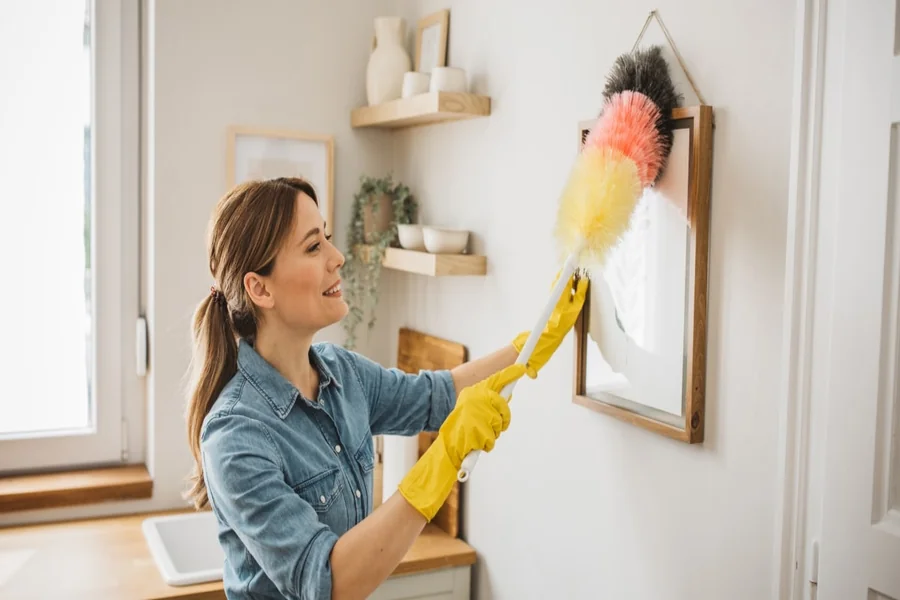
A practical sequence saves effort and avoids backtracking: declutter first, clean higher surfaces before floors, use a damp cloth on hard surfaces, and finish with the floors. Dry dusting tends to send settled particles right back into the air, while damp wiping actually captures them. Working from cleaner areas toward dirtier ones also helps keep debris from spreading across a space you just finished cleaning.
Match the Method to the Surface
Hard floors generally respond well to careful sweeping or an appropriate floor tool, followed by damp mopping when needed. Carpets and rugs should be cleaned on a regular schedule, with extra attention paid to traffic lanes and edges, and always in line with manufacturer guidance to avoid damage. Upholstery calls for checking care labels and using the right attachments without soaking the fabric. Bedding should be washed regularly according to fabric-care instructions; guidance from sources like the Mayo Clinic recommends weekly hot-water washing to help keep dust mites under control.
How to Use Floor-Cleaning Technology Wisely
Automated floor cleaning can bring welcome consistency, especially in households with pets, kids, or heavy foot traffic. That said, it has clear limits: it won’t replace upholstery cleaning, bedding care, damp dusting, or moisture control, and it may struggle to reach stairs, corners, or tight spaces beneath furniture. How well it performs also depends on floor type and how diligently the device is maintained—emptying collection bins safely, checking brushes, and inspecting filters according to the manufacturer’s instructions.
Consider three different households: one with a shedding dog and open-plan hard flooring, one with a carpeted bedroom and young children, and one in a small apartment with mostly hard floors and light foot traffic. Each one calls for a different balance of frequency, surface-specific tools, and manual attention—no single device fits all three equally well.
Filters, Ventilation, and Indoor-Air Expectations
Filtration cuts down on airborne particles, but it isn’t a cure-all. It helps to separate the roles played by filters built into floor-cleaning equipment, portable air cleaners, and HVAC or furnace filters. Air cleaners can’t remove every pollutant and work best when paired with source control and proper ventilation. A filter’s stated efficiency rating doesn’t guarantee whole-home performance either, since room size, airflow, fit, and upkeep all shape the real-world results. It’s worth checking official technical documentation rather than taking vague marketing claims at face value. And importantly, no cleaning method should be treated as a way to prevent or treat allergies—persistent symptoms call for medical attention, not just a revised chore list.
Practical Routine for Different Households
- Daily or as needed: Address spills, visible debris, and entryway buildup.
- Several times per week: Clean floors in high-use rooms and manage pet hair.
- Weekly: Clean carpets or upholstery as appropriate, wash bedding, and damp-dust key surfaces.
- Periodically: Clean under furniture, inspect filters, and address neglected corners.
Homes with pets, recent renovations, smokers, young children, or allergy-sensitive occupants may need more frequent attention, adjusted based on visible buildup and, where respiratory conditions are involved, professional medical advice.
Common Mistakes That Reduce Cleaning Effectiveness
Several habits quietly undercut good intentions: dusting after the floors are already clean, using dry methods on heavily soiled surfaces, ignoring mattresses and curtains, mistaking a pleasant fragrance for actual cleanliness, neglecting filters and collection compartments, expecting one appliance to handle moisture, airborne pollutants, and settled dust all at once, and overlooking basic safety rules like never mixing cleaning chemicals.
Final Perspective: Consistency Beats a Single Deep Clean
A lower-dust home usually comes down to several habits working together: consistent source control, regular damp dusting, dependable floor care, attentive filter maintenance, and above all, a consistent routine that fits the household’s real life rather than some idealized schedule. Start small—identify the two rooms or surfaces that seem to collect the most dust, then build a manageable routine around them.

Passionate about exploring diverse ideas and sharing inspiration, I curate content that sparks curiosity and encourages personal growth. Join me at ElementalNest.com for insights across a wide range of topics.