
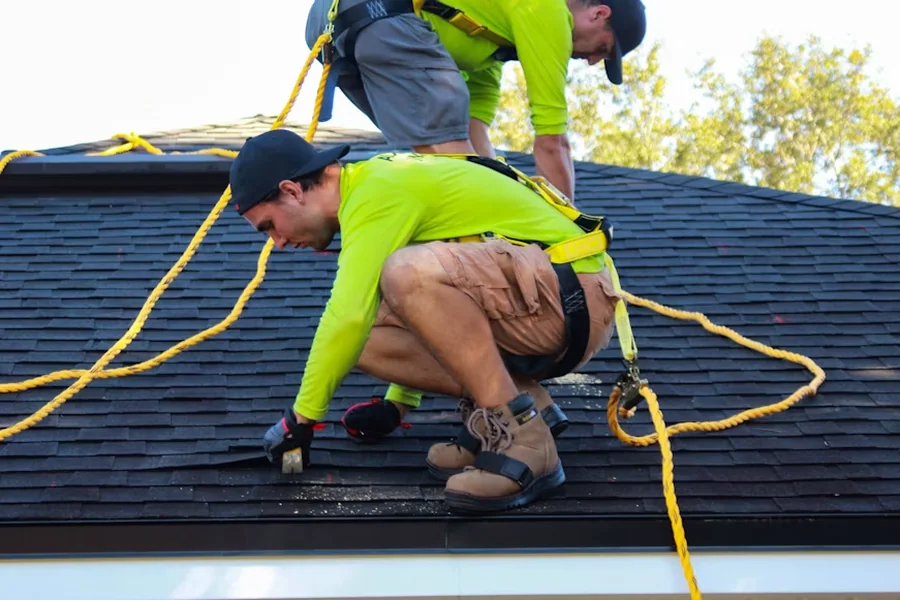
Central Texas hail and wind storms roll through the Austin area most years, and when your roof takes a hit, you suddenly find yourself comparing bids from a dozen companies you have never heard of.
That decision carries more weight than most home repairs. A poor roofing job can lead to leaks, mold, and denied insurance claims years down the road. Texas does not require roofers to hold a state license, which means the burden of vetting a contractor falls almost entirely on you as the homeowner.
This guide breaks down exactly what separates a trustworthy Austin roofing contractor from a storm chaser, what a fair written estimate should include, and how to read customer reviews the right way before you sign anything.
Key Takeaways
- Texas has no state roofing license, so you must verify insurance, BBB standing, and review yourself.
- A full roof replacement in the Austin area typically runs $8,000 to $18,000 in 2026.
- Storm chasers often lack a permanent local address; ask for one before signing anything.
- A fair written estimate breaks down materials, labor, and warranty terms line by line.
- Texas law bars contractors from offering to waive your insurance deductible.
Start With Reputation: Read Real Customer Reviews
Before requesting a single estimate, spend twenty minutes reading reviews across more than one platform. A company’s online reputation tells you far more than a glossy homepage or a friendly sales call, because reviews reflect what actually happened once the crew left the job site.
Checking a contractor across multiple sources is worth the extra ten minutes. For instance, browsing LOA Construction and Austin Roofing reviews on Google, the Better Business Bureau, Yelp, and Angi gives you four independent data points instead of relying on a single testimonials page a company controls itself. Look for patterns rather than isolated complaints, such as consistent praise for communication and cleanup or repeated mentions of missed appointments.
“the best overall responsiveness and price” — Chris Farrow, Google review
Pay attention to how a company responds to negative reviews, too. A business that addresses complaints professionally, rather than ignoring or arguing with them, usually treats service issues the same way in person.
| Quick Tip
Look for a Better Business Bureau accreditation with an A+ rating and several hundred verified reviews spread across platforms before you request a quote. |
Texas Doesn’t Require a State Roofing License, So Check This Instead
Unlike electricians or plumbers, roofing contractors in Texas do not need a state-issued license to operate. The state’s licensing agency does not administer licensure for roofing, so anyone can call themselves a roofer without passing an exam or proving they carry insurance.
That gap does not mean every unlicensed roofer is unqualified, but it does mean the vetting responsibility sits entirely with you. The Roofing Contractors Association of Texas offers a voluntary credential that requires applicants to be a principal at a Texas roofing company for at least two years and to carry proof of insurance, giving homeowners one meaningful trust signal in a state with no mandatory standard.
Since a license is not a reliable filter here, ask every contractor for these three documents before signing anything:
- A certificate of general liability insurance, ideally naming you as a certificate holder
- Proof of workers’ compensation coverage, or a signed waiver if the crew is a subcontractor
- A physical business address in the Austin metro area, not a P.O. box
| Warning
If a contractor cannot produce a certificate of insurance within a day of asking, treat that as a serious red flag and keep looking. |
Watch Out for Storm Chasers
After a major hail event, Austin neighborhoods often see a wave of door-to-door sales crews offering free inspections and pressuring homeowners to sign same-day contracts. Some of these traveling crews are legitimate. Many are not, and they disappear once the job is paid for, leaving no one to call if the flashing leaks a year later.
A locally rooted company has a permanent office and a reputation it has to protect with its neighbors. Search the company name alongside “Austin, TX” and check how long its Google Business profile and BBB listing have existed. A company reviewed consistently for five or more years is a different bet than one whose profile appeared the week after last month’s storm.
Video: “Better Business Bureau shares tips to find roofing contractors” — https://www.youtube.com/watch?v=rg0y_dFmYzM
This FOX 7 Austin segment walks through the BBB’s specific advice for vetting a roofer after storm damage.
Get a Detailed, Written Estimate
A trustworthy contractor puts everything in writing before a single shingle comes off your roof. Compare bids on what is included, not just the bottom-line number, since the cheapest quote often hides a shorter warranty or lower-grade underlayment.
| Red Flag | What a Trustworthy Contractor Offers |
| Pressures you to sign the same day | Gives you time to compare multiple written bids |
| Asks for full payment upfront | Requests a reasonable deposit, balance due at completion |
| Verbal estimate only | Line-item written estimate covering materials, labor, and disposal |
| No physical Austin-area office | Verifiable local address and years of local reviews |
| Vague or no warranty language | Clear workmanship warranty, separate from the manufacturer’s material warranty |
Ask specifically whether the estimate includes tear-off and disposal of the old roof, new underlayment, drip edge, and ridge venting, since some low bids quietly skip these line items to look cheaper on paper.
Know What a Roofing Project Actually Costs in Austin
Pricing varies with roof size, material, and pitch, but Austin homeowners can use current figures as a starting benchmark. A minor repair, such as patching a small leak or replacing a handful of damaged shingles, typically runs $150 to $1,500. Larger repairs involving flashing, decking, or storm damage generally fall between $1,500 and $7,000.
A full roof replacement with standard architectural asphalt shingles runs $8,000 to $18,000 for most Austin homes, according to Angi’s 2026 local cost data, with material choice and roof complexity pushing the number toward the higher end.
Metal and clay tile systems cost roughly double what asphalt shingles do upfront but can last 40 to 50 years with far less maintenance, compared with 15 to 30 years for a typical asphalt roof. If a contractor’s estimate falls dramatically below these ranges, ask what specifically is being cut to hit that price.
Know Your Rights Under Texas Insurance Law
If your roof needs replacing because of storm damage, know that Texas law protects you from one specific sales tactic. A contractor cannot legally offer to pay, waive, or rebate your insurance deductible to win your business. This rule exists because deductible waivers were historically used to inflate invoices and defraud insurers, and homeowners who go along with it can end up on the hook if the fraud is later discovered.
A reputable roofer will help you document damage for your adjuster, but will always expect you to pay your actual deductible. If a salesperson offers to “cover” your deductible, treat that as a legal red flag, not a good deal.
Questions to Ask Before You Hire
Bring this short list to every estimate appointment:
- How long has your company operated in the Austin area?
- Can you provide a current certificate of general liability and workers’ compensation insurance?
- What manufacturer certifications does your crew hold, and does that affect my warranty?
- Is the workmanship warranty separate from the material warranty, and how long does each last?
- Will the same crew that inspects my roof also perform the installation?
- What is your plan for protecting landscaping and cleaning up nails and debris?
Frequently Asked Questions
Does Texas require roofing contractors to be licensed?
No. Texas does not license roofers, so anyone can legally operate as one. Many reputable contractors carry a voluntary credential from the Roofing Contractors Association of Texas instead, along with proof of insurance.
How much does a roof replacement cost in Austin, TX?
Most Austin homes with architectural asphalt shingles cost $8,000 to $18,000 for a full replacement in 2026, per Angi’s local cost data. Metal and tile systems cost more upfront but last significantly longer.
How can I spot a storm-chasing roofing crew?
Look for no permanent Austin address, pressure to sign the same day, and a Google or BBB profile that only appeared after a recent storm. Legitimate local companies have years of consistent reviews.
Can a contractor waive my insurance deductible?
No. Texas law prohibits contractors from offering to pay, waive, or rebate your deductible to win your business. This practice is illegal and can expose homeowners to insurance fraud liability.
What’s the best roofing material for Central Texas weather?
Architectural asphalt shingles offer the best balance of cost and durability. Metal and clay tile cost more upfront but resist hail and heat better and can last 40 to 50 years.
How long does a typical roof replacement take?
Most residential roof replacements in Austin finish in one to three days once materials arrive, depending on roof size, pitch, and weather. Storm-damage repairs generally take longer.
Final Thoughts
Choosing a roofing contractor in a state with no licensing requirement puts more responsibility on homeowners than most people realize. The good news is that the vetting process is straightforward once you know what to check: verified insurance, a real local address, transparent written estimates, and a review history that spans years rather than weeks. Take your time, ask the questions above, and treat any pressure to skip that process as the clearest warning sign of all.

Passionate about exploring diverse ideas and sharing inspiration, I curate content that sparks curiosity and encourages personal growth. Join me at ElementalNest.com for insights across a wide range of topics.