

For years, Vietnam has been known as one of Asia’s major destinations for software outsourcing. But the industry is entering a different phase. AI can now generate websites, applications, and working code from simple prompts, raising a basic question: if software is becoming easier to build, does outsourcing to Vietnam still make sense? The answer depends on what businesses actually need from a software partner.
1. Vietnam’s software outsourcing market is still growing
According to Ken Research, Vietnam’s IT outsourcing market was worth approximately $810 million in 2025 and is projected to reach $1.68 billion by 2031, representing a forecast CAGR of 12.92%. The market grew at an even faster 15.04% CAGR between 2020 and 2025.
The market is also becoming more specialized. Application development and maintenance remain major segments, but demand is increasingly moving toward application modernization, cloud engineering, data platforms, AI implementation, quality engineering, cybersecurity, and managed services. Ken Research expects value growth to increasingly come from higher-value services rather than simply adding more developers.
Vietnam also has a substantial technology workforce behind this growth. Government figures show that the country had nearly 1.26 million ICT workers and 73,788 digital technology companies by the end of 2024. Around 1,900 Vietnamese digital technology companies generated revenue from foreign markets, with total foreign-market revenue reaching $11.5 billion in 2024.
These figures cover the broader digital technology sector, not software outsourcing alone, but they indicate the scale of Vietnam’s technology ecosystem and its growing international reach.
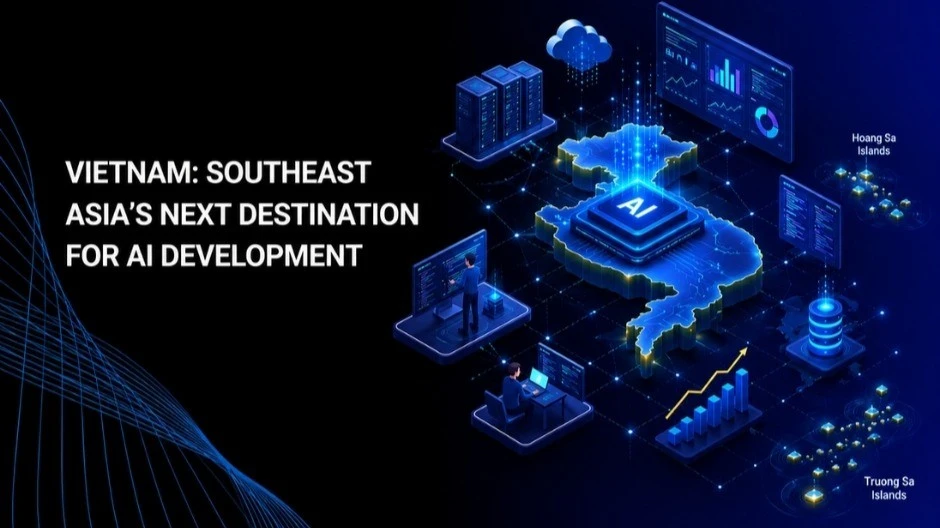
Vietnam’s software outsourcing market is still growing
2. Why do companies outsource software development to Vietnam?
2.1. Competitive engineering costs
Vietnam can provide software engineering capacity at lower costs than many Western markets while offering access to a large pool of technically trained professionals.
For companies with long development roadmaps, this can make offshore development financially attractive. Instead of hiring an entire local team, businesses can work with a Vietnamese software partner or establish a dedicated development team.
However, hourly rates should not be the only factor in vendor selection. A low-cost team can become expensive if weak communication, poor project management, or technical debt leads to rework.
2.2. A growing engineering talent pool
Vietnam’s talent pool is large, but it is not unlimited. Ken Research notes that rising demand for experienced engineers is putting pressure on wages and outsourcing margins, particularly as clients increasingly require skills in cloud, AI, data, and cybersecurity. This creates an important distinction: Vietnam remains cost-competitive, but the future of its outsourcing industry cannot depend on being the cheapest source of developers.
2.3. Experience with international clients
Vietnamese technology companies have spent years serving clients in markets such as Japan, Australia, North America, and Europe. This has helped local vendors develop experience with international communication, distributed teams, product development, and long-term engineering engagements. For international buyers, this experience can reduce some of the challenges associated with managing offshore development.
3. What does AI change?
AI coding tools can now generate code, create interfaces, build APIs, debug applications, and produce working prototypes from natural-language instructions. The rise of vibe coding has made software development more accessible to founders, designers, and other non-engineers. That raises a legitimate question: if one person can build an application with AI, why hire a development team?
The problem is that generating code is only one part of building software. Recent research on vibe coding suggests that its strongest use cases are currently around prototyping and UI development, while evidence for long-term maintainability, production quality, and safety-critical applications remains more limited. AI-generated software still requires evaluation, debugging, integration, and human oversight.
For a simple website or internal prototype, AI may reduce the need for external development considerably. For a large enterprise product, however, challenges such as architecture, security, data management, system integration, testing, compliance, and long-term maintenance do not disappear.
In other words, AI is making code cheaper, but it is not making software engineering irrelevant.
4. The outsourcing model is changing
The traditional model was largely based on providing development capacity: Client → offshore team → developers write code → product is delivered
The emerging model is different: Client → engineering partner → AI-assisted discovery, design, development, testing, deployment, and maintenance
This changes what companies should look for in an outsourcing partner. Instead of asking only how many developers a vendor can provide, buyers should ask:
- How is AI used across the development lifecycle?
- Who is responsible for architecture and technical decisions?
- How is AI-generated code reviewed?
- How are security and compliance handled?
- Can the team work with an existing product organization?
- Does the vendor have experience with legacy modernization and system integration?
- Can it support the product after launch?
These questions are increasingly important because the value of a software partner is shifting from writing code to solving engineering and product problems efficiently.

5. What are the risks of outsourcing to Vietnam?
Vietnam is not without challenges:
- Communication and project management can become problems when teams have different working styles, expectations, or documentation practices. Strong vendors should have clear ownership, communication processes, and project management practices.
- Talent availability is another issue. As demand for experienced engineers increases, senior talent becomes more expensive. This means buyers should be cautious about choosing a vendor purely because of a low hourly rate.
- Security and compliance also deserve close attention. Companies handling healthcare, financial, or other sensitive data should evaluate a vendor’s security controls, data-handling practices, relevant certifications, and experience with regulated environments before granting access to critical systems or information.
6. What should companies look for in a Vietnamese software partner?
A strong vendor should offer more than development capacity.
- Technical expertise: Check whether the team understands your architecture, cloud environment, technology stack, and integration requirements.
- Product understanding: A vendor that can contribute to discovery, requirements, UX, and product decisions can be more valuable than one that simply implements tickets.
- AI adoption: Ask how AI is actually used. Having access to an AI coding assistant is different from building an AI-enabled development process with appropriate human review and quality controls.
- Security and quality: Review certifications, QA processes, code-review practices, deployment procedures, and experience in your industry.
- Track record: Case studies and references can provide more useful evidence than generic claims about technical capability.
7. How Vietnamese software companies are adapting
Some Vietnamese technology companies are already moving beyond the traditional “developer outsourcing” model.
PowerGate Software, for example, is a Vietnam-founded software development company that positions itself as a global AI-powered software product studio. Since 2011, PowerGate Software has served international clients across sectors including healthcare, fintech, education, marketplaces, and enterprise software.
PowerGate Software is certified to ISO 9001:2015 for its quality management system and ISO/IEC 27001:2022 for its information security management system. Their process incorporates AI-assisted tools into its software development and delivery workflows, with human review and engineering oversight remaining part of the process.
This reflects a broader shift taking place in the industry. The competitive advantage is gradually moving from how many developers a company can provide to how effectively it can combine engineering expertise, AI, product knowledge, and delivery processes.
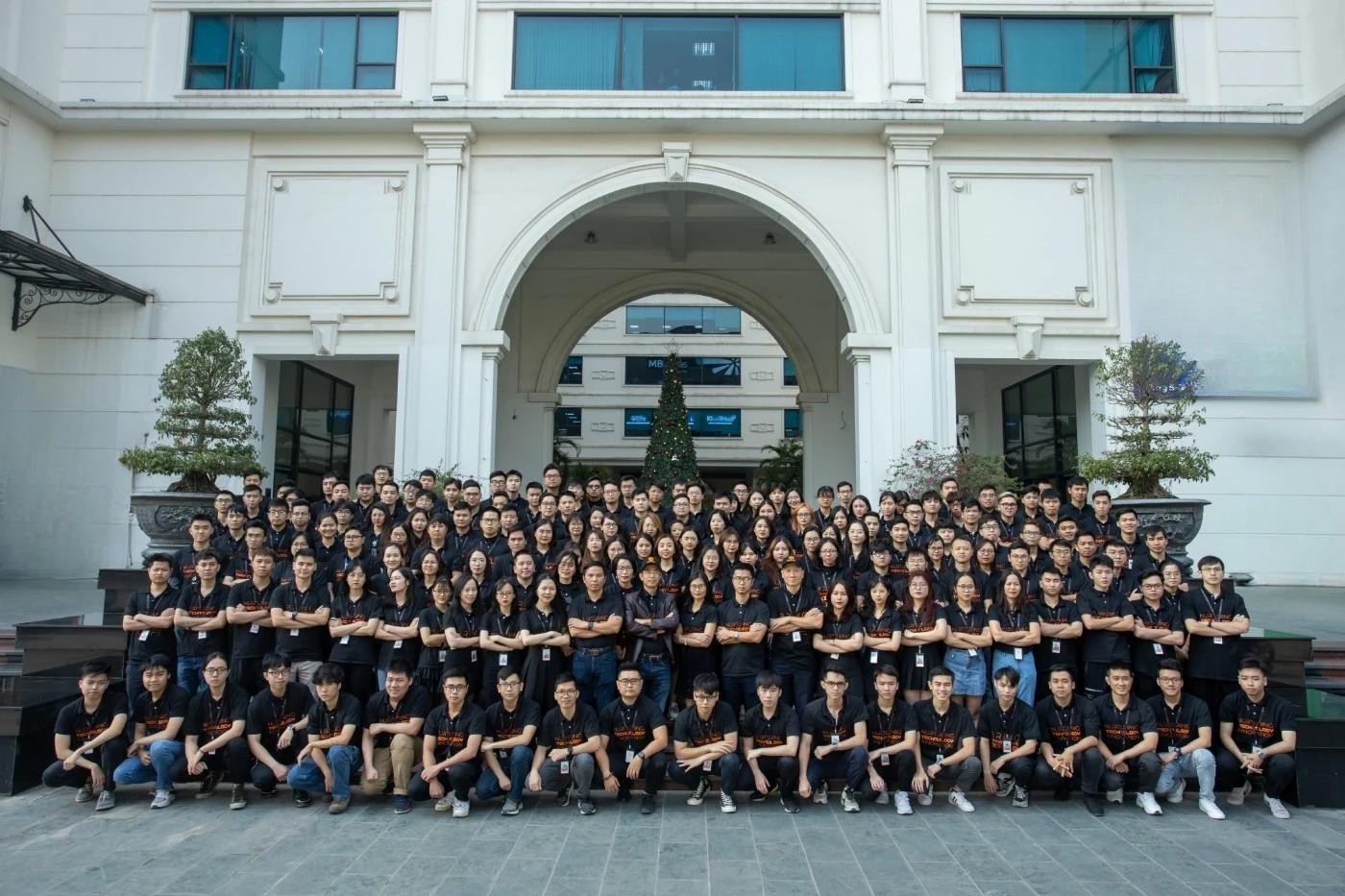
PowerGate Software is a global AI-Powered software product studio
Vietnam continues to offer a combination of engineering talent, competitive costs, international experience, and a growing technology ecosystem. Its projected market growth also suggests that international demand for Vietnamese technology services is far from disappearing. But the meaning of “software outsourcing” is changing. AI will make basic coding and simple application development increasingly accessible, putting pressure on vendors whose value proposition is limited to developer capacity.
The companies that remain competitive will likely be those that move beyond coding capacity and help clients solve more complex product and engineering problems. For Vietnam, the bigger question is not whether AI will replace outsourcing, but how quickly the industry can evolve beyond its traditional model.

Passionate about exploring diverse ideas and sharing inspiration, I curate content that sparks curiosity and encourages personal growth. Join me at ElementalNest.com for insights across a wide range of topics.