
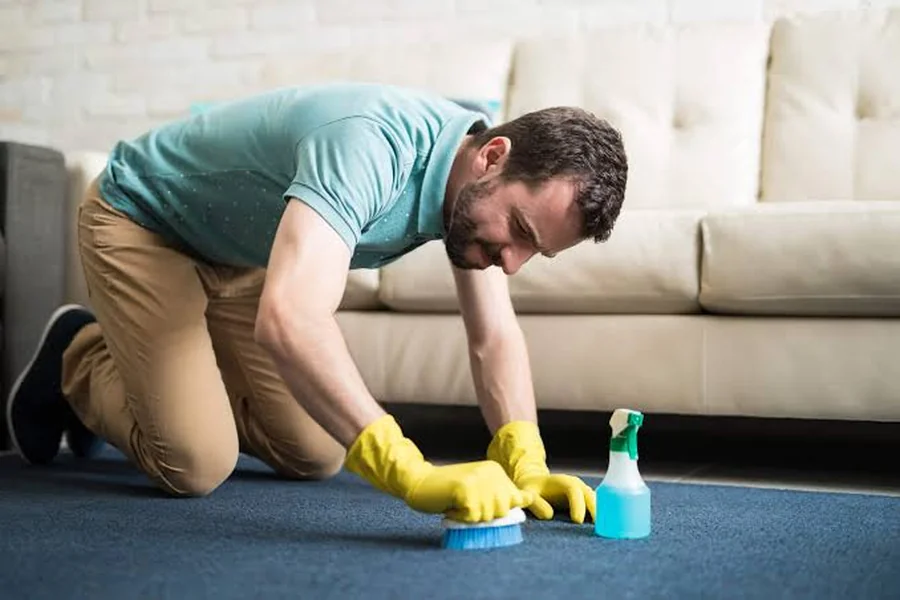
Somewhere between the ancient bottle of stain remover under your sink and the fancy machine you hired that one time, carpet cleaning became something we all think we’re quite good at.
And most of us are, right up until the moment a glass of red wine hits the living room floor and instinct takes over.
The trouble is that five seconds of panic can do more damage than the spill itself. So, here’s what usually goes wrong in Croydon homes, and how to avoid joining the club.
Scrubbing Stains Instead of Blotting Them
Something lands on the carpet, and your arm starts moving before your brain catches up. You grab the nearest tea towel and start scrubbing like you’re trying to sand a skirting board.
But scrubbing forces the liquid sideways and downwards at the same time. A neat little coffee splash becomes a wide, pale halo, and half of it ends up in the backing where no cloth will ever follow.
Worse, all that friction roughs up the pile itself. Even after the colour fades, you’re left with a fuzzy patch that catches the light differently from everything around it.
Blotting works better because it uses absorption rather than force. Press a clean, light-coloured cloth straight down, hold it, lift, and repeat with a fresh section each time. Work from the outside of the spill inwards so you’re not spreading the edges.
Using Too Much Carpet Cleaner
There’s a very human logic to this one. If a capful lifts the stain a bit, surely half the bottle will lift it completely?
Carpet cleaners are designed to be diluted, though, and they don’t rinse out as easily as you’d hope. Whatever your cloth doesn’t lift stays behind in the fibres as a faint, tacky film.
That film is sticky, and sticky things collect dirt. Every bit of grit walked in from the pavement outside sticks to that patch instead of sitting loose where the vacuum can grab it.
So a few weeks later, the spot you treated looks darker than the carpet around it. You did clean it; the residue simply invited everything else to come and settle there.
Follow the dilution on the label, treat a small hidden area first, then go over the spot with a cloth dampened in plain water to lift any leftover product. Less solution, properly rinsed, beats a soaked patch every time.
Waiting Too Long to Treat Spills
We’ve all done the mental maths. You need to prep the kids’ meals, walk the dog, and that splash of gravy can surely wait until you’ve finished the washing-up.
But a fresh spill is still sitting on top of the fibres, which is the only stage where it comes out easily. Give it an hour, and it’ll soak through to the backing and work its way into the fibres, making it much harder to remove.
Give it a week, and you’re no longer cleaning a stain; you’re negotiating a peace treaty with it. Organic spills like milk, gravy, or pet stains will also start to break down, producing that musty smell that always seems to return on warm days.
Keeping a clean cloth and a bottle of water within easy reach makes a genuine difference. Thirty seconds of blotting now saves you an entire Saturday of scrubbing later.
Thinking Vacuuming Is Enough
Vacuuming is the single best habit you can have, and Croydon’s damp, muddy winters make it non-negotiable. Twice a week in hallways and living rooms keeps abrasive grit from grinding away at the base of your carpet pile.
But a vacuum can only do so much. It picks up the loose dirt sitting on the surface and leaves the deeply embedded grime behind.
Dust mite waste, skin cells, pet dander, and the fine dust that mud turns into when it dries all become trapped deep within the fibres. That’s the layer responsible for the tired, flat, slightly grey look that no amount of hoovering can shift.
You’ll notice it most in older Croydon properties, where poor ventilation traps moisture and helps everything settle in. Regular vacuuming keeps the problem from growing, but only a deep clean actually removes it.
Using Too Much Water
If you’ve hired a machine for the weekend, there’s a strong temptation to drench a stubborn patch and let the water do the heavy lifting.
The pile will happily soak it up, and so will the underlay beneath it. That’s where the real problem starts, because water that sinks below the carpet has no easy route back out.
A carpet that stays damp for a couple of days starts to smell, and given Croydon’s rainfall and the number of period homes with limited airflow, mould in the backing is a genuine risk.
Work in swift passes instead. Go over the area, make a few extra dry passes to pull out as much moisture as possible, then open the windows and get a fan going until the pile feels properly dry to the touch.
Using the Wrong Cleaning Method for Your Carpet
Not every carpet responds the same way, and this is where confident DIY goes sideways fastest.
Wool is particularly prone to damage. It’s naturally absorbent and reacts badly to high heat and alkaline products, so the shampoo that revives a polypropylene rug can leave a wool carpet shrunken, patchy, or permanently faded.
Loop-pile carpets have their own weakness, since a stiff brush can catch a loop and pull a thread halfway across the room. Some synthetics, meanwhile, are treated with stain-resistant coatings that harsh cleaners strip straight off.
And those homemade vinegar or bicarb mixes that work brilliantly on one floor can dull the dye on another. So, check the manufacturer’s guidance before you try anything new, and always test on a hidden patch behind a door or under the sofa.
Waiting Too Long to Book a Professional Clean
Here’s the frustrating part. You can vacuum religiously, blot every spill within seconds, and use exactly the right product, and your carpet will still gather dirt you can’t reach.
Household equipment simply doesn’t have the suction or the heat to pull embedded grime out of the base of the pile. Professional extraction does, which is why a proper clean often reveals a colour you’d forgotten your carpet had.
If you’re on the hunt for reliable carpet cleaners, Croydon has no shortage of them, and most will recommend a deep clean every 12 to 18 months.
Make it sooner if you have pets, children, or a busy commuter household walking rain and mud through the hallway every day.
Left too long, that embedded grit will cut through the fibres until the wear becomes permanent. And rescuing a badly soiled carpet always costs more than maintaining a decent one.
Conclusion
Congratulations, you’re now the person who reaches for a clean cloth instead of panic-scrubbing a wine spill into oblivion.
So go on and enjoy those floors. Kick your shoes off, wiggle your toes in the pile, and let the next spill find out exactly who it’s dealing with!

Passionate about exploring diverse ideas and sharing inspiration, I curate content that sparks curiosity and encourages personal growth. Join me at ElementalNest.com for insights across a wide range of topics.