
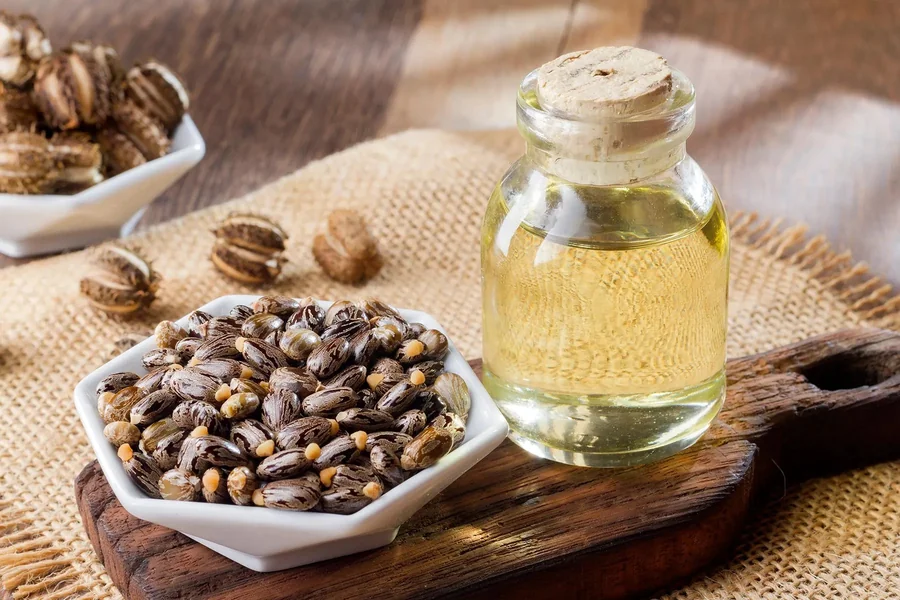
Castor oil has seen a resurgence in its popularity through the clean beauty movements. Consumers are conscious of the ingredients used in personal care products, leading them to choose simpler alternatives. Castor oil stands out for its versatility and usefulness in many areas, including skincare and haircare.
Both regular and organic castor oils come from the same plant, Ricinus communis, with differences in their extraction and production. Most notably, the source plants used for organic castor oil are free from pesticides and chemical fertilizers. Often, organic castor oils are minimally processed to retain their purity and benefits.
Read on to find out more about organic castor oil, its properties, and ways to incorporate it into your routines.
What Is Organic Castor Oil?
Organic castor oil comes from the seeds of the plant Ricinus communis, making it a vegetable oil. It has a thick consistency that feels rich and warm when applied to the skin. Organic castor oil has to come from plants that are farmed organically. This means no use of chemical fertilizers for growth, artificial pesticides or herbicides, and GMOs.
The oil is extracted by cold-pressing the castor plant’s seeds, yielding rich, fatty oil. Ricinoleic acid is the most abundantly found fatty acid in the oil, contributing to its anti-inflammatory effects.
When selecting organic castor oil, look for product labels such as “organic” and “hexane-free”. Typically, organic castor oil products are minimally filtered, fragrance-free, and cold-pressed.
Benefits of Organic Castor Oil for Hair
Organic castor oil has many uses in haircare. While there isn’t much evidence on the effectiveness of castor oil for hair growth, its fatty-acid-rich composition can do wonders for hair texture.
For dry and brittle strands, organic castor oil can be a good smoothing and deep conditioning treatment. Since it has a very thick texture, there are a few considerations to take into account when using it.
First, combine your organic castor oil with a lighter carrier oil such as almond or coconut. When mixed, apply a generous amount of organic castor oil to the strands and lengths of the hair, and leave it to sit for 30 to 60 minutes. Afterward, wash your hair thoroughly with shampoo to remove the oil fully.
Using organic castor oil in your haircare works by smoothening your hair cuticle and sealing the moisture. This helps hair strands retain moisture and promotes healthy-looking tresses.
Can Castor Oil Be Used for Eyebrows and Eyelashes?
You may have noticed castor oil listed as an ingredient on lash and eyebrow serums. On its own, organic castor oil is a great lash serum. It conditions the lash and eyebrow hairs and softens them. You can also use it in your brow-grooming routine to help shape the hairs and stick them in place.
To use, apply a small amount of organic castor oil on a cotton swab and brush onto your eyebrows or eyelashes.
Benefits of Organic Castor Oil for Skin
Castor oil has been a staple in skincare routines since Egyptian times. Its earliest use was as a moisturizer or balm to combat dryness and protect the skin from the sun. It is also found in Ayurvedic medicinal practices originating from India.
Today, castor oil is commonly included in serum, moisturizer, and lotion formulations. It works by sealing the moisture on the surface of the skin, keeping it bouncy and fresh. You can use organic castor oil as skincare by mixing it with a lighter oil or another moisturizing product.
Note that if you have acne-prone or oily skin, organic castor oil can feel too heavy on its own. In some people, it may cause reactions, so make sure to patch test before using it on your face.
How to Use Organic Castor Oil Safely
The thick, rich texture of castor oil can be a double-edged sword. While it is incredibly helpful for moisture retention, take care to dilute it before application to avoid weighing your hair down or making your skin feel greasy. If your hair or skin leans toward the drier side, you can use a higher ratio of castor oil with your diluting agent. For those with oily scalp or skin, use a smaller amount of castor oil to mix with your carrier product.
Other safety tips include patch testing before use and avoiding direct eye contact. Also, remember that most organic castor oils are meant for topical application, meaning that you should not ingest them unless approved by a healthcare professional.
How to Choose High Quality Organic Castor Oil
The most important aspect of your experience with organic castor oil depends on where you get it from. The beauty industry is quite diversified when it comes to the production of vegetable oils. To ensure you purchase the highest quality organic castor oil, these are the features you should look for:
- Organic label
- Cold-pressed extraction method
- Hexane-free
- Simple and clean ingredient list
- Fragrance or additive-free
Also, make sure that the oil is packaged in dark glass bottles to avoid degradation. Be sure to only purchase from reputable retailers, like Organic Castor, for best results.
Getting the Most Out of Your Organic Castor Oil Experience
Organic castor oil is one of the most versatile products you can add to your beauty routine. It has uses in skincare, haircare, and bodycare. Choosing the right oil is about being careful about where you buy it from and being aware of the properties to look for.

Passionate about exploring diverse ideas and sharing inspiration, I curate content that sparks curiosity and encourages personal growth. Join me at ElementalNest.com for insights across a wide range of topics.