
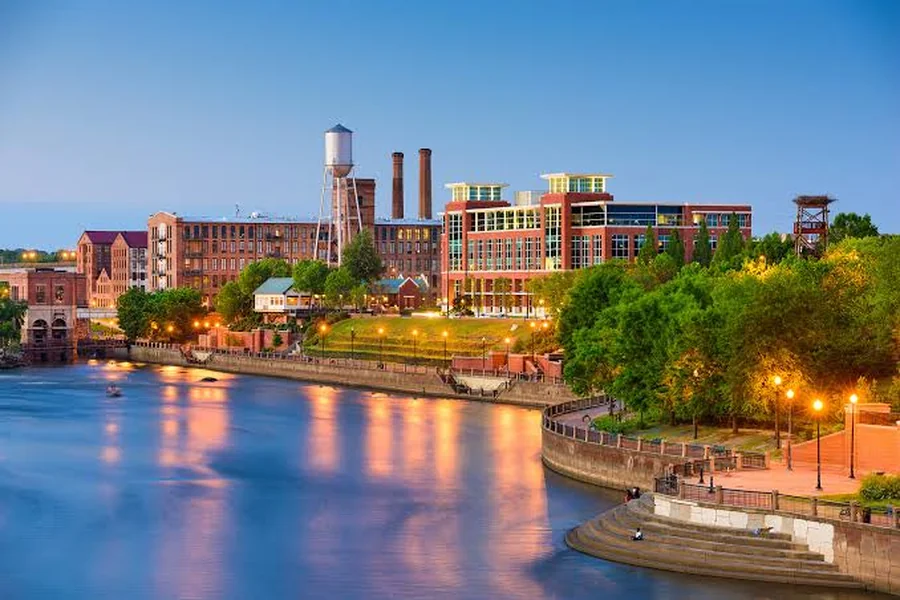
Three hundred dollars a square foot, forty-minute commutes on a good day, and the nagging feeling that you’re paying premium prices to live somewhere you barely have time to enjoy. That’s the reality many families are escaping when they leave major metro areas for smaller coastal suburbs. And one city keeps showing up in those conversations: Richmond Hill, Georgia.
This isn’t a fluke or a pandemic blip. The shift toward smaller, well-positioned coastal suburbs reflects something deeper about what families actually want from a home and a community. Richmond Hill sits at the center of that conversation, and understanding why requires looking past the real estate listings at the lifestyle math underneath them.
The Numbers Behind the Migration
You don’t have to take anyone’s word for the growth story. Richmond Hill’s 2024 population reached 19,839, representing a population change of more than 185% since 2000, according to city-data.com. That isn’t the kind of growth that happens by accident. People make deliberate decisions to move somewhere, and when nearly three times as many people choose a city over two decades, the reasons tend to be structural, not sentimental.
The 2026 projected population for Richmond Hill is 21,303, consistent with a 42.9% population change from 2019 to 2024 according to the U.S. Census Bureau’s American Community Survey, as compiled by georgia-demographics.com. That five-year window is telling. It spans a period of nationwide rethinking about where and how people want to live, and Richmond Hill kept growing through all of it.
The median age in the city sits at 31.1, and the average annual household income reached $105,695 in 2024, according to the U.S. Census Bureau. That’s a young, financially stable population base, and it shapes everything from school quality to local business investment.
What the Suburb Decision Actually Comes Down To
Most people frame the city-versus-suburb debate as a trade-off between energy and peace. That framing misses the point. What families are really running calculations on is value density: how much of what matters to them is accessible per dollar spent and per minute of effort.
Richmond Hill scores unusually well on that measure. You’re about 20 miles south of Savannah’s downtown, which means the restaurants, museums, and live music are genuinely close without requiring you to live at Savannah prices. The coast is accessible without requiring a dedicated beach trip that eats an entire day. And the community itself is sized at a level where a new family can actually feel like they belong within a year rather than a decade.
That last point matters more than most relocation guides admit. A city of roughly 19,000 people has functional PTA meetings, youth soccer leagues you can actually get your kid into, and neighbors who recognize your car. Anonymity is fine in your twenties. By the time you have school-age children, it tends to feel like a bug, not a feature.
The Suburb Selection Scorecard
Here’s a framework worth running before committing to any suburb, coastal or otherwise. Score each factor 1 to 5 based on your own family’s priorities, then compare total scores across locations:
| Factor | What to Evaluate | Richmond Hill Snapshot
|
|---|---|---|
| Commute Tolerance | Drive time to your primary employer or nearest job hub | ~20 miles to Savannah core; Fort Stewart within range |
| School District Quality | District ratings, new school investment, class sizes | Bryan County School District; newer facilities |
| Housing Value | Price per sq ft vs. comparable cities in the region | New construction from $410K range; competitive for coastal GA |
| Growth Trajectory | Is the city still building infrastructure to match population? | Active new community development underway |
| Lifestyle Access | Parks, restaurants, outdoor recreation within 30 minutes | Waterways, Savannah day-trips, coastal parks nearby |
Run this on three candidate suburbs side by side and the decision usually gets clearer fast. Richmond Hill tends to hold up well across all five factors, which is rare for a city its size at its price point.
Why New Construction Makes Sense in a Growing Market
Buying in a growing suburb means the inventory competition is real. When a city expands as quickly as Richmond Hill has, resale homes get multiple offers and tend to be priced accordingly. New construction sidesteps that friction entirely while adding something resale homes genuinely cannot match: modern energy efficiency built into the structure from day one.
This matters financially, not just philosophically. According to the U.S. EPA, ENERGY STAR certified new homes are at least 15 percent more energy efficient than homes built to current code, and include additional features that typically make them 20 to 30 percent more efficient than standard new homes. In a coastal Georgia climate where air conditioning runs hard through a long summer, that efficiency gap translates into real monthly savings year over year. You can read more about the EPA’s residential energy efficiency findings at epa.gov.
New construction also gives buyers something older homes can’t: choice. Floor plan selection, finish upgrades, lot positioning within a community, and the absence of deferred maintenance concerns. For a family relocating from a city where housing options were constrained by inventory and budget, having genuine input into how a home is configured feels like a significant shift.
“Buyers moving to growth markets increasingly prioritize community design and long-term build quality over square footage alone. The structure of a neighborhood, how it connects to schools, green space, and commercial corridors, drives long-term satisfaction more than any single feature.”
This reflects a broad consensus among residential planning researchers, echoed across multiple studies on post-2020 suburban migration patterns.
A Realistic Picture of the Richmond Hill Trade-Off
No suburb deserves a purely promotional write-up, so here’s the honest version. Richmond Hill’s rapid growth means some commercial infrastructure is still catching up. If you need a dense restaurant scene or a major hospital within ten minutes, you’ll feel the gap. The city is building toward that, but it’s not there yet.
What you get instead is quiet in the actual sense of the word, not the way it’s used in real estate brochures. Streets where kids ride bikes in the late afternoon. Neighbors who bring food over when you move in. A school pickup line that moves because everyone is coming from close by.
For families who’ve been grinding through years of metro life and wondering when the trade-off starts paying off, that’s not a small thing. If that version of life lines up with what your family is actually after, it’s worth a serious look at what’s being built in the area right now. Families ready to take the next step can buy a home in Richmond Hill GA with Landmark 24 builder and get real details on available floor plans, lot availability, and current pricing, which is a better starting point than any list of hypothetical pros and cons.
The Practical First Steps
Once you’ve run your suburb scorecard and the math points toward a coastal Georgia community, the actual process is more straightforward than most relocating families expect. A few things worth doing in order:
- Visit the community in person on a weekday morning, not a staged weekend open house. The commute traffic, school pickup patterns, and noise levels all read differently.
- Talk to residents who moved in 18 to 24 months ago. They’re past the honeymoon period and will give you unfiltered feedback on what surprised them.
- Compare total cost of ownership, not just purchase price. Property taxes, HOA fees, utility costs for a new versus older build, and commute costs all compound over five years.
- Understand the builder’s warranty structure before you sign. New construction warranties vary widely in what they cover and for how long.
Richmond Hill is one of those places that rewards the families who do the homework rather than falling for the headline numbers. The growth story is real, but what makes it worth considering is the more specific question: does this particular suburb match how your particular family actually lives?
That’s the question only you can answer. But the raw material here is genuinely strong, and the window to buy into a community before it fully matures is narrower every year. The population numbers suggest Richmond Hill has not reached its peak yet and is showing a trend of further growth. That matters for anyone thinking about long-term value, not just immediate lifestyle fit.

Passionate about exploring diverse ideas and sharing inspiration, I curate content that sparks curiosity and encourages personal growth. Join me at ElementalNest.com for insights across a wide range of topics.