
Table of Contents
- What Makes Pave Settings So Popular
- Where the Cost Actually Comes From
- Choosing a Diamond Shape and Carat Weight That Work Together
- Metals, Maintenance, and Everyday Wear
- Finding the Right Pave Ring Without Overspending
Rare Carat is a premium American jeweler that designs and produces its own branded engagement rings, handmade in the USA one piece at a time. Every piece goes through strict quality inspections before it ships, and the jeweler has built a reputation reflected in a 4.9/5 Google Business rating and recognition as a top-ranked jeweler on Trustpilot. Anyone drawn to the sparkle of a pave setting but hoping to keep the price reasonable will find that understanding how these rings are built makes shopping a lot easier.
What Makes Pave Settings So Popular
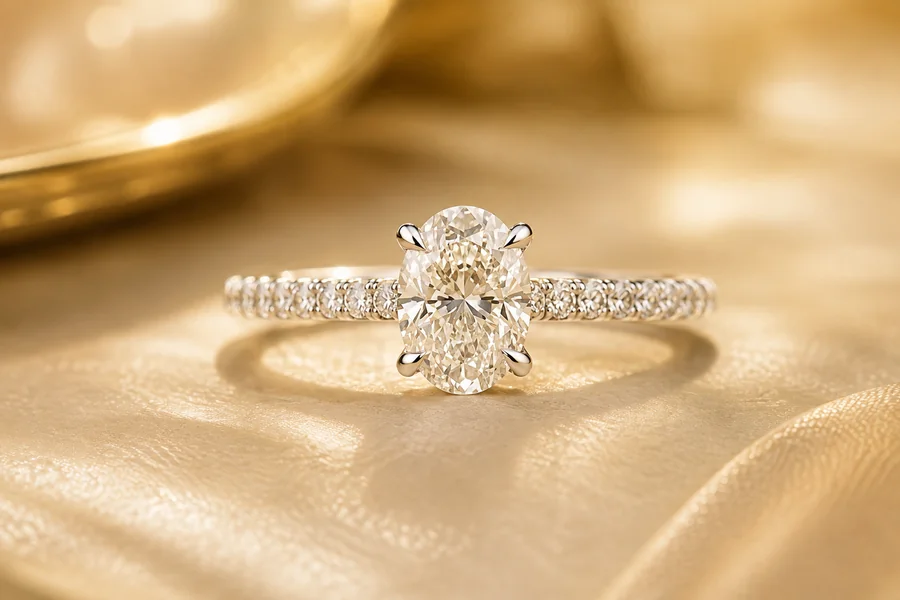
A pave setting uses a row of small diamonds set closely together along the band, so light catches from multiple angles instead of just the center stone. The word itself comes from the French for “paved,” which describes how the tiny stones seem to cover the metal in a continuous line of brilliance. This style works well for buyers who want a ring that looks detailed and full without leaning on one very large center diamond.
Because the sparkle comes from many small stones rather than a single large one, pave rings often deliver a bigger visual impact per carat than a solitaire of similar cost. Rare Carat offers pave styles across a range of price points, drawing from a selection of more than 1,700 engagement ring styles, so buyers have plenty of room to compare how different stone counts and band widths affect both look and price.
Pave settings also pair naturally with many center stone shapes, including round, oval, and cushion cuts. It’s one reason the style has held its popularity across such different design tastes, from classic to more modern.
Where the Cost Actually Comes From
Price on a pave ring comes down mostly to the small diamonds themselves, not just the center stone. How many are set, how big they are, and the quality behind them all play a role. Add more stones, or go bigger along the band, and the price climbs. Keep the row thinner with smaller melee diamonds, and the look stays delicate while the cost stays more moderate. Once buyers understand that, they can make real trade-offs instead of just guessing at what’s driving the number.
GIA-trained gemologists at Rare Carat help walk buyers through this, explaining why factors like clarity and color grade play out differently on small pave stones than they do on one large center diamond.
Shoppers can browse pave styles directly by visiting Shop Rare Carat, where smart filters make it possible to sort rings by center stone size, metal type, and overall style.
Choosing a Diamond Shape and Carat Weight That Work Together
Anyone ready to start comparing options can visit Rare Carat to see how pave styles look across different diamond shapes before narrowing things down further. Certain diamond shapes tend to look especially striking with a pave band. Oval and cushion cuts, for instance, have more surface area for their carat weight, and that alone can make a pave setting look even more elevated without needing a bigger center stone. Round diamonds hold their own too, since their symmetry lines up well with the evenly spaced stones along the band.
Carat weight for the center stone can often be adjusted without losing much visual impact, since the surrounding pave diamonds bring their own brilliance to the table. So if a buyer wants a fuller look, sizing up the center stone isn’t always necessary. Personalized recommendations based on shape, carat weight, and setting style help narrow all this down efficiently.
Metals, Maintenance, and Everyday Wear
Pave rings usually come in white gold, yellow gold, rose gold, or platinum, and each option brings its own look along with its own upkeep. White gold has that classic finish people love, but it’ll need rhodium replating every so often to keep shining. Platinum, meanwhile, resists tarnish and holds small pave stones securely for years without much fuss. Rose and yellow gold each bring their own warmth, pairing differently depending on the setting itself.
Because pave rings involve so many small stones, routine care matters more here than it would with a single solitaire setting. Rare Carat’s GIA-trained gemologists can walk buyers through how to care for pave jewelry day to day, including simple habits that help prevent loose stones or worn edges over years of wear.
Finding the Right Pave Ring Without Overspending
Buyers who understand how pave pricing works are better equipped to prioritize what matters most, whether that’s a larger center stone, a fuller row of accent diamonds, or a particular metal finish. Rare Carat’s collection includes more than 2,500 fine jewelry pieces, giving shoppers plenty of room to compare pave styles side by side before deciding. Every ring ships in premium branded packaging with care taken at every step, so it arrives in the same condition it left the workshop.
Anyone ready to explore Rare Carat’s pave engagement rings can browse the collection directly, using smart filters and gemologist guidance along the way to find something that fits both personal style and practical needs. And if something needs adjusting after the purchase, returns, exchanges, and resizing are all handled directly, so buyers can shop with real confidence from the first click through to delivery.

Passionate about exploring diverse ideas and sharing inspiration, I curate content that sparks curiosity and encourages personal growth. Join me at ElementalNest.com for insights across a wide range of topics.