
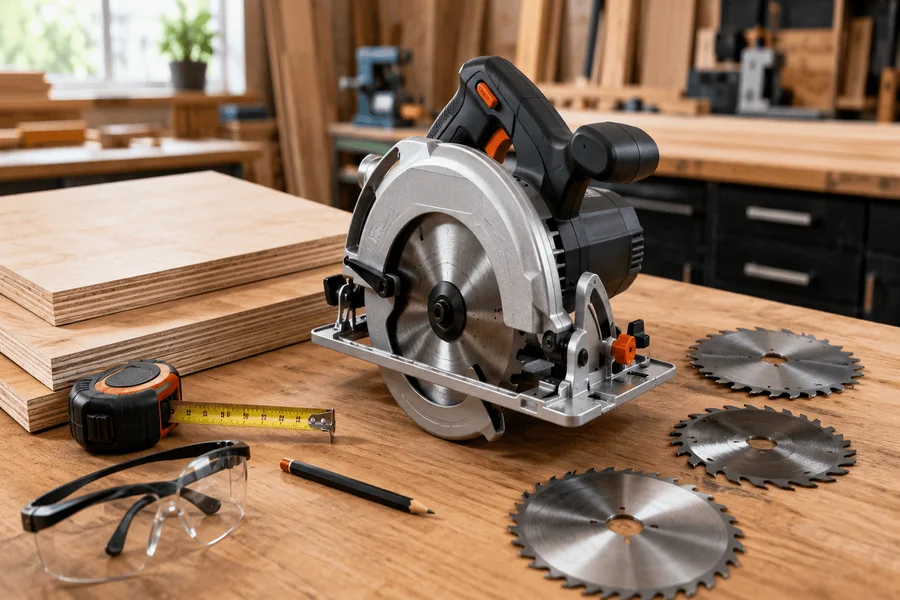
A circular saw is one of the most versatile tools in any workshop, whether you’re framing a wall, building furniture, cutting plywood, or tackling weekend DIY projects. Yet after working with homeowners and contractors for more than a decade, I’ve noticed that many buyers choose a saw based solely on price or motor size. That approach often leads to disappointing results because the blade, power level, and intended application all work together to determine cutting performance.
Before purchasing a new circular saw, it’s important to understand how different models are designed and which features matter for the work you actually plan to do. A well-matched saw not only produces cleaner cuts but also improves efficiency, safety, and overall satisfaction with every project.
This guide explains how to select the right blade, determine the ideal power level, and avoid common buying mistakes that can limit your tool’s performance.
Why Choosing the Right Circular Saw Matters More Than Buying the Most Powerful One
Many first-time buyers assume that the most powerful circular saw automatically delivers the best results. In reality, cutting quality depends on balancing motor performance, blade selection, ergonomics, and the materials being cut.
The right saw provides several advantages:
- Cleaner, more accurate cuts
- Reduced blade binding
- Better control and stability
- Less operator fatigue
- Longer blade life
- Improved safety
Professionals often select different saws and blades depending on the project because versatility comes from choosing the right combination—not simply the biggest motor.
Understanding Blade Size and Why It Affects Cutting Performance
Blade diameter directly determines the maximum cutting depth of a circular saw.
6½-Inch Blades
These compact blades are ideal for:
- Lightweight DIY projects
- Shelving
- Interior trim work
- Smaller framing tasks
Their lighter weight also improves maneuverability.
7¼-Inch Blades
This is the industry standard for most homeowners and contractors.
They handle:
- Dimensional lumber
- Plywood
- Deck boards
- Pressure-treated lumber
- Most remodeling projects
For general-purpose use, a 7¼-inch circular saw offers the best balance of cutting capacity and versatility.
Choosing the Right Blade for Different Materials
Even the most powerful circular saw cannot compensate for an incorrect blade.
Here’s a simple guide:
Framing Blade (24 Teeth)
Best for:
- Construction lumber
- Fast rip cuts
- Deck framing
Combination Blade (40–50 Teeth)
Ideal for:
- General woodworking
- Crosscuts
- DIY projects
- Mixed applications
Fine Finish Blade (60–80 Teeth)
Recommended for:
- Hardwood
- Plywood
- Cabinet work
- Trim installation
Specialty Blades
Designed specifically for:
- Fiber cement
- Laminate flooring
- Aluminum
- Plastic
- Composite materials
Using the correct blade often improves cut quality more than upgrading to a larger motor.
How Much Power Do You Actually Need?
Power requirements depend largely on the material thickness and frequency of use.
Occasional DIY Users
A compact cordless circular saw offers enough performance for:
- Home repairs
- Furniture projects
- Shelving
- Light remodeling
Frequent Home Improvement Projects
Choose a brushless cordless or corded model capable of maintaining speed under heavier loads.
Professional Contractors
Daily construction work often demands higher sustained output, particularly when cutting engineered lumber or thick hardwoods throughout the workday.
Rather than focusing only on voltage or amperage, evaluate how consistently the saw maintains blade speed under load.
Cordless vs. Corded Circular Saw: Which One Fits Your Workflow?
Modern cordless technology has transformed jobsite mobility, but corded models still serve an important role.
| Feature | Cordless Circular Saw | Corded Circular Saw |
| Mobility | Excellent | Limited |
| Runtime | Battery dependent | Continuous |
| Maintenance | Low | Low |
| Convenience | Outstanding | Moderate |
| Heavy Continuous Cutting | Good | Excellent |
For most homeowners, cordless models now provide more than enough performance while eliminating extension cords.
Professionals performing long production cuts may still prefer corded equipment for uninterrupted operation.
Features That Improve Accuracy and Ease of Use
Motor power matters, but several other features have an even greater impact on everyday usability.
Look for:
- Brushless motor technology
- Electric blade brake
- Adjustable bevel capacity
- Tool-free depth adjustment
- Dust collection compatibility
- LED work light
- Comfortable ergonomic grip
These features improve control while reducing fatigue during extended projects.
A Practical Five-Step Process for Choosing the Right Circular Saw
If you’re unsure where to begin, follow this simple buying framework.
- Identify the materials you’ll cut most often.
- Choose the appropriate blade size.
- Decide between cordless and corded operation.
- Select a compatible battery platform if buying cordless.
- Invest in high-quality blades designed for your typical projects.
This process helps you avoid paying for unnecessary features while ensuring the saw meets your long-term needs.
Common Buying Mistakes That Lead to Poor Cutting Results
Over the years, I’ve seen several purchasing mistakes repeated again and again.
Avoid these common errors:
- Buying based only on motor power.
- Using one blade for every material.
- Ignoring saw weight and balance.
- Choosing the cheapest blades available.
- Overlooking battery compatibility.
- Forcing dull blades through hardwood.
Many cutting issues are solved simply by replacing a worn blade with one designed for the specific material.
Expert Tips for Better Performance and Longer Blade Life
Proper technique extends both blade life and tool performance.
Keep these best practices in mind:
- Let the blade reach full speed before beginning the cut.
- Support material correctly to prevent pinching.
- Keep blades clean to reduce friction.
- Replace dull blades promptly.
- Allow the saw to do the work rather than forcing it.
- Store blades in protective cases to prevent tooth damage.
These habits improve both cut quality and overall safety.
Trusted Resources for Circular Saw Safety
For additional guidance on safe tool operation and home improvement best practices, consult these trusted organizations:
- Occupational Safety and Health Administration (OSHA): https://www.osha.gov
- U.S. Consumer Product Safety Commission (CPSC): https://www.cpsc.gov
These organizations provide valuable recommendations for operating power tools safely and maintaining equipment properly.
Frequently Asked Questions
What size circular saw is best for most homeowners?
A 7¼-inch circular saw is the most versatile option, offering sufficient cutting depth for framing, plywood, decking, and most home improvement projects.
Does a higher tooth count produce cleaner cuts?
Yes. Blades with more teeth generally create smoother cuts but cut more slowly, making them ideal for finish carpentry and cabinetry.
Are cordless circular saws powerful enough for construction?
Modern brushless cordless models provide excellent performance for nearly all residential construction and remodeling applications.
How often should circular saw blades be replaced?
Replace blades whenever they become dull, chipped, or begin producing burn marks or rough cuts. Proper maintenance significantly extends blade life.
Is a brushless motor worth the extra investment?
For anyone who uses a circular saw regularly, absolutely. Brushless motors improve efficiency, reduce maintenance, increase runtime, and typically last much longer than brushed motors.
Final Thoughts
Choosing the right circular saw isn’t about buying the largest motor or the highest-priced model. The most effective setup combines the appropriate blade, adequate power, comfortable ergonomics, and features that match the projects you complete most often.
By understanding how blade selection, motor performance, cutting depth, and safety features work together, you’ll make a smarter investment that delivers cleaner cuts, greater efficiency, and dependable performance for years to come.

Passionate about exploring diverse ideas and sharing inspiration, I curate content that sparks curiosity and encourages personal growth. Join me at ElementalNest.com for insights across a wide range of topics.