
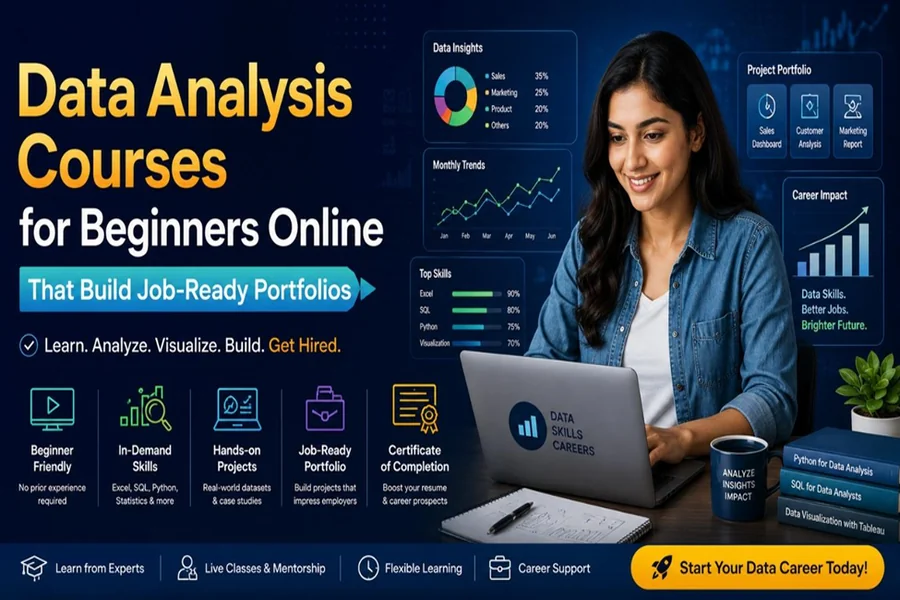
Data has become the world’s most valuable commodity. From tech giants to local healthcare clinics, organizations of every size rely on data to make critical decisions, optimize operations, and predict market trends. This shift has triggered an unprecedented surge in demand for skilled data professionals. However, as the field grows, the hiring landscape is shifting. Employers are no longer just looking for a piece of paper; they want proof of capability. For those looking to pivot into this lucrative field, finding comprehensive data analysis courses for beginners online that emphasize practical, project-based training is a strong way to launch a successful career.
Why a Strong Portfolio Matters More Than Just a Certificate
In the competitive field of data analytics, a certificate alone rarely secures an interview. Hiring managers are routinely flooded with resumes featuring identical credentials and bullet points. What truly sets a candidate apart is a robust, tangible portfolio. Recruiters want to know that you can handle messy, real-world data, not just pristine textbook exercises.
Theoretical knowledge tells an employer you understand the definitions; a portfolio proves you can execute. When reviewing entry-level talent, managers actively look for interactive dashboards, clean repositories on platforms like GitHub, structured SQL queries, and detailed business case studies. A portfolio bridges the gap between learning a concept and applying it, showcasing your ability to transform raw, disorganized data into actionable business strategies. If you want to capture the attention of top-tier companies, you need to enroll in the best data analytics courses online that prioritize building these tangible assets from day one.
What to Look for in a Beginner-Friendly Program
Not all online programs are created equal. When evaluating your options, look for specific pillars that guarantee a smooth transition from novice to job-ready analyst.
Hands-on Projects
The core of any good curriculum is experiential learning. Avoid courses that rely purely on passive video lectures. Instead, look for programs that utilize real business datasets—such as e-commerce transactions or healthcare metrics—and structure assignments around genuine industry case studies.
Essential Tools Covered
To be competitive in the job market, you must master the industry-standard toolkit. Ensure your chosen path covers:
- Excel: For foundational data manipulation and quick sorting.
- SQL: The universal language for querying databases.
- Python: Essential for advanced data cleaning, automation, and statistical analysis.
- Power BI & Tableau: The gold standards for data visualization and business intelligence.
Portfolio-Based Assignments
The curriculum should naturally culminate in portfolio-grade work. Look for courses that include comprehensive capstone projects, end-to-end dashboard creation, and explicit exercises in data storytelling—the art of explaining your technical findings to non-technical stakeholders.
Features of a Premium Learning Experience
The ideal training program acts as a complete ecosystem, taking you from a complete beginner to a confident professional. Premier online courses differentiate themselves by offering structured learning paths designed for adult learners who may be juggling current jobs or family responsibilities.
Beyond high-quality video content, look for platforms that offer dedicated mentor support. Having access to industry experts who can review your code, unblock your technical hurdles, and provide constructive feedback on your dashboards is invaluable. Furthermore, the finest programs do not abandon you at graduation. They integrate career guidance, including resume reviews, LinkedIn profile optimization, mock technical interviews, and industry-recognized certifications. When combined with lifetime access to updated course materials, these features ensure your skills remain sharp long after you land your first role. Programs such as those offered by SkillUp Online combine structured technical learning with human mentorship and career support to help learners prepare for roles in the technology workforce.
Portfolio Projects That Impress Employers
To maximize your employability, your portfolio should showcase a diverse range of analytical skills. Here are the top projects recruiters look for:
- Data Cleaning Project: Showcases your ability to handle missing values, fix structural errors, and filter out outliers. Recruiters value this because real-world data is famously messy.
- Exploratory Data Analysis (EDA): Uses Python to discover patterns, spot anomalies, and check assumptions within a brand-new dataset.
- Sales Performance Dashboard: Built with Tableau or Power BI, this demonstrates your ability to track Key Performance Indicators (KPIs) and present revenue trends clearly.
- Customer Segmentation Analysis: Uses data to group consumers by purchasing habits, proving you understand how data directly impacts marketing strategies.
Each project tells a story about your critical thinking, your technical proficiency, and your eye for design.
Tips for Choosing the Right Course
Selecting your educational path is a significant investment of your time and energy. To make an informed choice, always do your due diligence before enrolling:
- Scrutinize the Curriculum: Ensure it covers the full modern data stack (SQL, Python, and visualization tools), not just theoretical math.
- Verify Instructor Backgrounds: Learn from active industry practitioners, not just academics.
- Check the Project Requirements: Confirm that you will build a unique portfolio rather than following a copy-paste tutorial.
- Evaluate Career Infrastructure: Look into their track record for placement assistance and interview preparation.
- Read Student Reviews: Seek out testimonials from alumni who successfully transitioned into data roles from non-technical backgrounds.
Conclusion
Breaking into the world of big data does not require a costly, multi-year university degree. It requires practical, hands-on skills that you can immediately prove to a prospective employer. While certifications add credibility to your resume, your portfolio is what will ultimately land you the job. By focusing your search on programs that emphasize real-world datasets, capstone projects, and expert mentorship, you will position yourself far ahead of the competition. Take the time to select a course that prioritizes building these assets, and watch how quickly your career trajectory changes.

Passionate about exploring diverse ideas and sharing inspiration, I curate content that sparks curiosity and encourages personal growth. Join me at ElementalNest.com for insights across a wide range of topics.