
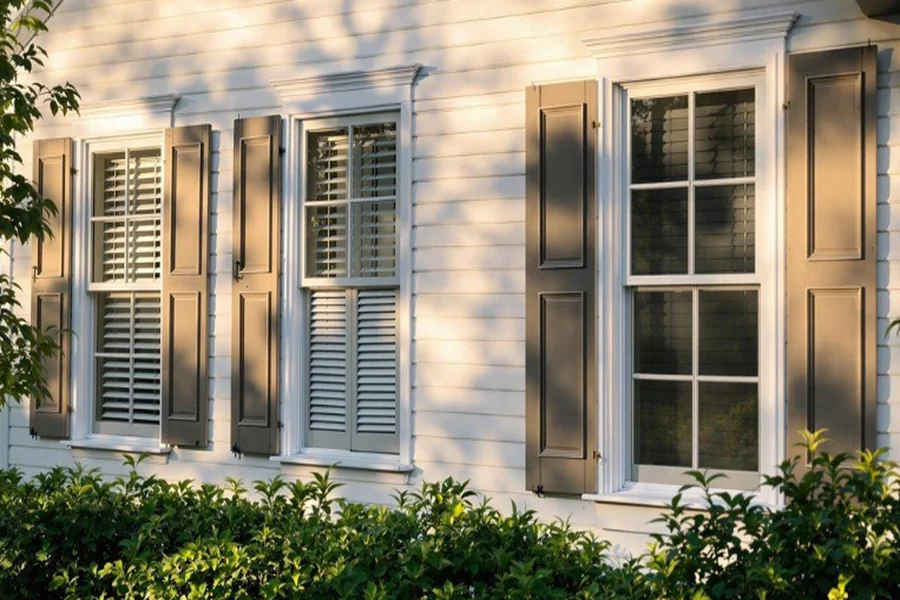
Paint sheen changes more than how shutters look in the sunlight. The finish you choose affects how strongly they reflect light, how noticeable surface imperfections become, and, to a smaller extent, how the painted surface responds to heat.
That makes sheen worth considering alongside color when updating exterior shutters. A glossy black shutter and a flatter black shutter may share the same basic color, yet they can look noticeably different once installed outside.
What Paint Sheen Actually Means
Paint sheen describes how much light a painted surface reflects. Flat and matte finishes reflect relatively little light, while satin, semi-gloss, and gloss finishes become progressively more reflective.
The difference is especially noticeable outdoors. Direct sunlight can make glossy shutters appear brighter, while a low-sheen finish usually gives the color a softer, more muted appearance.
Common exterior finishes include:
- Flat or matte: Minimal shine and a subdued appearance
- Satin: A soft sheen that provides some light reflection
- Semi-gloss: More noticeable shine and contrast
- Gloss: A highly reflective, polished-looking surface
Not every finish suits every shutter material, so consider the paint manufacturer’s recommendations.
Sheen Changes How Color Looks
Lighting conditions can make the same paint color appear different throughout the day. Sheen adds another variable because reflective finishes interact more noticeably with changing sunlight.
On house shutters, darker colors with a satin or semi-gloss finish can create stronger contrast against light siding. A flatter finish may make the same dark shade appear quieter and less prominent.
Glossy finishes can also emphasize the shape of louvers, raised panels, and other details because light catches their edges. However, that extra reflection may also highlight dents, uneven surfaces, or imperfections.
What About Heat Absorption?
Color generally plays a larger role in solar heat absorption than sheen. Dark surfaces tend to absorb more solar energy than light-colored surfaces, while lighter colors reflect more incoming sunlight.
Sheen can influence reflectivity, but choosing gloss instead of satin does not automatically make a dark shutter behave like a light-colored one. Material, paint formulation, exposure, ventilation, and local climate can all affect surface temperature.
This matters because excessive heat can contribute to expansion, warping, fading, or coating deterioration in some shutter materials. Always check whether the selected color and coating are recommended for the material.
Consider Sun Exposure Before Choosing
Shutters in intense afternoon sun face different conditions than those on a shaded side of the house. South- and west-facing areas often receive substantial direct sunlight, depending on the home’s location and surroundings.
Before you order exterior shutters online, consider both the shutter material and the amount of sunlight each side of the house receives. Product-specific finishing guidance can help you avoid choosing a paint or color that isn’t suitable for the material.
Balance Appearance With Maintenance
Higher-sheen finishes often create a crisp appearance and may be easier to wipe clean because their surfaces are smoother. However, dust, scratches, and imperfections can sometimes become more visible under reflected light.
Lower-sheen finishes hide minor surface irregularities more effectively, but some can hold dirt more noticeably or be less convenient to clean. Exterior-rated satin finishes often provide a practical middle ground when the shutter material allows them.

Passionate about exploring diverse ideas and sharing inspiration, I curate content that sparks curiosity and encourages personal growth. Join me at ElementalNest.com for insights across a wide range of topics.