
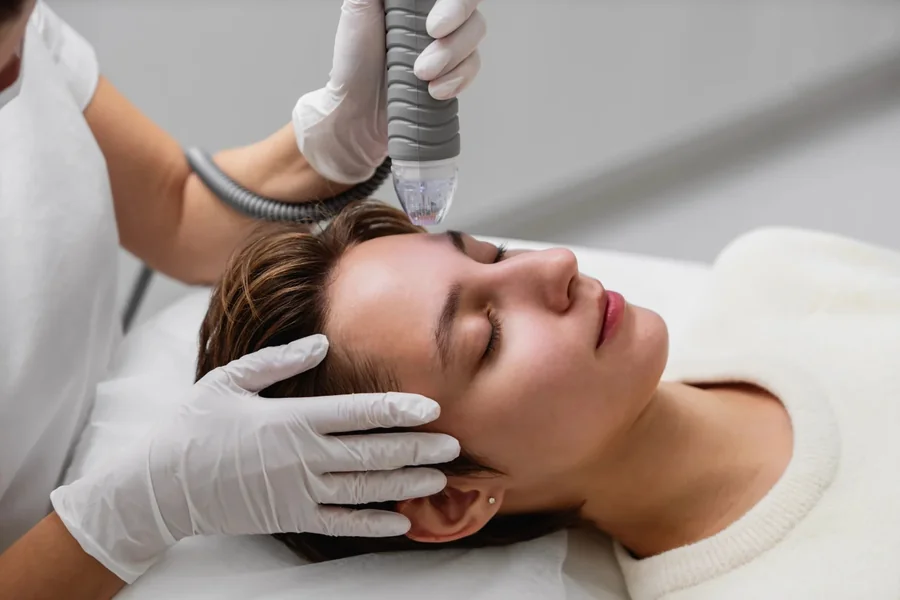
Ten thousand medspa locations. That’s where the U.S. industry stood in 2023, up from 8,899 the year before, and the number is still climbing. If you’ve been watching this sector from the outside and wondering whether to make a move, the data suggests the window is open right now, and it won’t stay that way forever.
Career pivots are scary. You weigh lost seniority, new certifications, and the gut-check of starting over. But the medspa space is unusual: it rewards clinical and non-clinical professionals alike, it has defined training pathways, and it’s sitting on top of a consumer trend that has proven resistant to economic headwinds. That combination doesn’t show up very often.
The Numbers Behind the Buzz
Skeptics of any “hot industry” claim deserve hard figures, so here they are. The American Society of Plastic Surgeons reported a 5 percent rise in plastic surgeries and a 7 percent rise in minimally invasive procedures in 2023 compared to the prior year , according to their 2023 Procedural Statistics report.
Minimally invasive treatments, things like neuromodulator injections, laser resurfacing, and chemical peels, are precisely the services medspa practitioners deliver day in and day out. A 7 percent volume jump in one year, in the middle of high interest rates and tighter consumer budgets, is a clear signal that demand here is structural, not cyclical.
On the workforce side, the picture is just as compelling. The Bureau of Labor Statistics Occupational Outlook Handbook puts the 2023 median pay for skincare specialists at $43,200 per year, with employment projected to grow 7 percent from 2024 to 2034, which is faster than the average for all occupations , as reported by Metaintro’s 2026 industry analysis. That growth projection doesn’t yet price in the continued medspa location expansion currently underway. In other words, the official forecast may actually be conservative.
“The demand for aesthetic procedures remains comparatively robust,” said ASPS President Steven Williams, MD, commenting on 2023 procedure volume data even amid tighter consumer budgets, suggesting the category has moved from discretionary to prioritized spending for a large segment of patients.
The Three-Tier Entry Model: Which Door Is Yours?
One of the most overlooked truths about the medspa industry is that it doesn’t have one career path. It has three distinct tiers, each requiring a different type of training commitment and each offering a different ceiling. Understanding which tier fits your current background before you start shopping for programs will save you time and money.
Tier 1: Career changers with no clinical background. This is the person coming from retail, teaching, corporate, or any field with zero beauty or medical history. Entry here requires a state-approved esthetics license, which typically means 150 to 260 hours of coursework depending on the state. Florida, for example, sits at 220 hours for its Facial Specialist designation. The time commitment is months, not years. The cost is a fraction of a nursing or PA degree. And the resulting license opens the door to medspa employment in facial treatments, microneedling, dermaplaning, and chemical peels.
Tier 2: Licensed nurses and nurse practitioners. RNs and LPNs already have the clinical foundation medspa owners want. What they often lack is hands-on aesthetic procedure training, specifically injectables, cannula technique, and complication recognition. A focused CE-bearing injector course can bridge that gap in as little as 40 hours. The NP or PA who already carries prescribing authority is genuinely one short course away from running an injector chair independently. Consider the math: a full-time NP at a medspa in a metro market frequently earns a higher effective hourly rate than the same clinician in a traditional outpatient setting, and with a schedule they largely control. That’s the kind of calculation worth running.
Tier 3: Physicians and surgeons. MDs and DOs moving into aesthetics aren’t changing careers so much as adding a revenue channel or building an exit from hospital employment. Advanced injector training, energy-based device certification, and business development curriculum tailored to launching a medspa practice are the building blocks here. The time commitment is higher, the tuition reflects it, but the earning ceiling in a well-run aesthetic practice is also categorically different from a salaried hospital role.
Knowing your tier matters because it shapes which medical aesthetics training programs make sense for your situation. A Tier 1 candidate has no business spending $15,000 on a physician-level injector course. A licensed PA has no reason to sit through 220 hours of foundational esthetics content. Match the training to the credential you already hold.
What Makes This Moment Different From Five Years Ago
The medspa industry isn’t new. What’s new is the combination of factors converging right now that make entry particularly well-timed.
First, consumer behavior has changed permanently. Aesthetic treatments have crossed a cultural threshold, moving from something people did quietly to something they discuss openly. Preventative Botox is part of a skincare routine for a growing segment of Gen Z clients. That demographic will be in treatment chairs for decades.
Second, staffing shortages are real and documented. The American medspa industry expanded from 8,899 to more than ten thousand locations in a single year, and roughly 40 percent of operators report staffing shortages they cannot fill with current talent. When four in ten employers in a sector say they can’t find qualified people, that’s not an anecdote. That’s a structural supply gap.
Third, training has gotten faster and more modular. You no longer have to choose between a full-time 18-month program or nothing. Modular weekend formats, CE workshop bundles, and focused track curricula mean a working professional can layer credentials without leaving a current income stream.
A Practical Decision Framework Before You Enroll
Before paying a deposit anywhere, run through these four questions. They work as a filter, not a checklist, so answer them honestly.
- What license do you currently hold? Your existing credential determines the training tier you belong in. Don’t start from scratch if you don’t need to.
- What’s your income floor during transition? If you need to keep working full-time, a weekend modular format is non-negotiable. If you can compress into a four-to-eight-week intensive, you finish faster and start earning sooner.
- Where do you want to practice? State licensing rules vary significantly. A Florida-approved program is the right credential for someone planning to practice in Florida. Don’t assume portability.
- Do you want a job, or do you want to own? Employment and ownership require different skill sets beyond the clinical training. A program that includes medspa business curriculum is meaningfully different from one that stops at technique.
The answers to those four questions will narrow your options considerably. From there, the comparison is mostly about cohort size, clinical hours on live models versus mannequins, and whether CE or CME credit is part of the package for your license type.
The Window Is Open, But It Moves
Supply gaps in growing industries don’t stay open indefinitely. As more training programs graduate more practitioners, competition for medspa chairs will normalize. The professionals who entered the field between 2023 and 2026 are building track records, client rosters, and reputations right now. That tenure matters when the next hiring cycle gets more competitive.
If you’ve been sitting on this decision, the clearest thing the data can tell you is this: the structural conditions that make this pivot attractive are present today. The question isn’t whether the medspa industry is growing. It clearly is. The question is whether your name is on a patient chart in this industry two years from now, or whether you’re still watching from the outside.

Passionate about exploring diverse ideas and sharing inspiration, I curate content that sparks curiosity and encourages personal growth. Join me at ElementalNest.com for insights across a wide range of topics.