
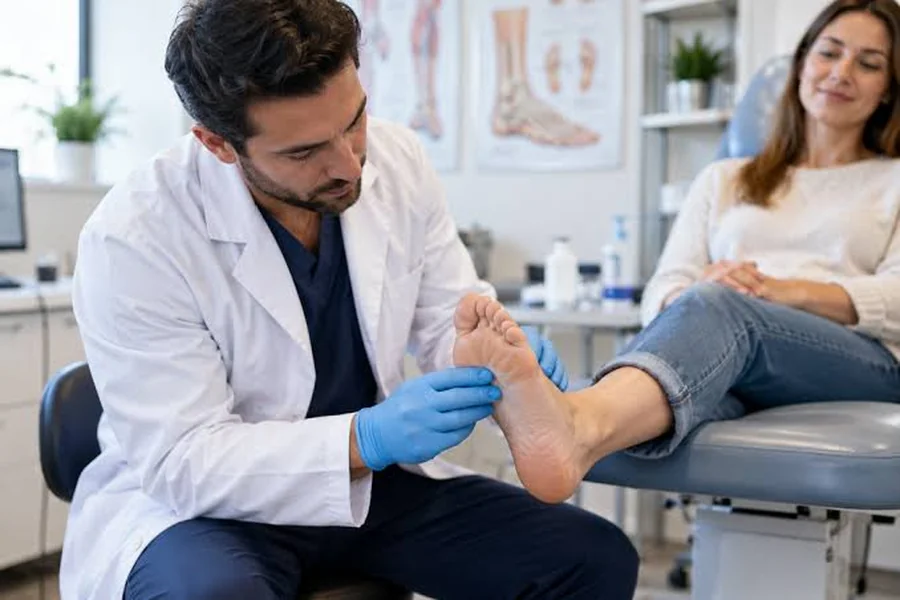
Most podiatrists are excellent clinicians and terrible marketers. That’s not an insult. You spent years learning biomechanics, surgical technique, and patient care. Nobody made you take a course on Google Business Profiles. But here’s the reality: your waiting room doesn’t fill itself, and the practices growing fastest right now aren’t always the best clinically. They’re the ones that show up where patients are already looking.
These five strategies are built specifically for podiatry practices. No bloated ad budgets, no marketing agency retainers required. You can start executing most of these within a week.
Why Most Podiatry Practices Struggle to Attract New Patients
The old model was simple: build a relationship with a few primary care physicians, and they’d send you a steady stream of referrals. That pipeline still exists, but it’s narrower than it was a decade ago. Insurers have tightened networks, patients have gotten more independent in how they choose specialists, and the internet has handed your prospective patients a tool they’re actively using to pick their next provider.
According to the U.S. Bureau of Labor Statistics’ 2024 Occupational Outlook Handbook, employment of podiatrists is projected to grow just 2 percent from 2024 to 2034, slower than the average across all occupations. That modest growth means a lot of established and new practices are competing for the same patient base in every metro market.
If your marketing strategy is mostly “hope people find us,” you’re already giving ground to a practice down the street that knows how to show up on page one of Google for “heel pain relief near me.”
The Patient Intent Ladder: Know Where Your Patients Are
Before you spend a dollar on advertising, you need a mental model for how podiatry patients actually move toward booking an appointment. I call this the Patient Intent Ladder, and it has four rungs.
- Awareness: The patient notices a problem (heel hurts in the morning) but hasn’t searched anything yet.
- Research: They Google symptoms, read articles, and start forming a sense of what they might have.
- Comparison: They search for local providers, read reviews, and look at practice websites side by side.
- Decision: They pick up the phone or tap the booking button.
Most podiatry marketing aims at the Decision rung. Run an ad, capture someone ready to book. That works, but it’s expensive and short-lived. The smarter play is to show up at the Research rung, too. Someone Googling “why does my heel hurt in the morning” at 11pm isn’t ready to call. But if your blog post answers that question clearly, your practice name is the first one they remember when they slide down to the Comparison rung the next day.
Think about a runner in Louisville who wakes up every morning with stabbing heel pain. She searches the symptom, lands on an article that mentions plantar fasciitis and suggests seeing a heel pain specialist in Louisville. That article just moved her from Research to Comparison, and the practice that wrote it is already at the top of her mental shortlist.
Map your content to every rung, and you stop competing only on price and location.
Build a Review Engine, Not a Review Hope
Podiatrists often have genuinely happy patients who never leave a review. Meanwhile, one frustrated patient writes three paragraphs about a billing issue on Google. You can’t manage what you don’t measure, and you can’t grow what you don’t ask for.
A nationwide survey by rater8, conducted in December 2024 with more than 1,000 U.S. adult patients, found that 84% of patients check online reviews before choosing a new healthcare provider. That number should anchor every conversation you have about reputation management.
“Online reviews are no longer a supplementary tool for patients. They are a driving force behind healthcare decisions.”
— rater8, How Patients Choose Their Doctors, 2025
The fix isn’t complicated. Train your front desk to mention reviews at check-out for satisfied visits. Send a text or email follow-up within 24 hours of an appointment with a direct link to your Google review page. You don’t need software for this on day one. A spreadsheet tracking who was asked and whether they responded is enough to start.
Once you’re consistently getting new reviews, respond to every single one. The positive ones deserve a short, warm thank-you. The negative ones deserve a calm, professional acknowledgment. Prospective patients read your responses just as carefully as they read the original review, and how you handle criticism tells them more about your practice culture than five-star ratings ever could.
Local SEO Is Your Most Durable Marketing Asset
Paid ads stop working the moment you stop paying. Local search equity compounds over time. If you invest in it now, the organic leads it generates two years from now won’t cost you anything per click.
Start with your Google Business Profile. It’s free, and it’s the first thing most patients see. Your profile needs accurate hours, a complete list of conditions you treat, at least 10 photos (reception area, exam room, staff), and responses to every review you receive. Practices that treat their Google Business Profile like a set-and-forget listing are leaving patient volume on the table.
Next, get your website’s service pages right. Each major condition you treat, plantar fasciitis, heel spurs, Achilles tendinitis, should have its own dedicated page. Not a paragraph on a general “Services” page. A full page with a clear description of the condition, how your practice approaches it, and a direct call to action. These pages do double duty: they rank for condition-specific searches, and they do the pre-appointment education that used to happen over the phone.
Consistency in your NAP (name, address, phone number) across every online directory matters more than most practices realize. Yelp, Healthgrades, ZocDoc, and even niche directories pull that data, and inconsistencies can suppress your local rankings.
A 30-Day Action Checklist to Start Now
Here’s a concrete sequence to run your first month. Do them in order. Don’t skip ahead.
- Claim and fully complete your Google Business Profile. Add photos, update hours, write a 100-word practice description.
- Audit your NAP across the top five directories: Google, Yelp, Healthgrades, ZocDoc, WebMD. Fix any inconsistencies.
- Create a dedicated service page for your highest-volume condition. Publish it with a clear call to action.
- Set up a post-appointment review request. Text message works better than email for this. A single sentence with a direct link is enough.
- Write one blog post targeting a symptom-based search term, not a brand term. “What causes heel pain in the morning” outperforms “Louisville podiatry” for capturing Research-rung patients.
- Contact the two or three primary care offices you’re closest to. Not to ask for referrals. To offer a free lunch-and-learn about foot and ankle conditions they commonly see. The relationship matters more than the pitch.
| Marketing Channel | Time to First Results | Cost Level | Longevity
|
|---|---|---|---|
| Google Business Profile | 2 to 4 weeks | Free | Ongoing compound growth |
| Review generation | 1 to 3 weeks | Low | Permanent visibility lift |
| Service page SEO | 2 to 6 months | Low to medium | Long-term organic leads |
| Symptom blog content | 3 to 9 months | Low | Evergreen patient education |
| Google Ads | Days | High | Stops when budget stops |
| Physician outreach | 1 to 6 months | Low | Builds durable referral base |
The Practice That Markets Consistently Wins
There’s no single tactic that grows a podiatry practice on its own. The practices that pull ahead do so because they show up consistently, on Google, in their patients’ inboxes, in the community, and in the search results of people who are one bad morning away from picking up the phone.
Pick two things from this list and actually do them this week. Not next quarter. This week. The practices that dominate locally didn’t get there with a bigger budget. They got there with a tighter system and longer commitment. What’s the one channel your practice has completely ignored so far?

Passionate about exploring diverse ideas and sharing inspiration, I curate content that sparks curiosity and encourages personal growth. Join me at ElementalNest.com for insights across a wide range of topics.