
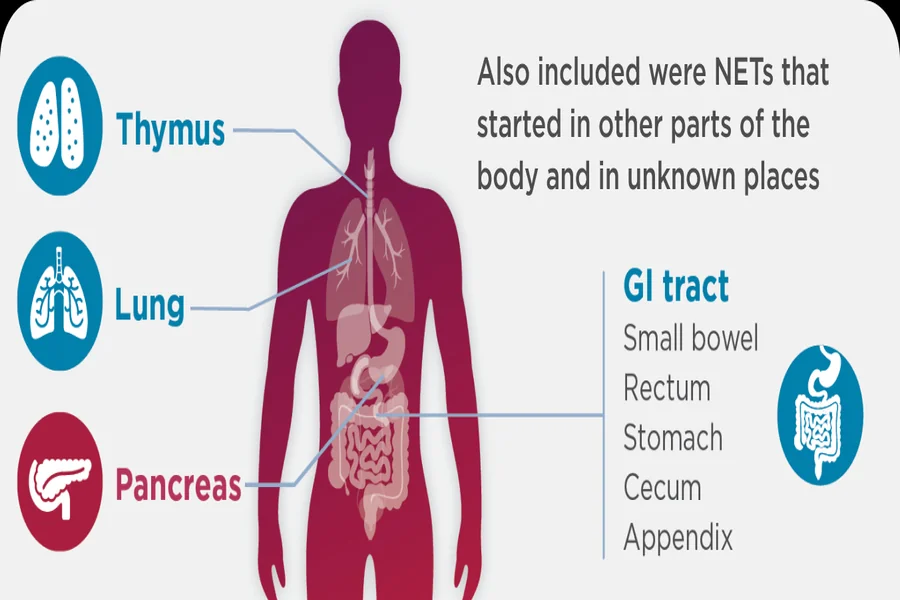
Most people with a neuroendocrine tumor diagnosis hear a version of the same speech: “It grows slowly. You can live with it for years.” And that’s often true. But “living with it” covers a huge range, from someone thriving with minimal disruption to someone barely keeping up with daily life because of fatigue, diarrhea, flushing, and anxiety that no single prescription fully controls. The research on what NET patients actually experience tells a more complicated story than the slow-growth narrative suggests, and understanding it changes how you think about what support you actually need.
The Numbers Behind the NET Quality of Life Problem
NETs were once considered rare enough that few large-scale studies existed. That picture has changed fast. According to a population-based analysis of the National Cancer Institute’s Surveillance, Epidemiology, and End Results (SEER) program, the age-adjusted incidence rate of NETs increased 6.4-fold between 1973 and 2012, rising from 1.09 per 100,000 to 6.98 per 100,000. More diagnoses mean more patients navigating long-term disease management, often for decades.
So how is that going for people? Not as well as the optimistic framing suggests. Patients with NETs demonstrated worse health-related quality of life scores compared to both the general population and a sample of mixed cancer patients and survivors. That comparison to other cancer patients is worth pausing on. NETs aren’t just hard for a rare-cancer diagnosis. They’re hard by any oncology standard.
The symptom picture is specific and relentless. Patients with recurrent disease reported poorer physical, social, and mental function. Those with recurrent NETs showed significantly higher anxiety, and also reported markedly impaired overall physical function, impaired sleep, and significant fatigue compared to patients with no current NET. These aren’t abstract metrics. They’re the reasons someone cancels plans, skips work, or stops going to the gym.
Research published by the SEER program is available through PubMed (Yao et al., 2017), and it remains one of the most cited epidemiological sources for understanding how NET incidence and outcomes have shifted over four decades.
The Gap Treatment Doesn’t Close
Here’s the honest tension at the center of NET care: medical treatment manages the tumor. It doesn’t automatically rebuild the life the tumor disrupted.
Think about a patient like Maria. She’s four years post-diagnosis, stable on a somatostatin analog, and her scans look fine. Her oncologist is pleased. But she’s gained weight because anxiety has changed her eating, she’s sleeping poorly, her exercise routine collapsed after a bad bout of diarrhea last spring, and she hasn’t figured out how to talk to her employer about her energy levels. Her labs are good. Her day-to-day life is not.
Maria’s situation is the rule, not the exception. Disease stability and quality of life aren’t the same measurement. NET patients reported worse health-related quality of life scores compared to the general population, and NET-related symptoms such as diarrhea and flushing were associated with reduced quality of life in a cross-sectional study. Managing a chronic, functional illness without a structured plan for lifestyle is like fixing the engine but never touching the brakes.
The standard clinical visit is also the wrong format for this work. A 20-minute appointment with an oncologist is built for treatment decisions, not for working through how to rebuild an exercise habit after a flare, or finding a sleep routine that accommodates nighttime symptoms, or setting goals when your idea of your future just shifted. These conversations need space and time that a clinic schedule doesn’t have.
What the Evidence Says About Wellness Coaching for Chronic Illness
Health and wellness coaching (HWC) has a growing research base in chronic illness populations. A 2023 systematic review and meta-analysis published in Patient Education and Counseling pulled together 30 randomized trials and found a clear signal. The 30 included studies demonstrated that HWC improved quality of life within 3 months, self-efficacy within 1.5 months, and depression at 3, 6, and 12 months. The conclusion: HWC improves quality of life, self-efficacy, and depression across chronic illness populations. That study, conducted by researchers at Mayo Clinic and published in Patient Education and Counseling, is available through PubMed (Boehmer et al., 2023).
The mechanism matters here. Wellness coaching doesn’t substitute for medical treatment and doesn’t give clinical advice. What it does is create a structured, ongoing relationship focused entirely on the patient’s self-defined goals. You decide what you want to work on. The coach helps you build toward it in steps that don’t overwhelm an already depleted system.
For NET patients specifically, the behavioral variables that coaching targets are exactly the ones research flags as most impaired: sleep, physical activity, stress, and nutrition. Those aren’t soft concerns. They’re the daily mechanics of quality of life.
The NET Wellness Gap Framework
One way to think about what coaching actually addresses is what I’d call the NET Wellness Gap: the space between medical stability and functional wellbeing. It has four sides.
- Physical capacity: What your body can consistently do, separate from what the tumor is doing.
- Emotional regulation: How you handle the unpredictability of a disease where symptom flares don’t follow a schedule.
- Behavioral consistency: Whether you can build and maintain routines like sleep hygiene, movement, and eating patterns, despite symptoms that disrupt them.
- Goal clarity: Knowing what you’re working toward when your original life plan no longer fits the disease timeline.
Medical care addresses the tumor. The NET Wellness Gap is everything else, and it’s substantial. Coaching is one of the few interventions designed specifically to work inside that gap.
How to Know If Coaching Fits Where You Are Right Now
Coaching isn’t the right fit for every moment in a NET journey. It works best when you have some stability and genuine capacity to engage, not when you’re in active crisis or need urgent medical attention. Here’s a rough decision guide:
| You’re probably ready for coaching if… | You might need something else first if…
|
|---|---|
| Your treatment plan is in place and stable | You’re actively changing medications or in acute treatment |
| You want to rebuild habits disrupted by diagnosis | You’re managing a new or worsening mental health condition |
| You feel stuck but can’t pinpoint exactly why | You primarily need disease-specific medical information |
| Your scan results are stable but daily life still feels hard | You’re in the middle of a symptom crisis that needs clinical management |
If the left column sounds like you more often than the right, coaching is worth exploring. Organizations specializing in NET patient advocacy now offer personalized support for NET patients through structured wellness coaching programs, giving patients a consistent relationship focused entirely on their behavioral goals, rather than their treatment plan.
The Bottom Line on Quality of Life
The research is consistent: living with a NET is harder than the “slow-growing” label implies, and medical management alone doesn’t close the gap between stable disease and a life that feels livable. Quality of life in NETs is impaired relative to the general population and even relative to other cancer cohorts. That’s not a reason to despair. It’s a reason to build a support structure that matches the actual scope of the challenge.
Wellness coaching won’t change your pathology report. But it might change what Tuesday morning looks like, and for a lot of NET patients, that’s the number that matters most. What would be on your list of things worth rebuilding?

Passionate about exploring diverse ideas and sharing inspiration, I curate content that sparks curiosity and encourages personal growth. Join me at ElementalNest.com for insights across a wide range of topics.