
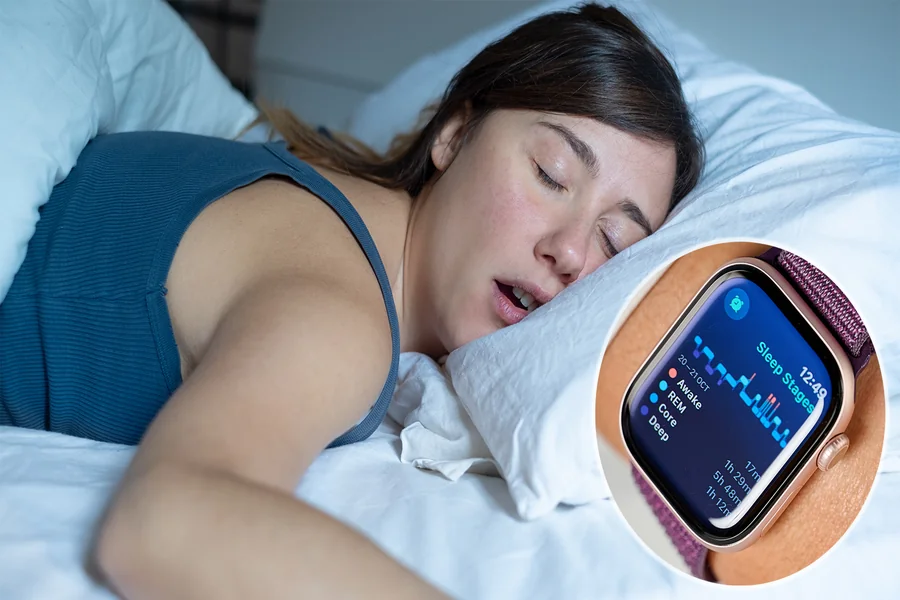
Your watch knows something is wrong before you do. That’s the strange new reality for millions of Americans wearing a Fitbit, Garmin, or Oura Ring to bed. These devices track breathing irregularities, blood oxygen dips, and restless cycles with enough precision to wave a red flag at 3 a.m. when you’re not even awake to notice. The catch? A red flag is not a diagnosis, and a gadget is not a doctor. Understanding what sleep tracking technology can actually tell you, and where it falls short, is the difference between using it wisely and letting a serious problem go unaddressed.
Why So Many People Have No Idea They Have Sleep Apnea
Sleep apnea’s cruelest trick is invisibility. You’re asleep when it happens. You stop breathing briefly, your oxygen drops, your body jolts itself awake just enough to restart the process, and then you don’t remember any of it in the morning. You just feel exhausted, foggy, and maybe a little irritable. For years, people chalked that up to stress or aging.
The numbers behind the underdiagnosis problem are stark. A 2025 systematic review published in Respiratory Medicine estimated that roughly 83.7 million U.S. adults were living with obstructive sleep apnea in 2024, yet the condition remains largely undiagnosed despite its substantial prevalence. That gap between how many people have it and how many actually know they have it persisted for decades partly because getting a formal sleep study traditionally meant an overnight clinic visit wired up to sensors, which most people put off indefinitely.
Consumer wearables cracked that door open. Not wide enough to replace clinical testing, but enough to plant the seed of suspicion that leads people to take action.
What Your Wearable Is Actually Measuring
The average consumer sleep tracker is not a medical device. That distinction matters. Most smartwatches and rings use a combination of accelerometers to detect movement, photoplethysmography sensors to estimate heart rate, and pulse oximetry to approximate blood oxygen saturation. Some newer models, like certain Garmin Forerunner and Oura Ring 4 units, also attempt to detect breathing disturbances using heart rate variability patterns.
Here’s a concrete example of how this plays out. Imagine you’ve been wearing an Oura Ring for three weeks. Your Sleep Score has been sitting in the low 60s despite getting seven or eight hours in bed. The app is flagging “restless sleep” and occasional blood oxygen readings dipping to 91% or 92%. You feel like you slept. The data says otherwise. That gap, between subjective feeling and objective measurement, is exactly where wearable tech earns its place in the discovery process.
But that same data also illustrates the ceiling. Blood oxygen readings from a consumer wrist or finger device can vary by a few percentage points in either direction. They are trend indicators, not diagnostic readings. A single night of low SpO2 could reflect sleeping position, a stuffy nose, or altitude. A pattern of low readings over multiple weeks is worth taking seriously.
The “Detect, Decide, Direct” Framework for Using Sleep Tech Wisely
People tend to fall into one of two unhelpful camps with sleep data: they either ignore every alert their watch produces, or they treat every metric spike as a crisis. A more useful approach is what you could call the Detect, Decide, Direct framework, three steps that turn passive data collection into productive health action.
- Detect: Your device flags something, whether that’s repeated low oxygen readings, high resting heart rate during sleep, or consistently poor sleep scores despite adequate time in bed.
- Decide: You look for patterns over two to four weeks, not a single bad night. Isolated anomalies rarely mean anything. Consistent trends do.
- Direct: You take that pattern data to a qualified clinician who can interpret it in context and, if warranted, order a proper diagnostic study.
The third step is where most people stall. They see the data, feel concerned, but don’t know who to see. A primary care physician is a reasonable first call, but sleep-disordered breathing often falls squarely in the territory of an ear, nose, and throat specialist because the physical causes of apnea frequently involve airway anatomy. If you’re in the Southeast and your wearable has been waving red flags for weeks, a specialist offering ENT sleep apnea treatment Atlanta is a logical starting point for an evaluation backed by real diagnostic tools, not just algorithm estimates.
The Sleep Crisis Driving All of This Demand
The boom in sleep tracking technology didn’t appear in a vacuum. It emerged against a backdrop of genuinely poor sleep across the population. According to 2024 data released by the Centers for Disease Control and Prevention, 30.5% of Americans, nearly one in three, slept an average of fewer than seven hours a night. More than half of adults surveyed by the CDC reported trouble falling asleep, staying asleep, or waking too early at least some of the time.
When sleep problems are that widespread, people look for answers wherever they can find them. Wearables offered a low-friction entry point: no appointment needed, no insurance forms, just strap something to your wrist and look at an app in the morning. That accessibility is valuable. It has nudged millions of people toward recognizing they have a problem at all.
Where Wearables Stop and Clinical Care Begins
A polysomnography study, the clinical gold standard for diagnosing sleep apnea, measures more than twenty physiological signals simultaneously, including brain waves, eye movements, muscle activity, airflow, respiratory effort, and oxygen saturation. Your smartwatch measures three or four of those at best, and with consumer-grade accuracy.
A 2024 analysis published in the MMWR by the CDC found that among employed adults in the United States in 2022, 48% of those who worked more than 60 hours per week slept fewer than seven hours per day, compared to 29% of those working 40 hours or fewer. High-demand professionals are precisely the group most likely to dismiss wearable alerts as stress artifacts rather than genuine warnings.
That’s the behavioral gap technology can’t close on its own. A device can generate data, but it cannot compel someone to act on it. And the consequences of delayed action on sleep apnea are not trivial: untreated obstructive sleep apnea is well-documented in the research literature as a contributor to cardiovascular strain, cognitive decline, and metabolic disruption over time.
“The diagnostic gap is a significant public health challenge. Approximately 80% of adults with obstructive sleep apnea in the U.S. remain undiagnosed.”
This estimate, drawn from American Academy of Sleep Medicine economic modeling cited across published OSA research, underscores a consistent finding: detection tools exist, but the bridge to diagnosis remains broken for most people.
A Practical Checklist: When to Move From Wearable Data to a Real Evaluation
Your device data is telling a story. Here’s how to know when that story deserves professional attention:
- Blood oxygen readings below 94% appearing on three or more nights across a two-week period.
- Your sleep tracker consistently classifies less than 10% of your sleep as “deep” or restorative, week after week.
- You wake up with headaches most mornings, even after a full night in bed.
- A bed partner reports that you stop breathing or gasp during sleep, regardless of what the device says.
- You feel genuinely unrested after seven or more hours of sleep on a regular basis, not just after a rough week.
Any two of these in combination is a pattern worth acting on. The wearable got you here. The next step is a clinician who can tell you what’s actually happening in your airway.
The Bottom Line on Sleep Tech and Discovery
Sleep tracking technology has done something remarkable: it turned a largely invisible condition into something people can see in chart form on their phone. That visibility has real value. It has shortened the path between suspicion and action for a meaningful share of the people who wear these devices consistently. But visibility without follow-through is just anxiety with a nice user interface. The devices are the detector. The decision to seek care is still yours, and the diagnosis belongs to a qualified specialist.
If your wearable data has been bothering you for weeks and you keep putting off the next step, that pattern itself is worth paying attention to.

Passionate about exploring diverse ideas and sharing inspiration, I curate content that sparks curiosity and encourages personal growth. Join me at ElementalNest.com for insights across a wide range of topics.