
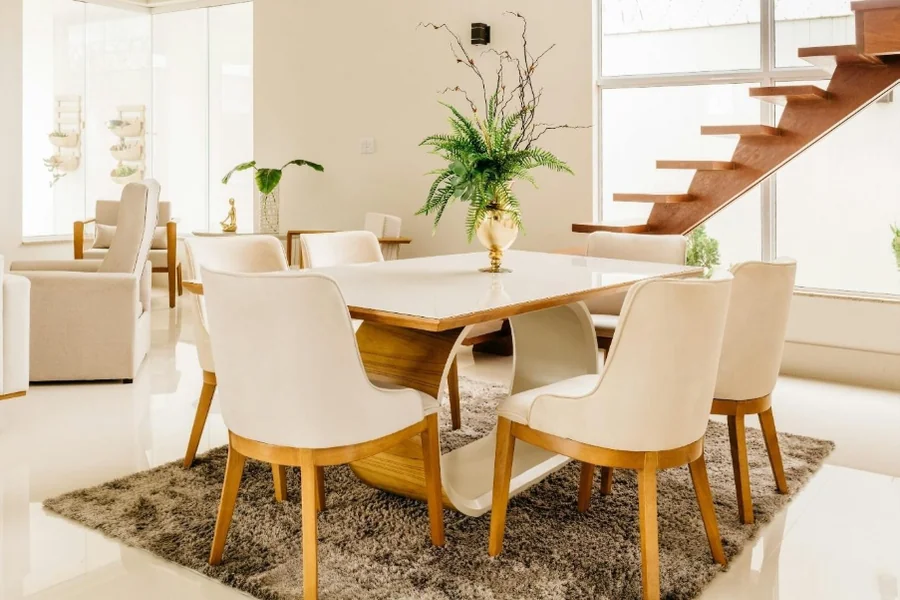
Sometimes a dining room has all the right ingredients and still feels incomplete. The colors can harmonize, the furnishings can be comfortable, the finishes can match, but nothing really catches the eye.
That’s where a statement piece can make a difference. In many dining rooms, the table is the obvious focal point and centerpiece of the furnishings. A statement dining table doesn’t need to be really large, unnatural, or overly ornate.
It can be subtle, such as thoughtful proportions, interesting materials, a sculptural base, or a shape that fits well in the room. The key to getting this right is to keep it simple, not overdecorated, but unique.
Here are some key elements to keep in mind when picking out a statement piece for your dining room.
1. Start with the Space You Already Have
Examine the dining room first before picking a marble dining table. Determine the available floor space and record the locations of doors, windows, walkways, and furniture in the immediate vicinity. Consider the number of people that will need to be seated comfortably and how much space they require to move chairs.
A large dining table might be a great fit for one of the larger rooms, but it might be too large for a smaller dining area. On the other hand, if a room is open and spacious, a small design may not make much of an impact. The appropriate piece should be eye-catching, but also allow for the ease of movement of others around the person.
2. Get the Proportions Right
Size and proportion aren’t the same thing. Two tables can share similar dimensions and still create very different impressions because of their thickness, base, and amount of open space.
A thick tabletop with a solid base creates a substantial presence, while a slim surface with an open base feels much lighter. Consider how the table’s length, width, height, tabletop thickness, and base relate to each other. In a large room, stronger proportions help establish a defined dining area. In a smaller room, lighter proportions add character without making the space feel cramped.
3. Choose a Shape That Suits the Room
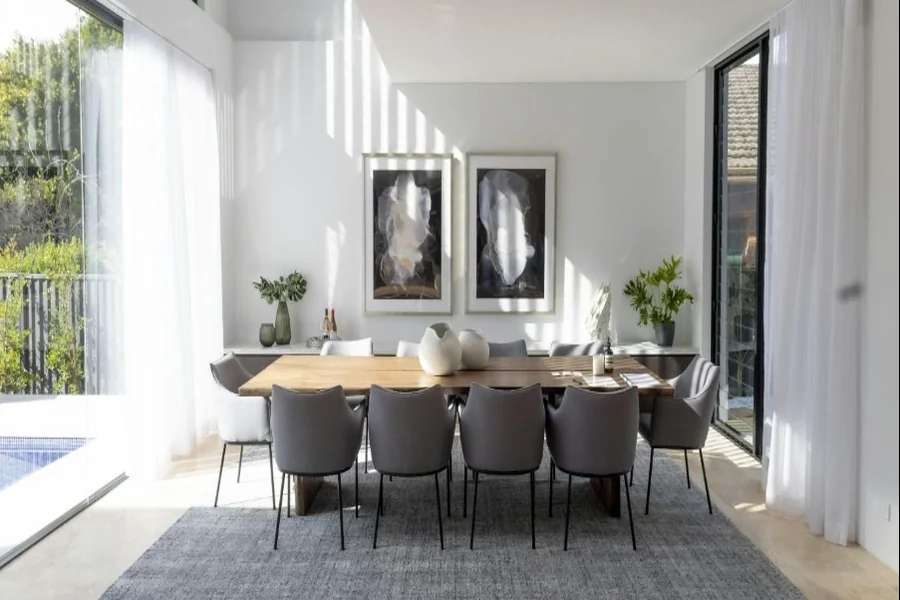
The shape of a dining table affects both its appearance and how people use the space.
Rectangular tables work naturally in longer rooms and reinforce straight architectural lines. Round tables create a softer atmosphere and make conversation feel more inclusive because everyone faces the center. They also work well where people move around several sides.
Oval and organically shaped tables give you another option. Their curves introduce movement while keeping the seating capacity of a longer table. They can be especially effective in rooms dominated by sharp angles and straight lines.
Look at the architecture first, then decide whether the table should follow those lines or contrast with them.
4. Decide Between Organic and Geometric Forms
The shape you choose can influence the mood of the room. Geometric furniture tends to create order and structure, while organic forms make an interior feel softer and more relaxed.
You don’t have to follow either approach exclusively. A minimalist dining room with lots of straight lines may benefit from a curved table that breaks up the repetition. A room full of rounded furniture, on the other hand, may need a more defined geometric shape for structure.
Rather than choosing based solely on current trends, consider what the room already has and what it seems to be missing.
5. Consider the Table’s Visual Weight
A table doesn’t need to be physically heavy to look substantial. Dark finishes, thick surfaces, and enclosed bases tend to carry more visual weight. Slim profiles, lighter finishes, and open structures usually feel less dominant.
This matters especially in open-plan homes. A distinctive dining table can visually separate the dining area from the kitchen or living space without any walls or screens.
Still, avoid giving every element the same level of visual importance. If the table, chairs, lighting, artwork, and rug all compete for attention, the room feels busy. Decide which element should lead and let the others support it.
6. Look beyond the Tabletop
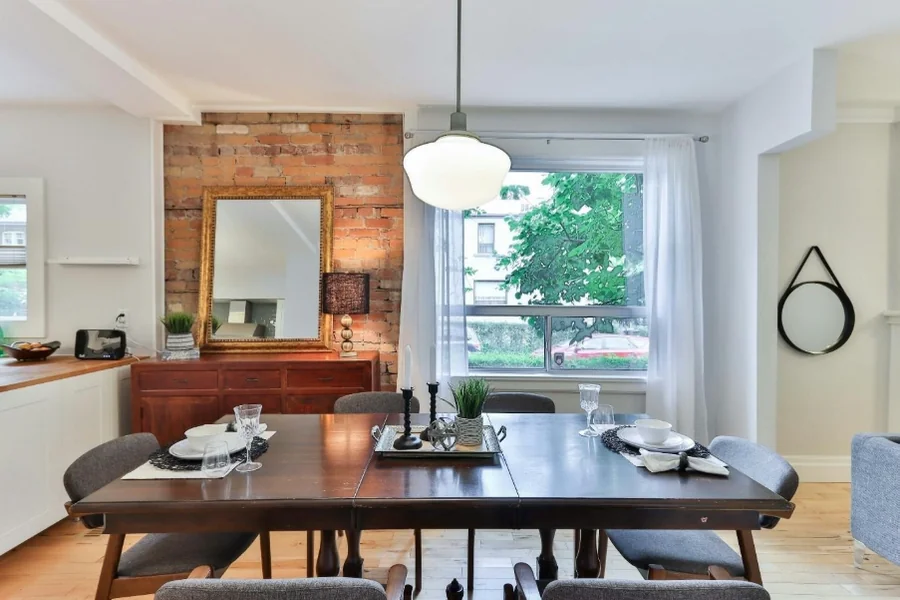
The base deserves as much attention as the surface above it. A traditional four-leg design looks familiar and practical, while a sculptural base gives the table a stronger architectural quality.
Curves, symmetry, asymmetry, repetition, and negative space can all change how a table looks from different angles. This becomes especially noticeable in open-plan spaces where you can view the dining table from the kitchen, living room, or entrance.
A well-designed base should feel connected to the tabletop rather than look like a separate component. When both parts share a visual language, the whole table feels more considered.
7. Pick a Material That Works With Your Interior
Material influences the appearance, texture, degradation, and illumination of a statement piece. Wood adds texture and warmth with visible grain, whereas stone and mineral finishes add more substantial, tactile qualities. The metal adds contrast and definition.
When choosing materials, don’t simply choose them because they’re currently in style; compare them to your fixed elements. Examine the floors, cabinetry, countertops, window frames, and other architectural features.
These elements can be in harmony with the table or stand in contrast to it. Both approaches work when the relationship feels intentional.
Wrapping Up
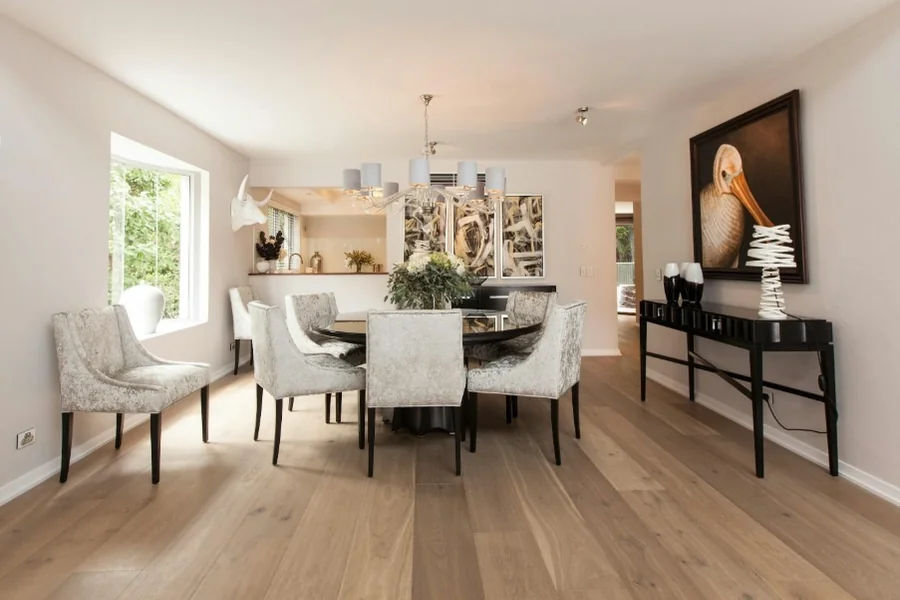
When selecting a statement piece for your dining room, you’re not necessarily trying to find the most dramatic one; it’s about understanding how one piece fits with the rest of your room. Consider the room’s scale and structure, then pay attention to scale, form, weight, material, and construction.
Then arrange the chairs and lights to complement the focal point rather than detract from it. The best option tends to have a personality of its own but remains cohesive with its surroundings.

Passionate about exploring diverse ideas and sharing inspiration, I curate content that sparks curiosity and encourages personal growth. Join me at ElementalNest.com for insights across a wide range of topics.